Executive Summary: A Call for Proactive Fiscal Policy
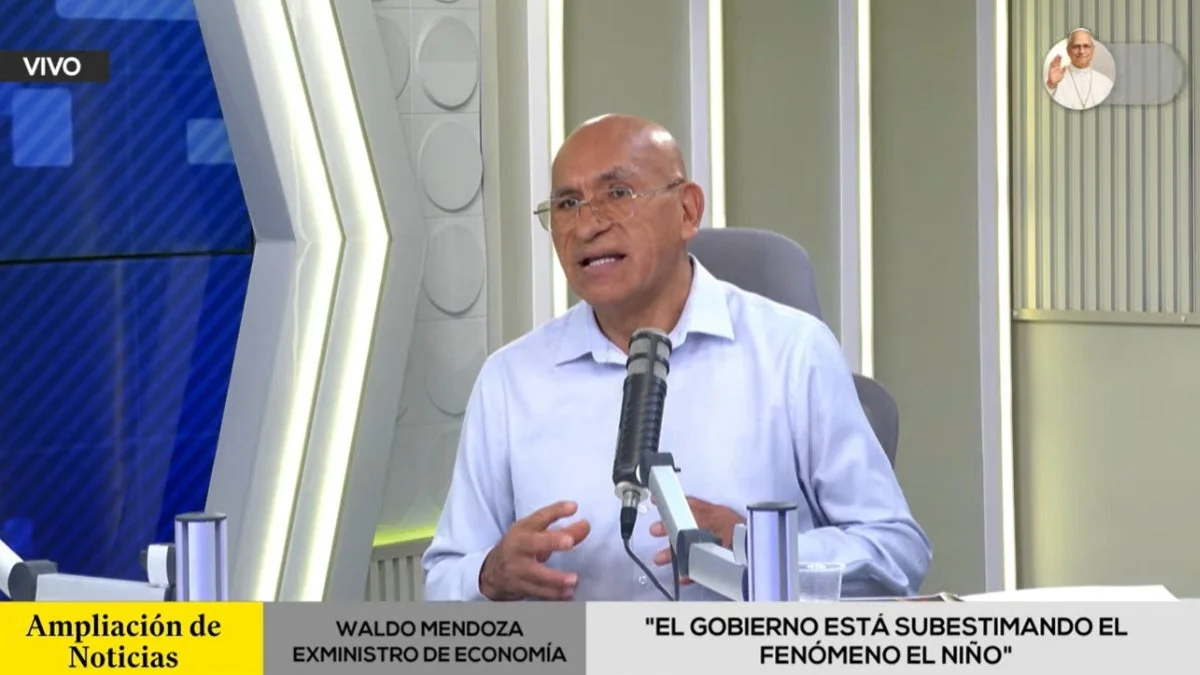
In a pointed critique of the current administration’s fiscal management, former Minister of Economy Waldo Mendoza has sounded the alarm regarding Peru’s preparedness for the looming threat of the El Niño phenomenon. Mendoza, a respected voice in Peruvian economic circles and current academic vice-rector at the Pontificia Universidad Católica del Perú (PUCP), argues that the executive branch is significantly underestimating the macroeconomic power of the climate event.
Central to his critique is the government’s reliance on legislative delegation from Congress to act, rather than utilizing executive decrees. Mendoza asserts that in times of crisis, particularly when the nation possesses the financial reserves to mitigate damage, the state must transition from a reactive to a proactive posture. With public investment growth targets set at a modest 3.7%, the former minister warns that the country is failing to leverage its available resources to prevent a systemic economic shock.
The Chronology of Neglect and Economic Vulnerability
To understand the gravity of Mendoza’s warning, one must look at the historical context of El Niño’s impact on the Peruvian economy.
1982-1983: The Era of Macroeconomic Paralysis
During the early 1980s, the country faced one of the most destructive climate events in its history. The resulting economic fallout saw a 10% contraction in the Gross Domestic Product (GDP) and a staggering 125% increase in inflation. While historians often note that these figures were exacerbated by broader structural issues of the time, the climate phenomenon served as the primary catalyst for the collapse of several key agricultural and industrial sectors.
1997-1998: The Recessionary Cycle
By the late 90s, Peru once again faced a major El Niño event. This period was marked by massive infrastructure damage, particularly in the northern regions, which crippled trade routes and decimated the agro-export industry. The economic ripple effects forced the country into a recession, highlighting the fragility of a nation that, at the time, lacked the fiscal buffers necessary to absorb such a shock.
2023-2024: A New Test for Modern Peru
Today, the situation is markedly different. Peru has built significant fiscal resilience over the last two decades. However, Mendoza argues that this newfound strength is being squandered through bureaucratic hesitation. The government’s decision to wait for legislative powers to address the emergency is, in his view, a "bureaucratic luxury" the country cannot afford.
Supporting Data: The Fiscal Disconnect
Mendoza’s primary bone of contention lies in the 2024 fiscal budget, which projects a deficit of 1.4%—a reduction from the 1.8% projected for 2023.
The Inadequacy of 3.7% Investment Growth
The former minister argues that a target of 3.7% growth in public investment is woefully insufficient. In his estimation, to properly fortify the country against the expected intensity of El Niño, public investment should be expanding by 15% to 20%.
- The Funding Gap: Mendoza identifies a shortfall of over 10 percentage points between the current government plan and the necessary level of investment required for robust preventative infrastructure.
- The "Rainy Day" Principle: "In bad times, the government has to spend," Mendoza stated during his interview with RPP. "Especially a government that has resources. And El Niño is a bad time."
The Power of Executive Decrees
Mendoza contrasts the current administrative delay with the agility displayed during the COVID-19 pandemic. He notes that the state possesses the legal mechanism of "Urgent Decrees" (decretos de urgencia), which allow for immediate fiscal mobilization. By waiting for Congress to debate and grant powers, the executive is losing the "golden hour" of prevention.
Regional Implications: A Tale of Two Disasters
The impact of El Niño will not be uniform, but its cumulative effect on the national economy could be devastating if not managed at the regional level.
The Northern Coast: The Threat of Inundation
In the northern regions, the primary risk is catastrophic flooding. The agro-export sector, a pillar of Peru’s modern economy, faces potential ruin. Infrastructure such as irrigation canals, highways, and logistics hubs are at high risk of being washed away.
The Southern Highlands: The Specter of Drought
Conversely, the southern departments—specifically Puno, Huancavelica, and Ayacucho—face the opposite threat: severe drought. This scenario jeopardizes livestock production, which is the livelihood for thousands of small-scale farmers. Mendoza suggests that the government must prepare to implement direct support subsidies or "bonos" for these families should the drought conditions escalate.
Lima: The Urban Fragility
Even the capital is not immune. Mendoza highlights the persistent danger of huaicos (debris flows), which have historically paralyzed the city’s supply chains and exposed the lack of adequate urban planning and drainage systems in high-risk zones.
Official Responses and Political Obstacles
The government’s response to these critiques has primarily focused on the complexity of inter-agency coordination and the necessity of legal frameworks to ensure transparency. However, political analysts observe that the tension between the legislative and executive branches is hampering the deployment of emergency funds.
The legislative package requested by the Executive was aimed at simplifying administrative hurdles for public works. Yet, reports suggest that the final version of the approved powers was "pruned" by Congress, removing key elements that the administration deemed essential for swift action. Mendoza has expressed frustration with this outcome, noting that while the details of what was excluded remain murky, the resulting delay is clearly hindering the mobilization of essential resources.
Strategic Recommendations: Moving Forward
To mitigate the risks identified by the former minister, several strategic shifts are recommended by experts in the field:
- Immediate Fiscal Re-prioritization: The government must move to increase the public investment budget immediately, prioritizing projects that have a high "prevention coefficient," such as river channelization and the reinforcement of bridge infrastructure.
- Decentralization of Emergency Management: Rather than waiting for central directives, local and regional governments need to be empowered with immediate liquidity to address localized threats.
- Direct Social Safety Nets: For the agricultural and pastoral sectors in the south, the government should finalize the design of a rapid-response subsidy program that can be triggered the moment rainfall levels fall below critical thresholds.
- Transparent Resource Allocation: To combat the fear of corruption—a major hurdle in Peruvian public works—the government should establish an independent monitoring body to oversee the expenditure of the increased investment budget.
Conclusion: The Price of Inaction
Waldo Mendoza’s warning serves as a stark reminder that macroeconomic stability is not merely about managing inflation or exchange rates; it is about the state’s ability to protect its citizens and its infrastructure from exogenous shocks.
The current fiscal trajectory reflects a government that is perhaps too comfortable in its reliance on past successes, underestimating the sheer power of the climate events that have, historically, reset the clock on Peru’s development. As the phenomenon nears, the window for effective prevention is closing. The choice, according to Mendoza, is clear: either the government embraces a bold, investment-led strategy today, or it will be forced to pay a much higher price in reconstruction and economic recovery tomorrow.
The "potency" of El Niño is a constant variable in the Peruvian experience; whether that leads to catastrophe or a managed recovery depends entirely on the willingness of the state to act with the urgency that the moment demands.