Executive Summary: A Milestone for Apurímac
In a significant move toward regional agricultural development, the Provincial Municipality of Abancay (MPA), under the leadership of Mayor Raúl Peña Sánchez, has officially commenced the construction of the "Tasta II" technical irrigation project. With a total investment exceeding S/ 13.8 million, this infrastructure initiative represents a lifeline for the rural economy of the Apurímac region. By transitioning from traditional, inefficient watering methods to a modern pressurized sprinkler system, the project aims to secure the livelihoods of hundreds of farming families across the annexes of Karkatera, Facchacpata, Ccacsa, and Trujipata, all located within the community of Juan Velasco Alvarado.
The project, officially registered under the CUI code 2570519, titled "Creation of water service for the sprinkler irrigation system in the annexes of Karkatera, Facchacpata, Ccacsa, and Trujipata," is being executed via direct administration. This modality signifies that the municipality will oversee the project’s execution, labor, and procurement of materials directly, ensuring greater accountability and control over the construction process.
Chronology: From Bureaucratic Stagnation to Local Action
The path to the realization of Tasta II has not been without its challenges. For years, the local farmers of the Juan Velasco Alvarado community have faced the harsh reality of water scarcity, which severely limited their crop yields and restricted them to subsistence farming.
The Original Vision: Sierra Azul
Initially, the Tasta II project was conceived under the auspices of "Sierra Azul," a flagship program managed by the Ministry of Agrarian Development and Irrigation (Midagri). The program is designed specifically to build small and medium-sized irrigation infrastructure in the highlands of Peru to promote water security. However, as the project moved through the initial design phases, it became entangled in administrative delays at the national level. These bureaucratic hurdles threatened to shelve the project indefinitely, leaving the farmers without the promised infrastructure.
The Municipal Intervention
Recognizing the urgency of the situation and the critical need to support the agricultural sector, the Municipalidad Provincial de Abancay (MPA) made the decisive choice to bypass the stalled national process. In close coordination with the community leaders of Juan Velasco Alvarado, the municipal administration took the initiative to adopt the project as its own. After securing the necessary technical approvals and finalizing the engineering files, the municipal government committed its own financial resources and management capacity to ensure the project reached the implementation stage. This shift from a national-level project to a municipal-led effort serves as a case study in decentralized governance and local responsiveness.
Technical Specifications: Building Modern Water Security
The scope of the Tasta II project is extensive, designed to provide a comprehensive water management solution for the participating annexes. The infrastructure plan is structured to maximize the efficiency of water usage, minimizing waste—a vital consideration in an era of climate volatility.

Infrastructure Components
The project is comprised of several key engineering components:
- Captation Structures: The construction of two major water intake structures designed to harvest and channel water effectively from local sources.
- Reservoir Network: The installation of five strategically located reservoirs. These serve as the backbone of the system, allowing for the storage of water during peak availability to be distributed during the dry seasons.
- Conduction Lines: An expansive network of 19.82 kilometers of piping that will convey water from the source to the sprinkler systems in the fields.
- Pressurized Sprinkler Systems: The core of the project, which will replace manual or furrow irrigation, allowing for precise, controlled, and efficient water delivery directly to crops.
Sustainability and Capacity Building
Crucially, the project goes beyond mere civil engineering. Recognizing that technology is only as effective as its users, the initiative includes a comprehensive training component. Local farmers will be trained in the operation and maintenance of the irrigation system, as well as in modern agricultural practices that maximize the benefits of sprinkler irrigation. Additionally, the project incorporates robust environmental mitigation measures to ensure that the infrastructure does not adversely affect the local ecosystems from which the water is drawn.
Official Responses and Stakeholder Perspectives
The launch of the project has been met with enthusiasm from local leadership and the farming community, who view this as a long-awaited victory for rural development.
The Municipal Stance
Mayor Raúl Peña Sánchez has emphasized that the Tasta II project is a cornerstone of his administration’s commitment to closing the infrastructure gap in Abancay. By prioritizing direct administration, the MPA seeks to ensure that the funds are utilized efficiently and that the project remains under the direct supervision of the local government, thereby minimizing the risk of the delays that plagued the initial Sierra Azul phase.
Community Leadership
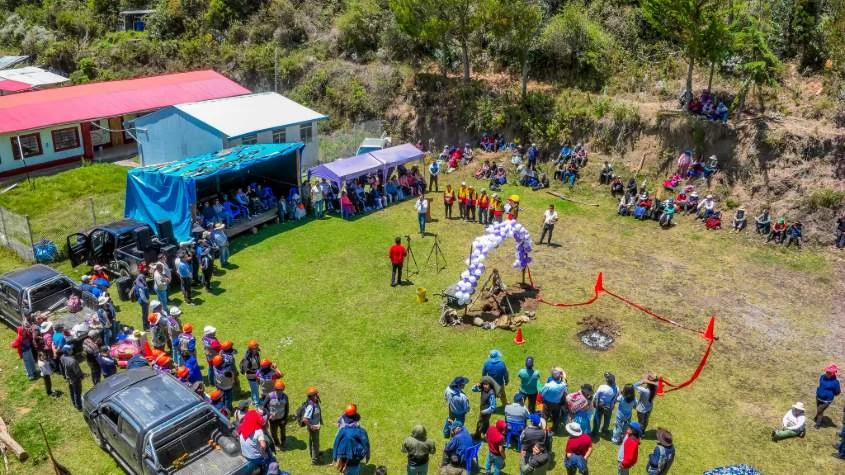
Alberto Barazorda, the president of the Juan Velasco Alvarado community, expressed deep gratitude for the municipal intervention. "This project represents years of struggle and constant requests to various levels of government," Barazorda stated during the inauguration event. He highlighted that the project is not just about pipes and concrete, but about the economic viability of the families in the four annexes. For these farmers, the guarantee of a reliable water supply translates directly into the ability to diversify crops, increase production cycles, and improve their income levels.
Implications for Abancay: A Broader Development Strategy
The Tasta II project is not an isolated effort. It is part of a larger, systemic effort by the Provincial Municipality of Abancay to modernize public services and infrastructure.

Integration with Broader Initiatives
Beyond the irrigation project, the MPA is working on other critical infrastructure needs. Notably, the community of Juan Velasco Alvarado is also slated to benefit from a new solid waste treatment plant, for which the technical file has already been approved. This dual focus—improving agricultural infrastructure while addressing environmental sanitation—reflects a holistic approach to regional development.
Economic and Social Impact
The implications of Tasta II are significant:
- Agricultural Diversification: With consistent water availability, farmers can move away from water-intensive, low-value crops and begin experimenting with higher-value, market-oriented products.
- Poverty Alleviation: By increasing crop yields and reducing the risk of harvest failure due to drought, the project serves as a direct poverty reduction tool for the rural population.
- Strengthening Local Governance: The successful transition of the project from a stalled national initiative to a functional local one strengthens the credibility of the municipal government in the eyes of its constituents.
Future Outlook
As construction begins, the focus shifts to ensuring that the timeline remains on track. The residents of Karkatera, Facchacpata, Ccacsa, and Trujipata will be watching closely as the pipes are laid and the reservoirs are built. If successful, Tasta II will likely serve as a model for other rural communities in Apurímac seeking to secure their water rights and modernize their agricultural sectors.
The transformation of the landscape, from arid, rain-dependent fields to productive, irrigated farmland, is a long-term investment in the future of Abancay. By taking responsibility for the project, Mayor Peña Sánchez’s administration has demonstrated that local governments, when empowered and responsive, can solve long-standing infrastructure challenges that have stalled at the national level. The coming months will be crucial as the project moves toward completion, but for now, the mood in the Juan Velasco Alvarado community is one of optimism and renewed promise for a more prosperous, water-secure future.