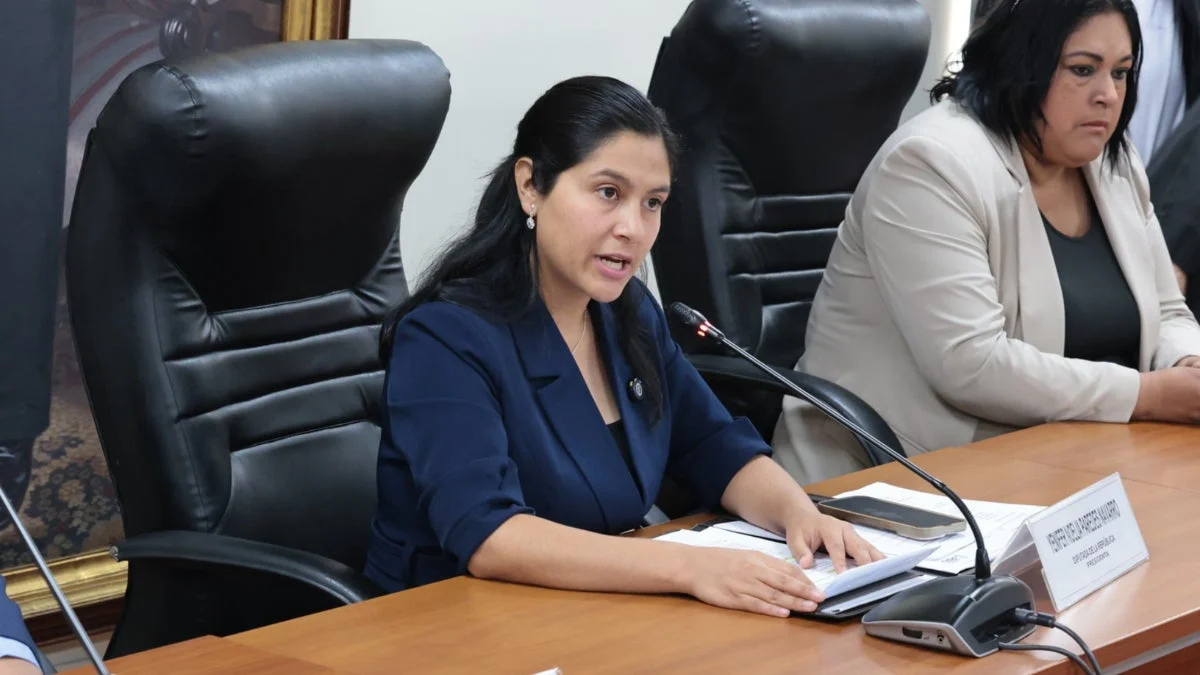
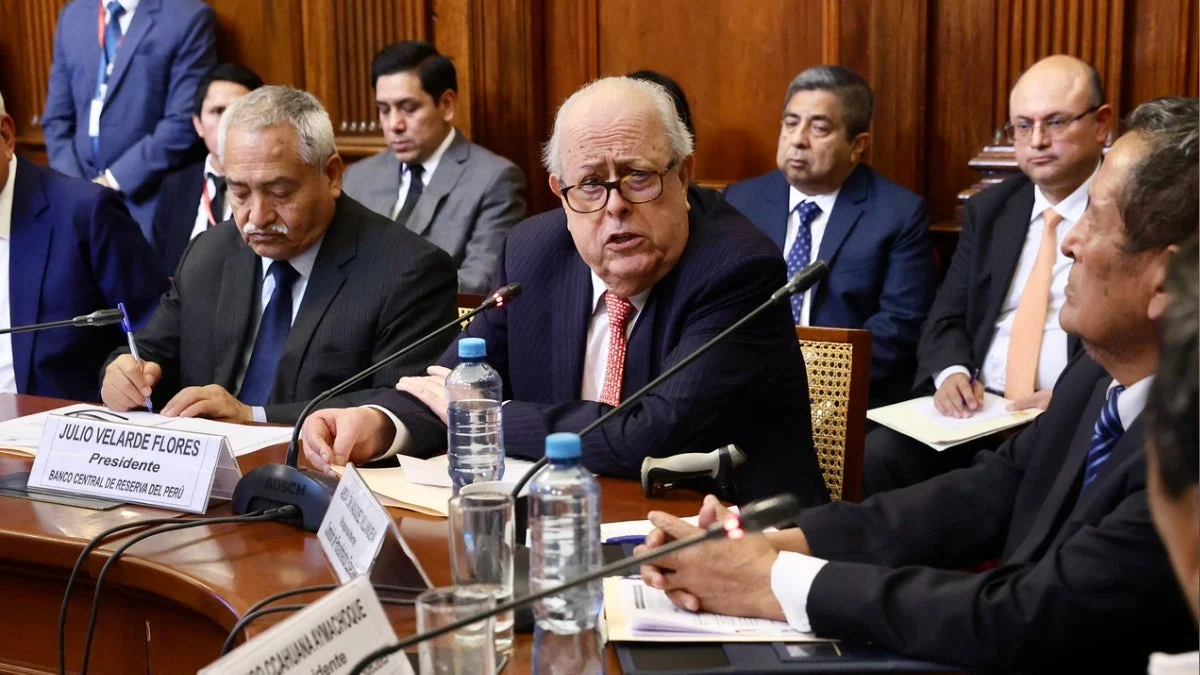
In a high-stakes session before the Senate’s Special Procedures Commission, Julio Velarde, the long-standing president of the Central Reserve Bank of Peru (BCR), addressed lawmakers to defend his stewardship of the nation’s monetary policy. As he faces the process for his fifth consecutive appointment to the helm of the institution, Velarde’s testimony provided a rare glimpse into the strategic thinking governing Peru’s $96.5 billion in Net International Reserves (RIN). Central to the discussion was a contentious debate: Should a resource-rich nation like Peru capitalize on the record-breaking price of gold by aggressively increasing its bullion holdings?
Velarde’s response was characteristically pragmatic, rooted in decades of macroeconomic stability, while simultaneously dismissing the notion that the central bank should act as a commodity trader.
The Core Mandate: Stability Over Speculation
The primary objective of the BCR, as defined by its constitutional mandate, is the preservation of monetary stability and the control of inflation. During his testimony, Velarde highlighted the institution’s track record over the past two decades—a period characterized by relative price stability despite significant global headwinds and domestic political volatility.
"The central bank’s main objective is the stability of the currency and prices. I believe we have fulfilled that objective quite effectively," Velarde stated.
When questioned by senators on why the BCR does not increase its gold reserves to take advantage of the metal’s performance—which reached peaks exceeding $5,000 per ounce this year and currently hovers around $4,500—Velarde offered a firm rebuttal. He argued that the role of a central bank is not to speculate on commodity prices.
"It is not the job of the Central Bank to be buying minerals. By that logic, one could justify buying copper, silver, and other commodities," he remarked. His stance emphasizes a fundamental tenet of modern central banking: reserves exist to provide liquidity and serve as a buffer against external shocks, not to capture capital gains from volatile market trends.
A Strategic Composition: Why 7% Gold?
A critical revelation during the session was the current composition of Peru’s international reserves. While the global average for gold holdings among central banks sits between 2% and 3%, Peru maintains a higher allocation of 7%.
Velarde clarified that this percentage is not arbitrary. It is the result of rigorous quantitative analysis that weighs the risk-adjusted returns of gold against other sovereign assets, such as U.S. Treasuries or other stable-currency instruments.
The Volatility Factor
Velarde warned against the "gold bug" mentality, labeling the precious metal as a highly volatile asset. "One can make a lot of money, but it is not a sure bet; it is highly volatile," he explained.
To illustrate the dangers of market timing, he pointed to the recent experience of Chile. The neighboring country, which had previously liquidated its gold reserves, recently re-entered the market. However, their timing was suboptimal: they purchased when prices were near the $5,200 mark, only to see the value plummet toward $4,300 shortly thereafter. This anecdote served as a cautionary tale for those urging the BCR to ramp up its acquisitions.
Global Comparisons
Velarde further contextualized the strategy by comparing Peru to major global players. Countries with massive gold holdings, such as the United States (which holds over $1 trillion in gold), Germany ($450 billion), and Italy ($400 billion), have maintained static positions for decades.
- The United States: Has not actively purchased gold for half a century.
- Germany: Has not added to its bullion reserves in 50 years.
- Italy: Has remained inactive in the gold market for 150 years.
These nations, Velarde argued, treat gold as a long-term strategic insurance policy rather than a tradeable asset, a philosophy that aligns with the BCR’s current approach.
The Ethical Dilemma: Gold Mining and Illegality
Perhaps the most poignant portion of the testimony addressed the shadow cast by illegal mining in Peru. Some proponents of increased gold purchases have suggested that if the BCR bought gold directly, it could help formalize the market and provide a regulated outlet for small-scale miners.
Velarde dismissed this notion with uncompromising clarity. "The problem with gold is that when it comes from illegal activities, buying it does not stop it from being illegal. The Central Bank would effectively be laundering it, but the activity would remain illicit," he stated.
The Mechanism of Contraband
Velarde explained that much of the gold produced by illegal, informal, or unregulated mining operations does not stay in the country or go to the BCR. Instead, it enters the global market through formal export channels, utilizing authorized processing companies as intermediaries. While there has historically been significant concern regarding the smuggling of gold across the border into Bolivia, Velarde noted that this practice, while still present, represents a smaller slice of the total export pie than previously estimated, as smugglers have become increasingly sophisticated in using "legal" cover to move the metal.
Call for State Intervention
While the BCR head maintains that the central bank is not the entity to solve the illegal mining crisis, he did not shy away from the necessity of government action. According to Velarde, the solution lies in the fundamental role of the State: presence and formalization.
"What is lacking there is the presence of the State, and a real effort to satisfy the needs of these small miners so that they can work in an orderly, legal fashion," he noted.
By failing to provide a clear regulatory and fiscal path for small-scale miners to formalize, the government leaves a void that is filled by criminal syndicates. Velarde’s testimony served as a call to action for the executive branch to prioritize infrastructure and administrative support for formalization, rather than looking for a "monetary solution" to a structural law-and-order problem.
Implications for Future Monetary Policy
The confirmation process for Julio Velarde is viewed by many market analysts as a bellwether for Peru’s economic stability. His insistence on preserving the BCR’s independence and its focus on its core mandate—price stability—has been a cornerstone of investor confidence in the Peruvian sol.
Economic Resilience
With $96.5 billion in reserves, Peru maintains one of the strongest balance sheets in Latin America. The decision to keep gold exposure at 7%—significantly higher than the global average—demonstrates a balanced approach: enough to act as a hedge against currency devaluation, but not so much as to expose the nation’s savings to the whims of the commodities market.
Political Stability
As Velarde enters what may be his fifth term, his testimony reinforces the idea that the BCR will remain a technocratic bastion, isolated from the populist pressures that often tempt politicians to use central bank reserves for short-term fixes. By clearly delineating between the duties of the central bank and the social responsibilities of the State regarding illegal mining, Velarde has effectively set the boundaries for the next stage of his tenure.
In conclusion, the debate over Peru’s gold reserves is more than a discussion about an asset class; it is a debate about the nature of a modern, responsible state. Through his firm stance, Velarde has signaled that while the world may fluctuate in its demand for gold, the Central Reserve Bank of Peru will remain steadfast in its commitment to the dull, yet essential, work of maintaining monetary order.
Chronology of the BCR’s Recent Engagement on Gold
- 2023–2024 (Market Peak): Global gold prices reach record highs, sparking internal political debate in Peru regarding the monetization of the nation’s mineral wealth.
- August 2024: BCR reports Net International Reserves (RIN) reach $96.518 billion, maintaining a steady, high-liquidity profile.
- Late August 2024: The Senate’s Special Procedures Commission summons Julio Velarde for the formal ratification process for his fifth term.
- September 2024: During his testimony, Velarde addresses the gold controversy, explicitly rejecting the idea of the BCR entering the market as a buyer and clarifying the ethical, legal, and economic reasons for his stance.
- Present Day: The BCR continues to adhere to its risk-return model for reserve management, with no immediate plans to alter its gold-to-currency ratio.