Executive Summary: A Rare Electoral Standstill
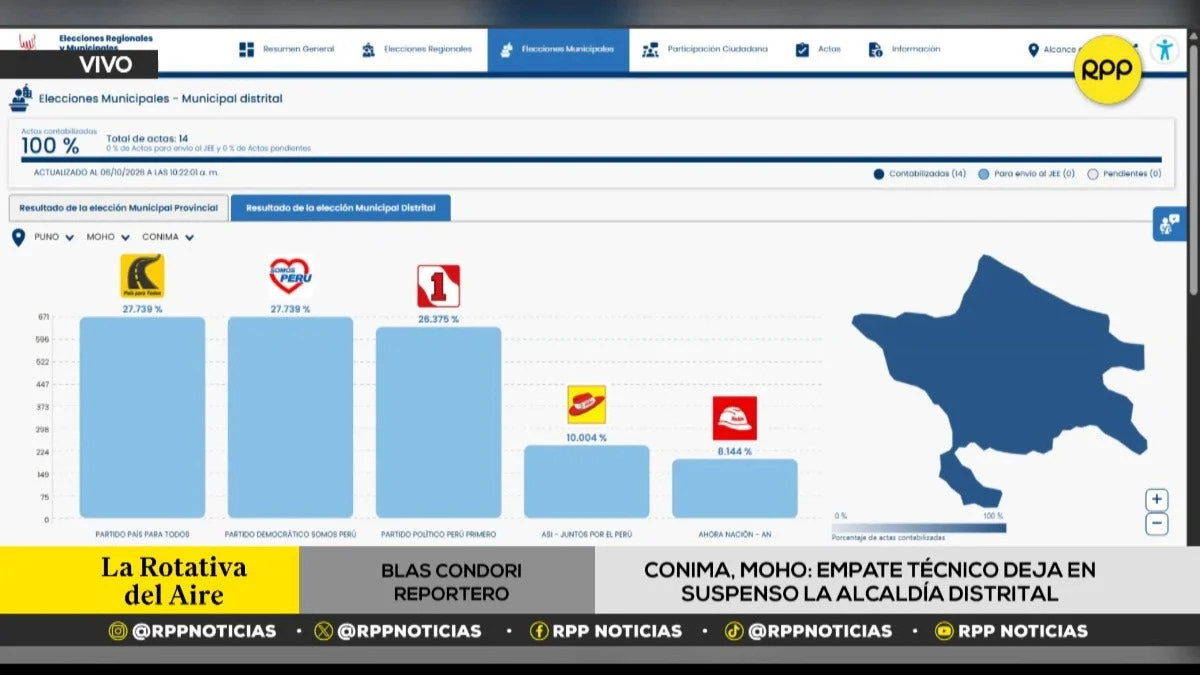
In an extraordinary turn of events that has captured the attention of the Puno region and beyond, the race for the mayoral seat of Conima—a district nestled in the province of Moho—has reached a complete electoral stalemate. Following the conclusion of the most recent municipal elections, official tallies from the National Office of Electoral Processes (ONPE) revealed a perfect numerical deadlock: candidates Salomino Mamani Quispe and Rubén Quispe Capajaña finished with an identical count of 671 votes each.
This rare outcome has plunged the district into a state of political uncertainty. While the democratic process usually culminates in the clear victory of a candidate who secures a plurality of votes, the unique geography of this contest has necessitated a shift from traditional vote counting to a mechanism rarely invoked in modern democratic systems: the public lottery.
The Candidates and the Parties at Stake
The two protagonists of this high-stakes electoral drama represent distinct political currents within Peru’s complex landscape.
- Salomino Mamani Quispe, representing the party País para Todos, entered the race with a platform focused on regional development and local infrastructure improvements in the border region of Moho.
- Rubén Quispe Capajaña, running under the banner of Somos Perú, a historically established political movement, centered his campaign on social welfare and the strengthening of municipal governance in the rural district of Conima.
The fact that these two individuals managed to mobilize an identical number of supporters out of a relatively small electorate highlights both the intense polarization of the community and the high level of civic participation in the district.
Chronology of the Electoral Impasse
The path to this stalemate was characterized by high voter turnout and a meticulous counting process.
Pre-Election Atmosphere
Leading up to the polling day, the district of Conima witnessed spirited campaigning. Both candidates traversed the rugged terrain of the Moho province, engaging with local communities, indigenous leaders, and agricultural collectives. The political climate was described as competitive but peaceful, with no major disruptions reported during the campaign period.
The Polling Day
On the day of the election, polling stations opened early to accommodate the rural populace. Throughout the day, the atmosphere remained orderly as citizens exercised their right to vote. However, as the evening progressed and the preliminary counts began to emerge from individual polling stations, it became apparent that the margin between the two frontrunners was razor-thin.
The Verification Process
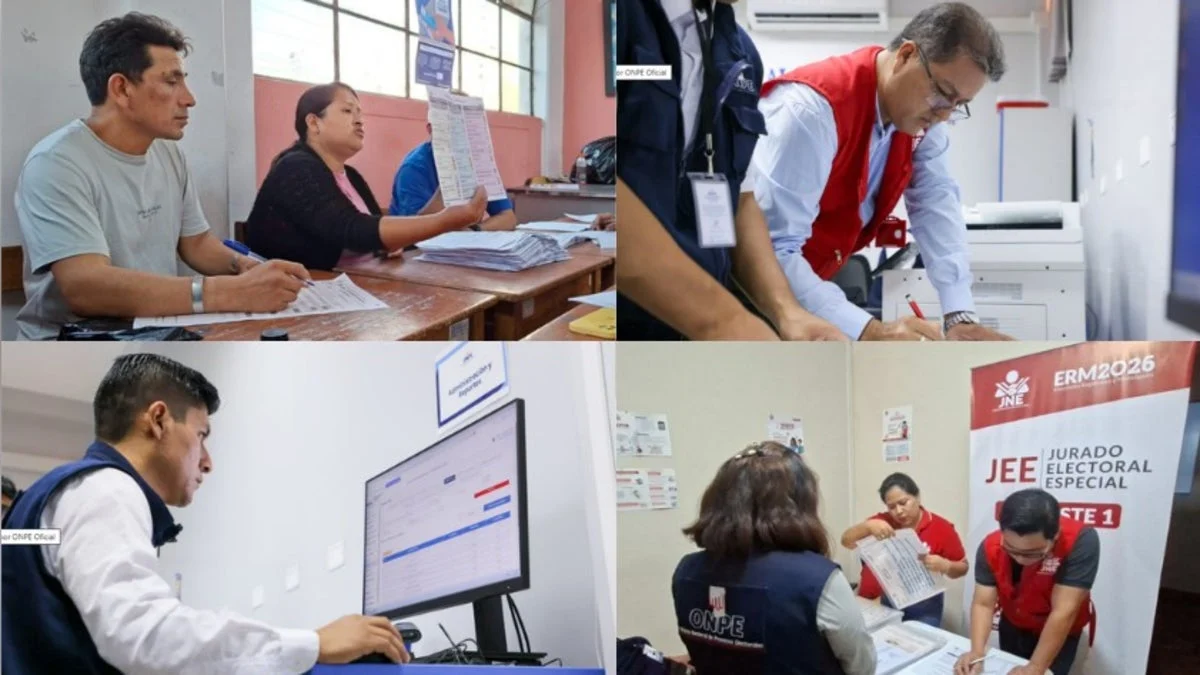
Once the physical ballots were transported to the processing centers overseen by the ONPE, the initial reports began to cause a stir among observers. Each batch of processed votes reflected a seesaw battle between Mamani and Quispe. By the time the final tally was verified and the last ballot accounted for, the total stood at 671 for each candidate. The result was immediately cross-referenced by the Jurado Electoral Especial (JEE) of Huancané to ensure no clerical or counting errors had occurred.
Supporting Data and Legal Framework
The situation in Conima is not merely a political curiosity; it is a legal challenge governed by the strict statutes of the Peruvian electoral code. When an election ends in a tie, the democratic process dictates that the tie-breaking procedure must be transparent, impartial, and final.
The Role of the JEE of Huancané
The Jurado Electoral Especial (JEE) of Huancané has assumed full responsibility for navigating this crisis. Under the guidance of the National Jury of Elections (JNE), the JEE has confirmed that no recounts will be performed, as the final count has been verified as accurate by all participating political observers and party representatives.
The Legal Mechanism of the "Sorteo"
In accordance with the Peruvian electoral law regarding municipal ties, the resolution must be achieved through a public hearing. This hearing is not an opportunity for further arguments or challenges; rather, it is a formal administrative act where the winner will be determined by a public draw (sorteo).
This mechanism is designed to remove the element of human subjectivity from the decision, treating the choice as an impartial outcome of chance when the will of the voters—as expressed through the ballot—has been split with absolute mathematical equality.
Official Responses and Administrative Updates
As of the latest briefings, the JEE of Huancané has not yet finalized the date or the specific venue for the public draw. Spokespersons for the electoral body have indicated that they are currently coordinating with the candidates’ legal teams to ensure the procedure is conducted under the strictest standards of transparency.
Statements from the Political Parties
While both candidates have expressed their readiness to abide by the law, the tension remains palpable. Supporters of both País para Todos and Somos Perú have expressed anxiety regarding the outcome. Local observers note that the atmosphere in Conima is one of "cautious waiting," as the municipality currently remains in a state of administrative limbo.
Implications for the District of Conima
The implications of this draw extend far beyond the mere selection of a mayor. They touch upon the core of administrative stability and the legitimacy of local governance.
Governance and Administrative Continuity
Until the draw is held and the winner is sworn in, the administration of the Conima municipality remains in a transition phase. This poses challenges for the planning of the upcoming fiscal year, the approval of municipal budgets, and the continuation of essential public services. The lack of a clear victor has essentially paused the transition of power, forcing municipal officials to manage only the most essential functions until a legitimate authority is established.
The Psychological Impact on the Electorate
For the citizens of Conima, this event is a profound lesson in the weight of a single vote. The fact that the entire mayoral race resulted in a tie demonstrates the power of the individual voter. It has sparked widespread debate in the region regarding the necessity of electoral reform or the potential implementation of runoff elections in municipal districts to avoid such deadlocks in the future.
Lessons for Peruvian Electoral Law
Political analysts in Puno have noted that the Conima case serves as a precedent that could prompt the National Jury of Elections (JNE) to propose legislative changes. Critics argue that a lottery system—while legally sound—is an unsatisfying conclusion to a democratic exercise. Supporters, however, argue that the lottery is the most neutral arbiter available when the electorate itself is fundamentally divided.
Future Outlook: The Path to Resolution
The coming days will be critical for the district. The announcement of the date for the public hearing is expected to draw observers from across the country, including representatives from national media outlets and civil society organizations dedicated to monitoring electoral integrity.
Once the hearing takes place and the name of the future mayor is pulled, the result will be legally binding and final. The winning candidate will then be issued their credentials, allowing them to assume the mayoral office and begin the task of addressing the needs of the Conima district.
As the population of Conima waits, they do so with the knowledge that their district has become a historical footnote in Peruvian political history—a place where every single vote held equal weight, and where the final decision rested in the hands of the law and the element of chance.
Conclusion
The deadlock in Conima is a rare, almost surreal instance of democratic balance. It serves as a stark reminder of the complexities of local government and the importance of having robust, transparent, and established legal mechanisms to resolve disputes when the democratic process reaches its absolute limit. Whether the final outcome leads to a term led by Salomino Mamani Quispe or Rubén Quispe Capajaña, the people of Conima will eventually move forward, likely with a renewed focus on the critical importance of civic participation and the need for greater clarity in the electoral processes that define their local leadership.
For now, all eyes remain on the JEE of Huancané, awaiting the final chapter of this unprecedented electoral stalemate.