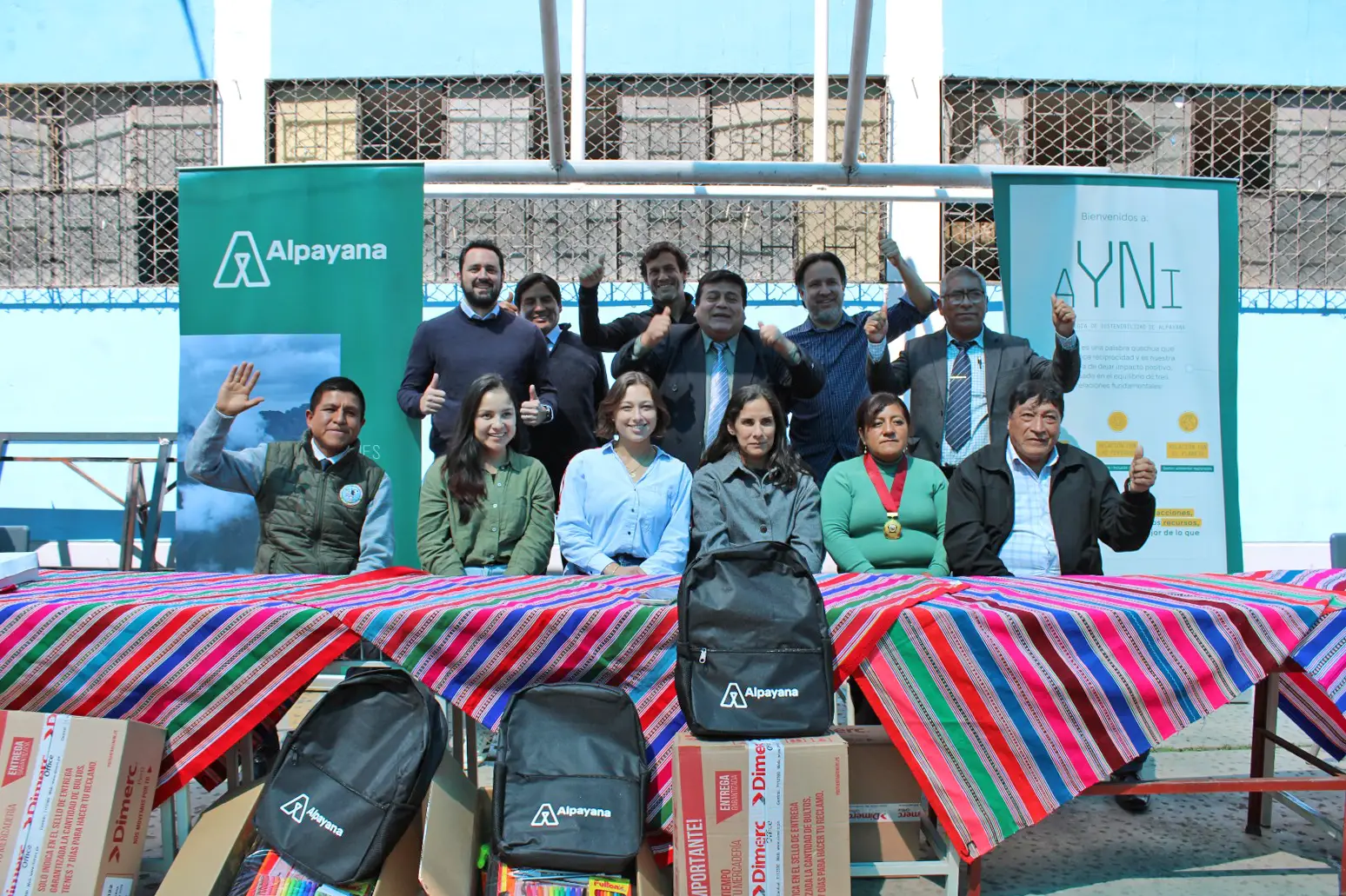
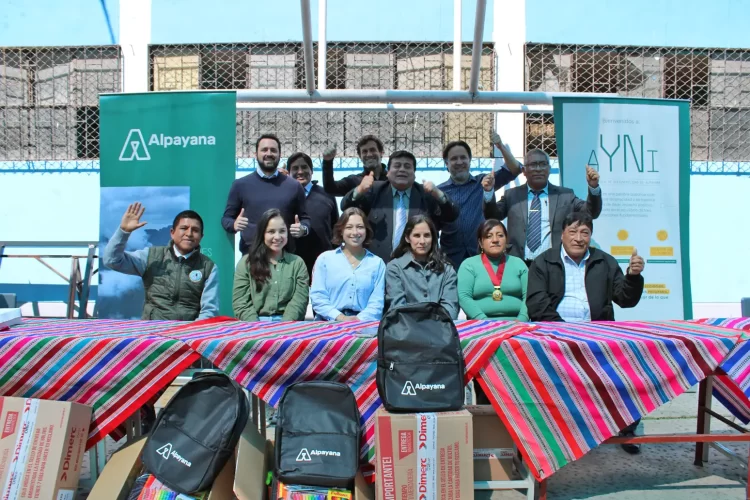
In a strategic move to redefine the standard of rural education, the mining company Alpayana has officially launched "Escuelas de Altura" (High-Altitude Schools). This ambitious educational model is designed to catalyze a systemic shift in the quality of instruction and student outcomes across seven schools located in the company’s primary area of influence: the districts of San Mateo, Chicla, and Casapalca.
By integrating technological innovation, pedagogical capacity building, and robust community engagement, the program aims to transcend traditional corporate social responsibility (CSR) paradigms, establishing instead a data-driven, sustainable ecosystem for learning. The initiative is set to benefit 1,169 students and 101 teachers, marking one of the most significant private-sector educational interventions in the region to date.
The Core Pillars of the Initiative
"Escuelas de Altura" is not merely an investment in infrastructure; it is a holistic methodology that addresses the multifaceted challenges of high-altitude rural education. The program operates on four strategic pillars:
- Pedagogical Innovation: Shifting from passive learning to active, inquiry-based methodologies that emphasize critical thinking and problem-solving.
- Capacity Building: Providing continuous professional development for teachers and school administrators to ensure that the adoption of new teaching tools is both effective and long-lasting.
- Physical and Digital Infrastructure: Upgrading learning environments to modern standards, most notably through the introduction of cutting-edge fabrication technology.
- Community and Family Integration: Recognizing that education is a communal endeavor, the program actively integrates parents and local community leaders into the school governance and support systems.
Chronology: A Roadmap to 2030
Unlike many short-term charitable projects, Alpayana has structured "Escuelas de Altura" with a long-term commitment that extends through the year 2030. This longitudinal approach ensures that the impact of the interventions can be measured accurately and adjusted as necessary.
Phase 1: Establishing the Baseline (Current – August 2026)
The program is currently in its foundational stage. Alpayana is conducting an exhaustive diagnostic of student performance across all seven participating institutions. This "baseline" will serve as the reference point for all future improvements. The completion of this diagnostic phase is scheduled for between July and August 2026.
Phase 2: Implementation and Iteration (2026–2029)
The execution phase involves at least three comprehensive performance evaluations per year. This iterative cycle allows the project managers to identify what is working and what requires adjustment, ensuring the curriculum and support systems remain relevant to the students’ needs.
Phase 3: Milestone Evaluations (2028 – 2030)
To ensure transparency and accountability, the program includes a major interim evaluation in May 2028. The final summative impact assessment is scheduled for April 2030. This final report will provide a comprehensive analysis of the program’s long-term efficacy and its success in meeting predefined educational milestones.

Supporting Data and Evaluation Metrics
The strength of "Escuelas de Altura" lies in its commitment to empirical evidence. The company has implemented a rigorous system to measure indicators that go beyond standardized testing. The success of the program will be evaluated based on:
- Learning Outcomes: Academic performance metrics in core subjects.
- Teaching Efficacy: Assessments of teacher performance and the successful integration of active teaching methodologies in the classroom.
- Operational Engagement: Monitoring school attendance rates and student motivation levels.
- Digital Literacy: The acquisition of competencies related to the use of modern technology.
- Community Participation: The depth and frequency of parental involvement and the strength of the school-community partnership.
By tracking these variables, Alpayana intends to move away from anecdotal evidence of "success" toward a verifiable model of educational progress that can be replicated in other regions.
Official Perspectives: The Vision of Leadership
Fernando Arrieta, CEO of Alpayana, emphasized the philosophical shift behind this initiative during the launch ceremony. "We believe that a high-quality education is the primary engine for human transformation. It opens doors to opportunities that would otherwise remain closed to these future generations," Arrieta stated.
He further elaborated on the company’s intent to move beyond "bricks and mortar": "With Escuelas de Altura, we are not just building classrooms; we are building a model that strengthens the capacity of the entire educational ecosystem—students, teachers, and families. Our goal is to generate changes that are sustainable, enduring, and deeply rooted in the needs of the territory."
The development of the program was not a top-down mandate. It was the result of a "co-creation" process involving school directors, teachers, the Asociación de Padres de Familia (APAFA), and representatives from local peasant communities. By involving these stakeholders from the inception, Alpayana has ensured that the program responds to the actual, ground-level realities of the high-altitude communities of San Mateo, Chicla, and Casapalca.
The FabLab Milestone: Bringing the Future to the Andes
As a tangible proof of concept, Alpayana has inaugurated the first Digital Fabrication Laboratory (FabLab) in the region at the I.E. San Mateo de Huanchor. This facility represents a quantum leap in the local educational infrastructure.
The FabLab is equipped with:
- 3D Printers and Scanners: Allowing students to move from theoretical design to physical prototyping.
- Laser Cutters and Vinyl Cutters: Enabling precision work in various materials.
These tools are not merely for vocational training; they are designed to foster a culture of innovation and creativity. By providing students with access to the same technology found in leading international universities, Alpayana is narrowing the digital divide that often separates rural communities from the globalized workforce. This infrastructure, paired with intensive teacher training on how to integrate these tools into the curriculum, underscores the company’s commitment to modern, experiential learning.
Implications for Sustainable Development
The launch of "Escuelas de Altura" is a flagship component of AYNI, Alpayana’s broader sustainability strategy. The term Ayni, derived from Quechua, refers to the ancient Andean principle of reciprocity—the idea that individual well-being is tied to the well-being of the collective.
Educational Equity
The most significant implication of this project is its focus on equity. By targeting geographically isolated and historically underserved communities, Alpayana is demonstrating that a mining operation can be a catalyst for socio-economic development that survives long after the resource extraction life cycle ends.
Strengthening Social License
In the modern mining landscape, the "social license to operate" is built on trust and tangible benefits. By investing in the long-term cognitive and professional development of the local youth, Alpayana is creating a shared future with the community. The planned second phase of the project, which will include schools for parents and joint workshops between families and educators, aims to bridge the gap between the school and the home, creating a unified front for student development.
A Model for Rural Transformation
If the metrics between now and 2030 show the intended improvements in student achievement and digital literacy, Escuelas de Altura could serve as a blueprint for other extractive industries working in remote, high-altitude regions. The model effectively shifts the conversation from "corporate philanthropy" to "social investment," where the ROI is measured in human capital, educational attainment, and the long-term prosperity of the local community.
Conclusion
The launch of "Escuelas de Altura" represents a sophisticated and ambitious attempt to tackle the systemic issues facing rural education in Peru. Through a combination of long-term data collection, community co-creation, and cutting-edge technological investment, Alpayana is positioning itself as a leader in corporate-led educational reform. As the project enters its active implementation phase, the eyes of the region—and potentially the broader mining sector—will be on the classrooms of San Mateo, Chicla, and Casapalca, waiting to see if this "High-Altitude" approach can indeed reach the heights of its lofty goals.