Introduction: The Mining Paradox in the Age of Transition
As the global economy accelerates its pivot toward decarbonization, the demand for critical minerals—specifically copper, lithium, and rare earth elements—has reached unprecedented levels. Latin America, endowed with some of the world’s most significant reserves, finds itself at the epicenter of this transition. However, the path to extracting these resources is fraught with complex social challenges.
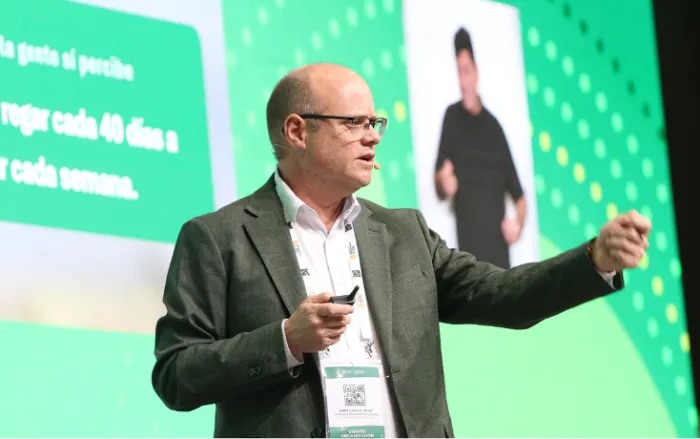
During the International Meeting on Social Management and Sustainability (GESS 2026), Juan Carlos Ortiz, President of the Instituto de Ingenieros de Minas del Perú (IIMP), offered a stark assessment of the current landscape. He argued that technical proficiency is no longer the primary hurdle for the mining sector. Instead, the industry’s greatest challenge lies in navigating territories defined by historical grievances, environmental legacies, and a fragile institutional presence. For Ortiz, who also serves as the Vice President of Operations at Compañía de Minas Buenaventura, the solution requires a radical shift in how mining corporations engage with communities and the state.
The "3-0 Deficit": Understanding the Starting Line
In his address at the panel titled "How to Build Development in Contexts of Polarization?", Ortiz used a poignant sports analogy to describe the reality of modern mining operations.
"Arriving at these project sites is like starting a football match with a 3-0 score against you," he stated. This metaphor highlights the "social debt" that companies often inherit upon arrival. In many mining-rich regions, the local population is not starting from a neutral position; they are often responding to decades of broken promises, legacy environmental liabilities, and an intermittent state presence that has failed to deliver basic services.
For a mining company to be successful in this environment, it must first acknowledge that it is not entering a blank slate. It is entering a landscape where skepticism is the baseline. Overcoming this deficit is not a matter of public relations or corporate social responsibility (CSR) budgets; it is a matter of long-term strategic alignment with the needs and fears of the local population.
Chronology of a New Relationship Model
The evolution of community relations in the mining sector can be categorized into three distinct phases as outlined by industry leaders like Ortiz:
Phase I: The Era of Imposition (Pre-2010s)
Historically, mining development was characterized by top-down decision-making. Companies operated within their concessions, viewing the community as a stakeholder to be managed rather than a partner to be engaged. This approach led to high rates of conflict and the eventual stalling of major multi-billion dollar projects.
Phase II: The Era of CSR (2010–2020)
Companies began to realize that "philanthropy" was necessary to secure a Social License to Operate (SLO). However, this era was often marked by paternalistic models where companies acted as a surrogate state, funding schools and hospitals without institutional sustainability. While well-intentioned, these projects often crumbled once the company’s focus shifted or the mine reached its end-of-life cycle.
Phase III: The Institutionalized Partnership (2020–Present)
This is the current paradigm. It prioritizes the strengthening of local institutions and the creation of permanent, transparent dialogue platforms. As advocated by the IIMP, this phase focuses on the "institutional legacy"—the idea that while individual executives move on, the agreements and the development framework must remain robust and enforceable by the community itself.
Supporting Data: The Global Mineral Demand
The urgency of the situation is underscored by the global economic context. According to International Energy Agency (IEA) projections, the transition to a net-zero economy requires a massive increase in mineral supply.
- Copper: Vital for electrification, with demand expected to double by 2040.
- Lithium: Essential for battery storage, with demand projected to increase by over 40-fold.
- Rare Earth Elements: Critical for wind turbines and electric vehicle motors.
Latin America possesses a significant share of these resources. Yet, the "Mining Paradox" remains: despite the economic potential, the lack of social trust leads to "bottleneck projects." Statistics from various mining jurisdictions in the Andes show that projects with unresolved social conflicts face delays averaging 5 to 10 years, costing the regional economy billions in unrealized GDP and social development funds.

The Crux of Confidence: Institutional Strength
Juan Carlos Ortiz emphasizes that "trust" is not a vague concept; it is the result of predictability. "What generates confidence? It is knowing that when they look for you, you will be there. It is the guarantee that you aren’t going to visit three times, six times, and then disappear," he noted.
The Role of Continuity
A critical takeaway from the GESS 2026 discussion is the separation of individuals from institutions. In remote mining regions, high turnover of government officials or corporate managers creates a sense of abandonment. To counter this, Ortiz suggests:
- Establishing Long-term Dialogue Tables: These must be formal, recurring, and independent of specific political administrations.
- Tracking Commitments: Using digital or public ledger systems to ensure that promises made by a company in 2026 are still tracked and honored in 2030.
- Prioritizing Local Agendas: Rather than a company deciding which infrastructure project to build, the community must be the one to identify and prioritize their own development gaps. "We don’t need a specific company agenda; we need to understand that we want to close the gaps together. The population knows those gaps best," says Ortiz.
Modifying the Architecture of Engagement
Traditional methods of community consultation—such as large-scale public hearings—are often counter-productive, according to the IIMP leadership. These events can be intimidating, performative, or dominated by local political actors, leaving the average citizen unheard.
The "Close-Proximity" Approach
Ortiz proposes a move toward granular, smaller-scale engagement:
- Micro-meetings: Hosting workshops with small, representative groups to foster honest, informal dialogue.
- Linguistic and Cultural Adaptation: Ensuring that communication is not just translated, but culturally contextualized.
- Active Listening Spaces: Creating forums where individuals feel comfortable speaking without fear of repercussions.
"Proximity is not just physical," Ortiz explained. "It is about being in constant contact, being in the town, and generating spaces where people can speak from a position of confidence."
Official Responses and Implications
The implications of the IIMP’s stance are significant for the broader mining industry in Peru and the wider Latin American region.
The State’s Responsibility
While companies must improve their behavior, Ortiz is clear: the company cannot replace the State. The ultimate goal of a mining operation should be to act as a catalyst for local governance, not a permanent substitute. The state must provide the framework, the legal security, and the oversight to ensure that mining royalties are translated into public services.
Future Industry Outlook
The industry is moving toward a model of "co-development." Companies that fail to adopt this strategy face an increasingly hostile regulatory and social environment. Conversely, companies that embrace transparency and institutionalized dialogue find themselves with a competitive advantage: a stable environment where projects can proceed with the consent and active participation of their neighbors.
Conclusion: The Long Road to Sustainability
The message from the GESS 2026 conference is clear: the mining industry is no longer just a technical operation; it is a social one. Juan Carlos Ortiz’s vision for the future of the IIMP and the Peruvian mining sector is one where the "3-0 deficit" is erased through hard work, consistent presence, and a humble approach to community needs.
As the world looks to the Andes for the materials to build a greener future, the success of these projects will not be measured solely by the tonnage of ore extracted, but by the strength of the institutions left behind and the level of trust forged in the process. True sustainability in mining is the ability to walk away from a project knowing that the community is better off than when you arrived—not because of a donation, but because of a partnership.