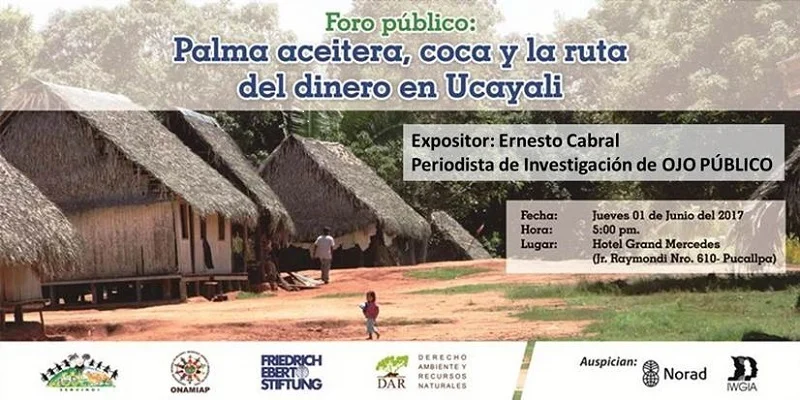
Pucallpa, Peru – May 31, 2017 – The Amazonian region of Ucayali stands at a precarious crossroads. As global demand for commodities intensifies and illicit economies expand, the territorial integrity and environmental stability of this biodiverse region are under unprecedented strain. To address the systemic challenges posed by the expansion of oil palm plantations and the illicit cultivation of coca, a high-level public forum, "Oil Palm, Coca, and the Money Trail in Ucayali," is set to convene on June 1.
The event, hosted at the Grand Mercedes Hotel in Pucallpa, promises to peel back the layers of influence, capital, and environmental degradation that define the current regional crisis. By bringing together investigative journalists, indigenous leaders, and policy experts, the forum aims to map the "money trail"—the complex web of financial interests that often operate in the shadows of the forest canopy.
Main Facts: The Nexus of Industry and Illicit Activity
The forum addresses the dual pressures currently reshaping the Ucayali landscape. On one hand, the rapid expansion of industrial-scale oil palm plantations has been linked to extensive deforestation, land-grabbing, and the displacement of indigenous communities. On the other, the resurgence of coca cultivation introduces a volatile element of illicit finance that further complicates local governance and security.
The core objective of the forum is to dissect how these two disparate but equally destructive forces interact. The discussion will be led by Ernesto Cabral, an investigative journalist from the renowned portal OjoPúblico.pe, known for his rigorous tracking of corporate and illicit financial flows in Peru. His presence signifies a shift toward data-driven journalism in the fight for environmental transparency.
Moderated by Ítalo García of the Network of Indigenous Communicators of Peru (REDCIP-Ucayali), the panel includes experts from prominent organizations:
- Claudia Zúñiga Carrillo (Law, Environment and Natural Resources – DAR)
- Raúl Vásquez Meza (ProPurús)
- Lizardo Cauper (ORAU – Regional Organization of the Interethnic Association for the Development of the Peruvian Rainforest)
Chronology: A History of Exploitation and Resistance
The urgency of this forum is rooted in a decades-long struggle for land rights and ecological preservation.
- 1990s–2000s: The initial push for agro-industrial development in Ucayali began, often lacking the rigorous environmental impact assessments required to protect fragile ecosystems.
- 2010–2015: As oil palm became a primary global commodity, large-scale clearances of primary forest were reported. During this period, numerous indigenous communities began reporting the illegal encroachment of their ancestral territories by palm companies.
- 2016: The rise of coca cultivation in the region saw a significant uptick, coinciding with the retreat of state presence in remote areas, leading to an increase in land-use conflicts.
- May 2017: Preparations for the "Governance, Transparency, and Forest Surveillance" workshop began, identifying the need for local indigenous communicators to be equipped with the tools necessary to monitor forest loss in real-time.
- June 1, 2017: The public forum serves as the opening act for a three-day intensive training workshop, bridging the gap between high-level investigation and grassroots advocacy.
Supporting Data: The Cost of Deforestation
The environmental degradation of Ucayali is not merely a regional concern; it is a global issue with local consequences. According to data monitored by regional NGOs and civil society groups, the conversion of forest into oil palm plantations often bypasses established environmental laws.
- Land Use: Thousands of hectares of primary forest have been cleared, leading to a loss of carbon sequestration capacity.
- Economic Flows: The "money trail" often involves a lack of transparency in corporate ownership, where shell companies are used to obfuscate the real beneficiaries of land clearing.
- Social Impact: Indigenous communities are often the first to experience the negative externalities, including the contamination of water sources due to pesticide runoff from plantations and the loss of traditional hunting and gathering grounds.
The forum will focus on how "Forest Governance" can be achieved through transparency. Without clear titles to land and a mechanism for the public to track who is funding these operations, the cycle of exploitation is likely to accelerate.
Official Responses and Stakeholder Perspectives
The organizing coalition—comprised of the National Organization of Andean and Amazonian Indigenous Women (ONAMIAP), the Friedrich Ebert Foundation, DAR, and Servindi—argues that the state has been largely absent in providing effective oversight.
The Indigenous Perspective
Lizardo Cauper, representing ORAU, has long maintained that indigenous peoples are the best guardians of the forest. "Our struggle is for the recognition of our territories, which are currently threatened by interests that prioritize short-term profit over our survival," Cauper has noted in previous statements. The inclusion of indigenous leaders in this forum is critical, as they provide the ground-truth data that institutional reports often lack.
The Institutional and NGO Response
Organizations like DAR and ProPurús emphasize that the issue is one of "governance." By focusing on the "Governance Forestal" (Forest Governance) project, they aim to equip local actors with the capacity to demand accountability from regional authorities. This involves monitoring government concessions and ensuring that environmental permits are not granted in violation of the rights of indigenous peoples.
Implications: Building a Framework for Vigilance
The implications of this forum extend far beyond a single night in Pucallpa. By linking the training of indigenous communicators with the findings of investigative journalists, the organizers are creating a new, sustainable model for forest monitoring.
1. Strengthening Grassroots Surveillance
The workshop held from June 1 to June 3, supported by international partners such as the Norwegian Agency for Development Cooperation (NORAD), the International Work Group for Indigenous Affairs (IWGIA), and the German Agency for International Cooperation (GIZ), focuses on training. Participants will learn how to use satellite imagery, geospatial tools, and traditional storytelling to report illegal logging and land-grabbing to the public.
2. Improving Financial Transparency
A key goal is to influence policy to ensure that climate funds—meant for conservation—are not diverted or misused. By understanding the "route of the money," local leaders can better advocate for direct funding that empowers indigenous communities rather than reinforcing central bureaucracies.
3. Creating a Regional Dialogue
The forum provides a rare space where the tension between economic development and environmental rights can be debated openly. In a region where activists often face intimidation, the presence of national and international media provides a layer of protection and legitimacy to the conversation.
Conclusion: The Path Forward
As the sun sets over Pucallpa on the evening of June 1, the questions posed by the forum organizers will remain long after the event concludes. Can the power of digital, investigative journalism merge effectively with the ancestral knowledge of the indigenous communities of Ucayali? Can transparency in the "money trail" lead to a shift in how the state regulates agro-industry and the illicit coca trade?
The efforts of the organizations involved, supported by international donors, represent a vital step toward reclaiming the sovereignty of the forest. The challenge for the future lies in whether these initiatives can scale into systemic reform, ensuring that the wealth of the Amazon is preserved not just as a commodity to be sold, but as a living ecosystem essential to the survival of the planet and the dignity of the peoples who call it home.
The coming days of training and discourse in Pucallpa will be closely watched by environmentalists and human rights defenders across the globe. As the Amazon faces its most critical period in history, the ability to track the money, expose the actors, and empower the local guardians of the forest is the only viable path to lasting change.