The development of the Corío Port Terminal in the Arequipa region stands as one of the most ambitious infrastructure endeavors in modern Peruvian history. With an estimated total investment of US$ 844.48 million, this project is designed to transform Southern Peru into a premier global logistics, industrial, and commercial hub. By creating a direct maritime gateway for trade with Brazil, Bolivia, and the booming Asia-Pacific markets, Corío is positioned not merely as a port, but as a holistic development platform intended to reshape the nation’s economic landscape.
Core Facts: A Three-Phase Vision for Connectivity
The Corío project is structured as a phased development strategy, ensuring that infrastructure growth keeps pace with demand and regional integration. At the heart of the initiative is a master plan approved by the National Port Authority (APN) in September 2026.
Phase 1: The Foundation (US$ 651.98 million)
The initial stage focuses on establishing the primary port infrastructure, complemented by the development of an expansive "Logistics City." This surrounding urban and industrial zone will span over 34,000 hectares, designed to host distribution centers, high-capacity storage facilities, modern industrial parks, and value-added processing plants. The primary objective is to create an ecosystem where goods arriving from landlocked regions or neighboring countries can be processed, packaged, and exported efficiently.
Phase 2: Expanding Capacity (US$ 109.25 million)
Following the successful establishment of initial operations, the second phase shifts focus toward specialized capacity. This stage includes the construction of a second berth specifically designed for bulk cargo, enhanced storage solutions, and, crucially, the integration of a rail component to facilitate seamless intermodal transportation to and from the hinterlands.
Phase 3: Specialized Specialization (US$ 83.25 million)
The final stage of the current plan involves the construction of a third specialized berth and the installation of high-tech auxiliary equipment. This phase ensures that the port can handle diverse types of cargo, from minerals and grains to high-value manufactured goods, solidifying Corío’s position as a multipurpose terminal of global standards.
Chronology and Development Timeline
The journey to Corío has been a study in long-term strategic planning. While the concept of a mega-port in Arequipa has been discussed for decades, the project reached a critical turning point in 2026.
- September 2026: The National Port Authority (APN) officially approves the Master Plan for the Corío Port Terminal. This milestone provided the technical legitimacy required to move from theoretical planning to concrete investment promotion.
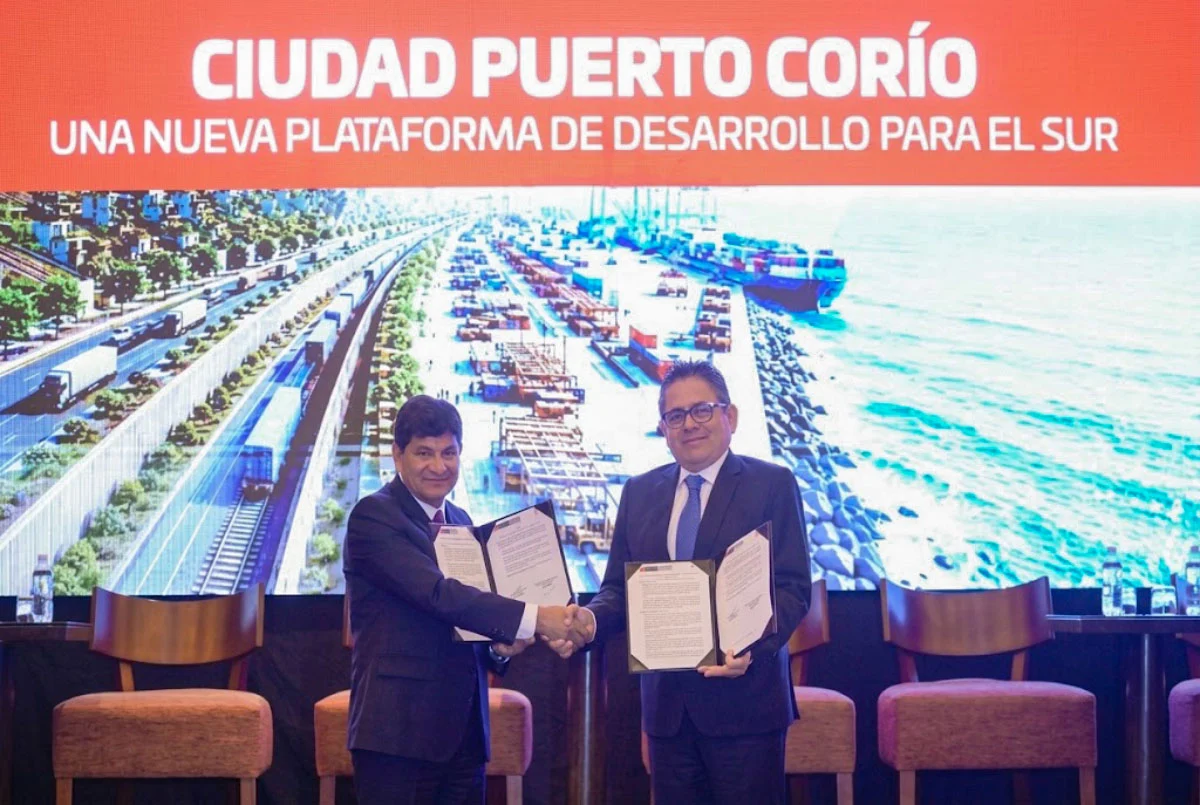
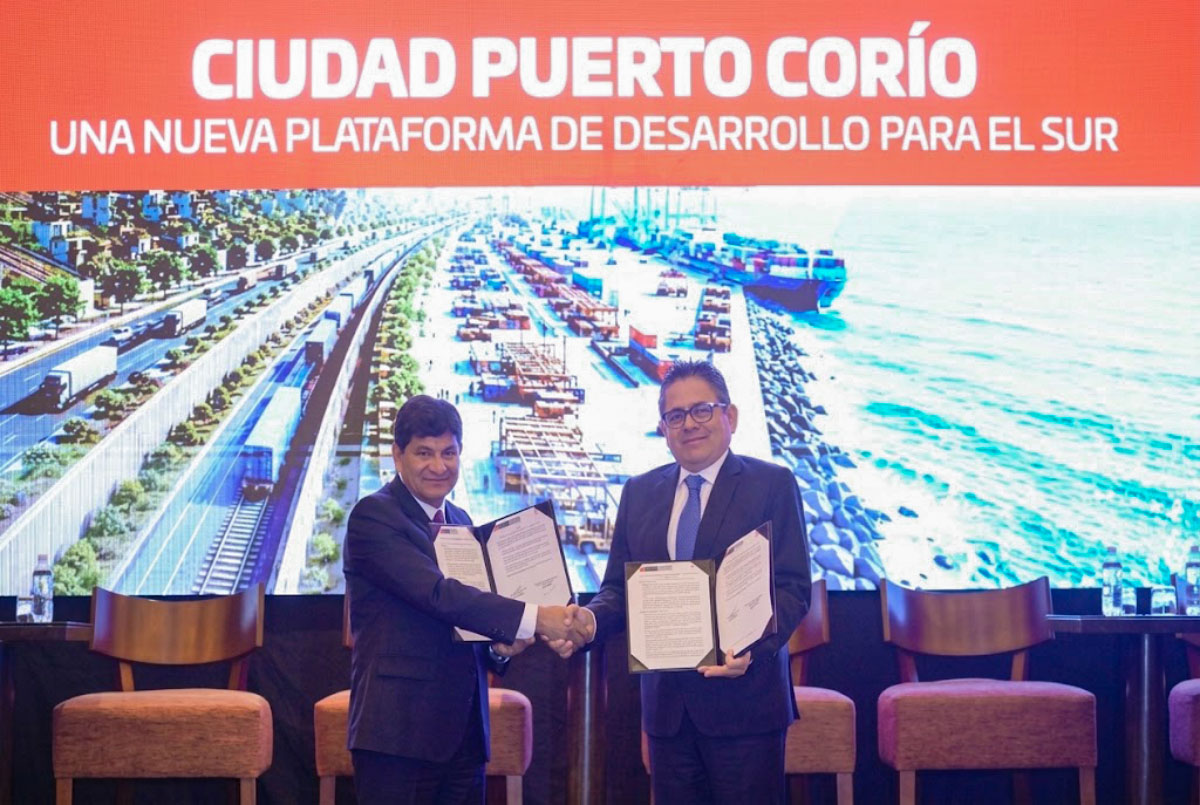
- Late 2026 (Launch Event): ProInversión and the Arequipa Regional Government hosted the seminal event, "Ciudad Puerto Corío: A New Development Platform for the South." This event served as the official public unveiling of the project’s scope and economic potential to potential international and local investors.
- Present Day: Following the formal signing of a Collaboration Agreement between ProInversión and the Regional Government of Arequipa, the focus has shifted toward aggressive marketing, regulatory streamlining, and the search for strategic private-sector partners to execute the first phase of construction.
Supporting Data: Economic Impact and Logistics Projections
The economic projections provided by the Arequipa Regional Government paint a picture of a massive regional transformation. The project is expected to act as a significant driver of employment, with estimates suggesting the creation of over 50,000 direct jobs and approximately 150,000 indirect jobs.
GDP and Industrial Growth
The initial phase of the project is estimated to have an impact equivalent to 1.9% of Peru’s national GDP. Beyond the raw numbers, the project aims to foster technical capacity building, innovation, and knowledge transfer in the region.
Cargo Throughput Projections
The Port’s design as a multipurpose terminal—specializing in clean solid bulk, general cargo, and containers—is supported by robust long-term demand modeling. By the 30th year of operation, experts project that the port could handle up to:
- 932,000 tons of general cargo annually.
- 19 million tons of bulk cargo annually.
These figures underscore the importance of Corío as an alternative to existing congested ports, offering a more efficient route for mining exports from Southern Peru and landlocked trade from Bolivia and Brazil.
Official Responses and Strategic Vision
The leadership behind the project emphasizes that Corío is not an isolated piece of infrastructure, but a central pillar of a broader economic system.
The Perspective of ProInversión
Luis Del Carpio, Executive Director of ProInversión, has been a vocal proponent of the project’s transformative potential. During the official presentation, Del Carpio clarified that while the port is the "door," the true value lies in what is built behind it.
"The real dimension of Corío will be, beyond the port, the investment in industry, employment, and economic activity that we are capable of generating," Del Carpio stated. "We want to stop looking at each project as an island and start building economic systems. Thinking big does not mean improvising; it means having a grand vision and executing it technically, step by step."
The Regional Commitment
Rohel Sánchez, Governor of Arequipa, alongside Richard Ale Cruz, Mayor of the Islay Province, have highlighted the importance of the public-private partnership (PPP) model. The recently signed Interinstitutional Collaboration Agreement is designed to position Corío as a high-priority strategic zone for both national and foreign capital. By creating a unified front between regional authorities and the national investment agency, the project aims to minimize bureaucratic hurdles and provide a clear, transparent roadmap for investors.
Implications for Global Trade and Regional Integration
The implications of the Corío project extend far beyond the borders of Arequipa or even Peru. As global supply chains shift, the need for deep-water ports capable of handling large-scale vessels is critical.
Strengthening the Southern Corridor
Corío is the missing link in the Southern Economic Corridor. By integrating port operations with existing road and future rail networks, the project will drastically reduce logistics costs for regional producers. This integration is essential for small- and medium-sized enterprises (SMEs) that previously struggled to connect with international markets due to high transportation costs and complex supply chain logistics.
Connectivity with Brazil and Bolivia
One of the most ambitious goals of the Corío project is to serve as an outlet for the trade of neighboring landlocked nations. Bolivia, in particular, stands to gain significantly from an efficient port on the Pacific, which would shorten export routes to Asia. Similarly, Brazilian producers in the western part of the country could benefit from the "bi-oceanic" corridor, where Corío serves as the Pacific anchor for goods coming from the Atlantic or the South American interior.
A Model for Sustainable Development
The "Logistics City" concept is perhaps the most forward-thinking aspect of the proposal. By designating 34,000 hectares for industrial use, the region is planning for long-term growth rather than just temporary construction. This allows for the development of "value-added" industries—meaning that rather than exporting raw materials, the region can focus on manufacturing and refining, effectively moving up the global value chain.
Conclusion: Turning Opportunity into Reality
The Corío Port Terminal represents a bold, systematic approach to economic development. By moving away from fragmented infrastructure projects and toward the creation of a comprehensive, integrated logistics platform, Peru is laying the groundwork for a new era of competitiveness.
As ProInversión moves to the next stage of implementation, the focus will remain on securing the necessary capital and ensuring that the project adheres to the highest international standards of efficiency and sustainability. With the backing of the Arequipa Regional Government and the strategic coordination of national agencies, Corío is well-positioned to become the backbone of the Southern Peruvian economy, bridging the gap between local production and the global marketplace.
The task ahead is significant: converting the project’s vision into tangible infrastructure and translating that infrastructure into lasting prosperity for the people of the region. However, if the initial planning and the enthusiasm from the public and private sectors are any indication, Corío is on its way to becoming a landmark achievement in the nation’s history.