Panama City, Panama – A powerful and alarming seismic event struck the Republic of Panama this Friday, October 9, sending shockwaves across the nation. At precisely 12:56 p.m. local time, the earth ruptured with a magnitude of 8.0, according to data provided by the Institute of Geosciences (IGC) at the University of Panama. The event, which has triggered widespread concern among residents and authorities alike, was centered in the province of Los Santos, an area that is now the focal point of emergency response efforts.
Main Facts: The Anatomy of the Seismic Event
The earthquake originated at a shallow depth of only 5 kilometers, a factor that significantly exacerbated the intensity of the shaking felt at the surface. Shallow-focus earthquakes are notoriously more destructive than their deep-seated counterparts, as the seismic energy has less distance to travel before reaching the crust’s surface where infrastructure and population centers are located.
According to the official report from the Institute of Geosciences, the epicenter was located approximately 42 kilometers northwest of Tonosí, in the province of Los Santos. The geographical coordinates were fixed at 7.59470 latitude north and 80.77110 longitude west. The sheer magnitude of 8.0 places this event in the "major" category on the moment magnitude scale, capable of causing significant structural damage over large areas.
Chronology of the Crisis
The unfolding of the event followed a rapid sequence of alerts and reactions:
- 12:56 p.m.: The initial rupture occurred. Within seconds, the seismic waves radiated outward from the Tonosí region, impacting the Los Santos province and rippling toward neighboring provinces, including Herrera and Veraguas.
- 1:05 p.m.: The Institute of Geosciences confirmed the magnitude of 8.0 and the shallow 5-km depth. The data was immediately relayed to the National Civil Protection System (SINAPROC).
- 1:15 p.m.: Social media platforms and local news outlets began flooding with reports of structural swaying, broken windows, and panic in urban centers as far away as Panama City.
- 1:30 p.m.: SINAPROC issued a formal state of alert, urging residents in coastal regions to move to higher ground as a precautionary measure against potential tsunami surges.
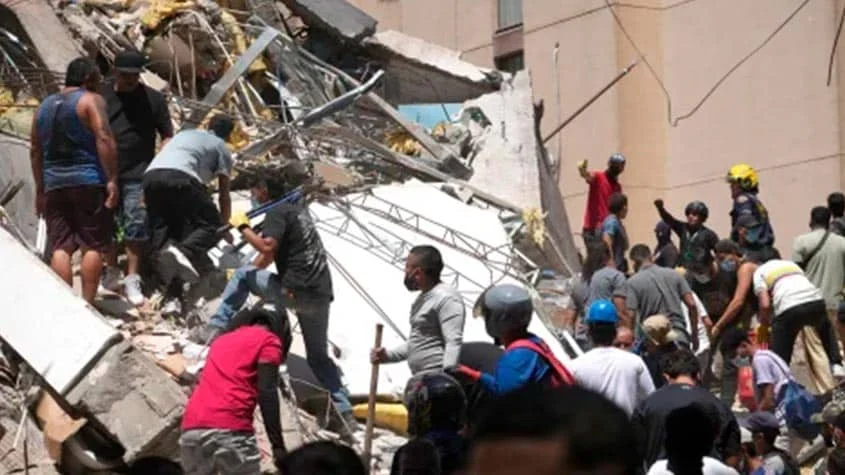
- 2:00 p.m. onwards: Emergency response teams, including the National Police, fire departments, and medical units, were mobilized to the Los Santos region to conduct initial damage assessments and search-and-rescue operations.
Supporting Data: Understanding the Geological Context
Panama sits in a complex tectonic setting. The country is influenced by the interaction between the Nazca Plate, the Cocos Plate, and the Caribbean Plate, along with the Panama Microplate. This convergence zone is known for historical seismic activity; however, a magnitude 8.0 event is a rare and significant occurrence that tests the resilience of the nation’s infrastructure.
Seismologists emphasize that the combination of high magnitude and shallow depth is the most dangerous scenario for architectural integrity. Structures not built to modern, stringent earthquake-resistant codes are particularly vulnerable. The Los Santos province, characterized by a mix of rural infrastructure and growing coastal settlements, faces unique challenges in the aftermath of such a high-intensity tremor.

Official Responses and Civil Protection Efforts
In the immediate aftermath, the National Civil Protection System (SINAPROC) assumed command of the emergency response. Directorates across the country were placed on "Red Alert," the highest level of emergency classification in Panama.
"Our priority at this stage is the preservation of human life and the rapid assessment of critical infrastructure," stated a spokesperson for the national emergency agency. SINAPROC has directed the following mandates to the public:
- Avoid Damaged Structures: Citizens are strictly warned not to enter buildings that show visible cracks or signs of structural compromise.
- Coastal Evacuation: While a formal tsunami warning was not immediately confirmed, the government mandated a move to high ground for coastal communities to mitigate the risk of sudden oceanic shifts.
- Communication Lines: Authorities requested that the public keep cellular networks clear for emergency services, relying instead on official radio broadcasts for updates.
Government engineers and technical squads are currently deploying across the epicenter zone. Their task is to conduct rapid safety inspections on bridges, highways, and public utilities. Any compromise to these arteries could hamper the delivery of emergency medical supplies and food to the most affected areas in Los Santos.
Implications for Infrastructure and Public Safety
The magnitude of this earthquake poses severe long-term implications for the nation’s construction and disaster management policies.
The Resilience of Urban Infrastructure
While Panama City boasts modern skyscrapers designed with advanced seismic dampers and steel-reinforced concrete, the rural sectors of Los Santos often feature traditional residential structures that may not meet the same rigorous standards. The government will likely initiate a comprehensive audit of all public buildings—schools, hospitals, and administrative centers—to determine the extent of the impact.
Economic and Logistical Disruptions
The agricultural heartland of Los Santos plays a vital role in Panama’s domestic economy. A disaster of this scale threatens the supply chain, as road connectivity is essential for the transport of agricultural goods. Furthermore, the disruption of electricity and water services in the immediate aftermath of the 8.0 quake could result in significant economic losses for local businesses and farmers.

Psychological Impact and Community Preparedness
Events of this magnitude leave a lasting psychological scar on the population. The widespread nature of the shaking, which was felt across large swaths of the country, has reminded citizens of the constant, underlying risk of living in a geologically active zone. In the coming weeks, it is expected that the Ministry of Education and local municipalities will ramp up disaster preparedness drills and public awareness campaigns.
Looking Ahead: The Threat of Aftershocks
The scientific community is currently monitoring the epicenter with high-precision sensors to track the occurrence of aftershocks. It is a well-documented geological phenomenon that a magnitude 8.0 earthquake is almost always followed by a sequence of smaller tremors as the tectonic plates settle into a new equilibrium.
These aftershocks, while typically smaller in magnitude, can be devastating to structures already weakened by the primary event. Authorities have warned the public that the danger has not yet passed and that vigilance is required for the next several days.
"We are in the phase of immediate response, but the recovery phase will be a long process," noted an expert from the University of Panama. "The focus must remain on the structural integrity of homes and the psychological support for those affected by the terror of the shaking."
As the sun sets on this Friday, October 9, the nation remains in a state of suspended animation. The full extent of the damage is still being calculated, and the brave men and women of the emergency services continue their tireless work in the field. For the people of Los Santos and all of Panama, the focus remains on resilience, recovery, and the hope that the worst of this seismic crisis has indeed passed.
Further updates will be provided as official damage reports are synthesized by the national government. For now, the message remains clear: stay alert, follow official guidance, and prioritize safety above all else.