By Political Correspondent
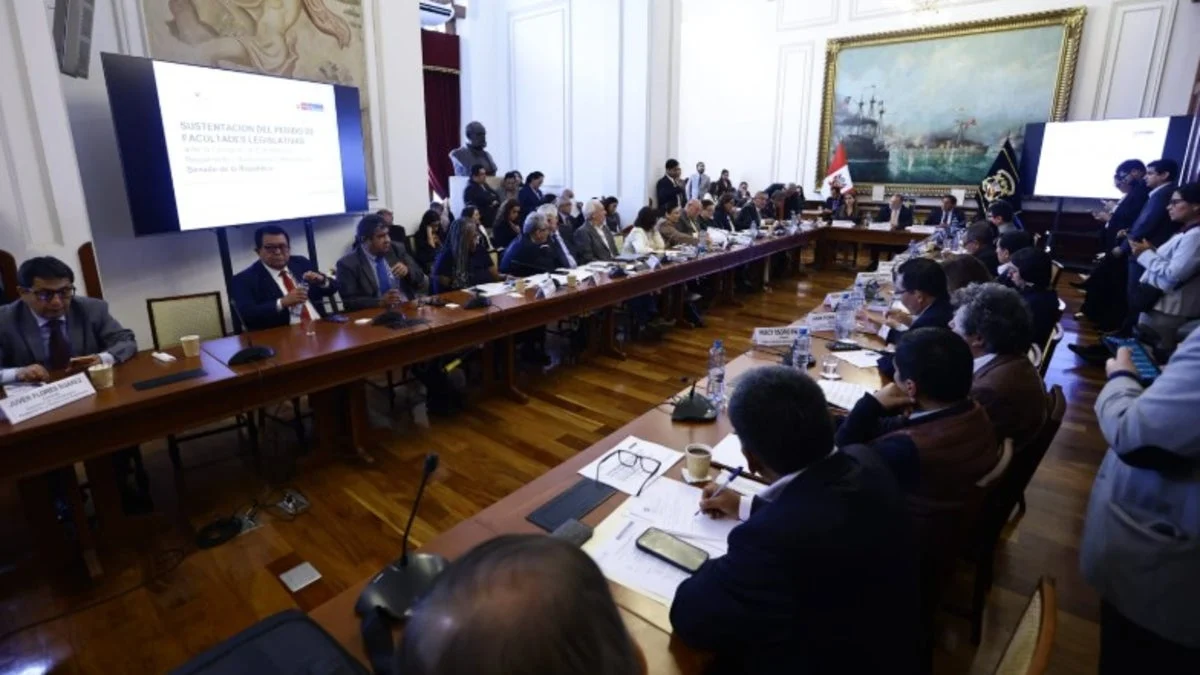
The legislative corridors of the Palacio Legislativo are bracing for a high-stakes Saturday morning as the Senate’s Constitution Commission prepares to reconvene at 10:00 a.m. This session, following an abrupt suspension on Friday, centers on one of the most contentious policy issues of the current administration: the Executive’s request for the delegation of legislative powers. The outcome of these deliberations will determine the government’s capacity to enact rapid, decree-based reforms concerning national security and mitigation strategies for the looming El Niño phenomenon.
Main Facts: The Scope of the Executive’s Request
At the heart of the current political friction is a comprehensive proposal submitted by the Executive branch, seeking authorization to legislate by decree on a wide array of issues. The proposal, which has been under intense scrutiny, comprises 20 distinct points distributed across six core areas of governance.
The urgency behind this request is rooted in two critical areas:
- National Security: The government argues that the current climate of crime and civil unrest requires a streamlined legislative process, bypassing the often-lengthy traditional parliamentary debate to implement urgent security protocols.
- El Niño Phenomenon: With meteorological reports warning of severe climate impacts, the Executive maintains that it needs the flexibility to allocate resources, authorize infrastructure repairs, and establish emergency relief programs without the delay of standard legislative procedures.
However, the opposition in the Senate argues that such a broad request constitutes an abdication of the legislature’s primary oversight duties. The debate is not merely about the topics themselves, but about the balance of power between the executive and legislative branches of government.
Chronology: A Tense Path to Saturday’s Session
The road to this weekend’s session has been marked by procedural delays and political maneuvering.
Friday, October 9:
The session commenced at 10:00 a.m. with high expectations for a productive dialogue. Prime Minister Luis Galarreta led the Executive’s presentation, flanked by Minister of Production, Juan Carlos Requejo, and Minister of Agricultural Development and Irrigation, Marco Vinelli. These three officials were tasked with defending the technical necessity of the requested powers.
However, the day proved unproductive in terms of reaching a consensus. Only three of the six ministers invited to defend the request appeared, leading to significant frustration among opposition senators. By the late afternoon, with no clear path to a vote, the session was suspended, much to the dismay of several commission members who had hoped to finalize the debate before the weekend.
Saturday, October 10:
The Commission is scheduled to reconvene in the Sala Miguel Grau of the Palacio Legislativo. The primary objective is to complete the interrogation of the cabinet members and move toward a definitive vote on the delegation of powers.
Official Responses and Political Friction
The suspension of Friday’s session has ignited a war of words between the government’s supporters and the opposition bloc.
The View from the Opposition
Senator Ruth Luque, representing the "Ahora Nación" bench, has been one of the most vocal critics of the current process. Speaking to the press following Friday’s suspension, Luque did not mince words regarding what she perceives as a tactical delay by the governing party.
"They are attempting to present a new text at the commission level," Luque stated. "They are fully aware that within the commission, they hold a structural advantage. In a worst-case scenario, the President of the Constitution Commission has the tie-breaking vote, which is precisely why they are pushing for this to be resolved here rather than in the plenary."
Luque’s critique highlights a common fear among opposition members: that the government is trying to circumvent the broader, more transparent debate of the full Senate floor by securing "easier" passage through the smaller, committee-controlled environment.
The Perspective of the Commission Chair
Carlos Mesía, President of the Constitution Commission, has maintained a more measured, procedural tone. Addressing the media, Mesía emphasized that the request for powers is not a blank check but a legislative instrument that must be rigorously vetted.
"We are evaluating the request within the framework of what is constitutionally permissible," Mesía noted. He clarified that the commission maintains the right to modify, restrict, or incorporate changes to the government’s proposal, ensuring that any delegation of power remains strictly within the bounds of the 20-point agenda presented by the Executive. "The goal is not to block progress, but to ensure that the legislative process remains robust and accountable," he added.
Supporting Data: Why the Delegation Matters
To understand why this debate has become a focal point of the current legislative session, one must look at the technical arguments presented by the Ministers on Friday.
- Agricultural Resilience: Minister Marco Vinelli argued that the El Niño phenomenon threatens the food security of the nation. Without immediate legislative power to authorize emergency irrigation projects and provide subsidies for farmers impacted by climate shifts, the agricultural sector could face a catastrophic contraction.
- Production and Supply Chains: Minister Juan Carlos Requejo emphasized that the delegation of powers would allow the Ministry of Production to stabilize industrial supply chains, which are currently vulnerable to the logistical disruptions predicted to accompany the upcoming weather events.
These arguments underscore the administration’s narrative: that the bureaucracy of the legislative process is a luxury the country cannot afford in the face of an impending climate crisis and an escalating security threat.
Implications for the Future of Governance
The outcome of the debate on Saturday will have long-term implications for the administration of the country.
1. The Precedent of Executive Power
If the Commission approves the delegation of powers, it sets a precedent that the government can bypass the standard legislative cycle in times of "crisis." Critics worry this could lead to an erosion of democratic checks and balances, as the definition of "crisis" is often subjective and politically malleable.
2. The Relationship Between Branches
The tension between Prime Minister Luis Galarreta and the opposition in the Senate reflects a broader breakdown in communication between the Executive and Legislative branches. Should the vote fail or be further delayed, the administration may find itself forced to negotiate a more restrictive bill, potentially stalling its policy agenda for the remainder of the year.
3. Public Perception and Accountability
For the average citizen, this debate might seem like political theater, yet the implications are direct. If the government fails to receive the power to act, and disaster strikes via El Niño or an increase in crime, the administration will likely blame the "obstructionist" Congress. Conversely, if they receive the powers and fail to produce results, the political fallout will be entirely on the shoulders of the President and his cabinet.
Conclusion: A Critical Weekend Ahead
As the sun rises over the Palacio Legislativo this Saturday, the atmosphere is one of intense preparation. The members of the Constitution Commission face a binary choice: they can either grant the Executive the tools they claim are necessary for public safety and disaster management, or they can maintain the traditional legislative barrier, insisting that every decree be subject to full parliamentary scrutiny.
The presence of the ministers who missed Friday’s session will be a litmus test for the government’s commitment to transparency. If they appear and answer the tough questions posed by senators like Ruth Luque, the administration may gain the political capital needed to push the bill through. If they remain absent or appear evasive, the opposition is likely to dig in its heels, potentially leading to a constitutional impasse.
For now, the country watches the Palacio Legislativo. The 10:00 a.m. session is more than just a committee meeting; it is a fundamental debate on the nature of authority in a modern democracy. The decisions made in the Sala Miguel Grau this weekend will reverberate throughout the legislative session, defining the trajectory of the government’s response to the challenges of the coming year. Whether the result is a compromise or a confrontation, the eyes of the nation are fixed on the Constitution Commission as it navigates this complex and consequential legislative challenge.