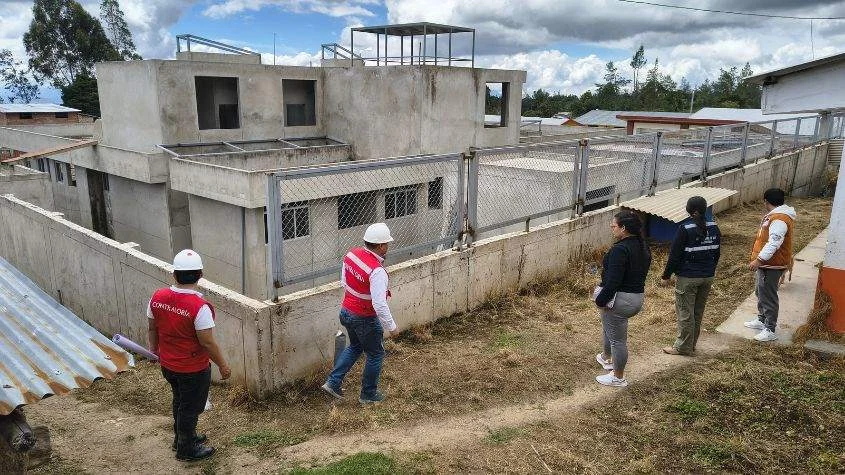
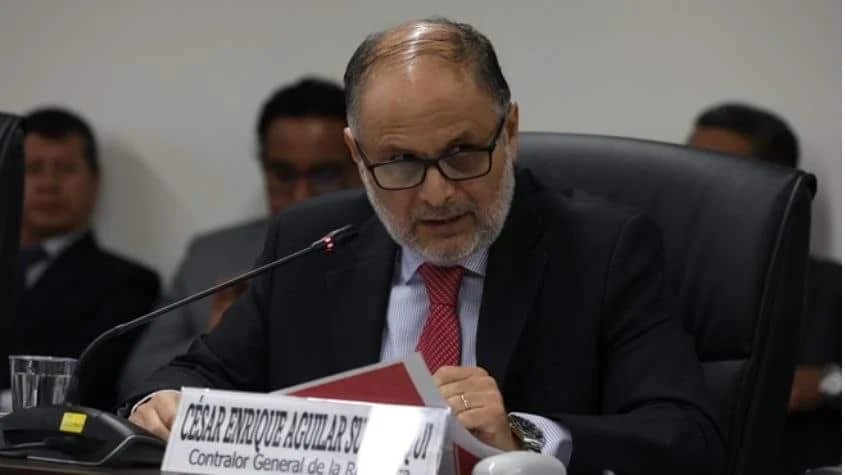
In a significant update regarding the state of national infrastructure, Comptroller General César Aguilar Surichaqui has unveiled a robust strategy that is successfully breathing new life into stalled construction projects across Peru. According to recent testimony provided to the Congress of the Republic’s Commission on State Management and Comptroller Affairs, the proactive intervention of the Office of the Comptroller General has successfully reactivated 94 major public works. This milestone, achieved as of June 30, 2026, represents an investment of S/ 3.9 billion and promises to directly benefit approximately 4.9 million citizens across 18 regions.
This initiative marks a shift in how the state manages its capital projects. By leveraging preventive control mechanisms, the Contraloría is moving away from purely reactive audits—which often only identify corruption after the damage is done—toward a model that prioritizes the continuity of essential services for the population.
The Chronology of Recovery: A Path Toward Efficiency
The current success story did not happen overnight. It is the result of a deliberate policy shift initiated in the middle of 2025. On July 11, 2025, the Contraloría issued its first formal preventive control report specifically designed to address the backlog of abandoned or stagnant construction sites.
Since that inaugural report, the Comptroller’s office has utilized a systematic approach to identify bottlenecks, ranging from administrative disputes and legal hurdles to financing gaps. By intervening early, the agency has enabled municipalities and regional governments to resolve disputes, renegotiate contracts, and, in many cases, restart work that had been dormant for years.
The timeline of these interventions reflects a steady acceleration in administrative capacity. Throughout the second half of 2025 and the first two quarters of 2026, the cumulative impact of these preventive actions has grown, turning what was once a landscape of "ghost projects"—monuments to inefficiency—into active construction sites that serve as engines for regional economic development.

Regional Distribution: A Geographic Overview of Progress
While the initiative is national in scope, the impact has been felt most acutely in specific regions where project abandonment had historically been a significant deterrent to economic growth.
- Arequipa leads the nation in successful reactivations, with 24 projects currently back on track. Among these, the "Improvement and Expansion of Health Services at the Maritza Campos Díaz Health Center," valued at S/ 337.4 million, stands as a flagship project. Furthermore, the "Improvement of Health Services at the Camaná Hospital," with an investment of S/ 197.5 million, is expected to transform the regional healthcare landscape.
- Cusco follows with nine reactivated projects, reflecting a critical effort to improve public infrastructure in the Andean highlands.
- Ancash has seen eight projects resumed, most notably the modernization of the Santa Rosa de Viterbo educational institution, a project valued at S/ 112.9 million that aims to provide modern facilities for thousands of students.
- Lima and Puno have recorded seven and six reactivations respectively, further cementing the reach of the Comptroller’s preventive mandate.
This geographical spread confirms that the issues surrounding public works—bureaucratic inertia, poor planning, and legal complications—are systemic rather than isolated, and the Contraloría’s strategy is designed to tackle these challenges regardless of the administrative jurisdiction.
Supporting Data: The Magnitude of Oversight
The scale of the Contraloría’s operations in 2026 is unprecedented. Comptroller Aguilar reported that between January and August 2026, the office issued a staggering 25,236 control reports. This data set is categorized into three primary types of oversight:
- Preventive Control (717 reports): The proactive arm that focuses on stopping potential issues before they translate into stalled works or squandered budgets.
- Simultaneous Control (18,465 reports): A massive effort to monitor ongoing works to ensure that safety, quality, and budgetary standards are met during the execution phase.
- Posterior Control (6,054 reports): The investigative arm, which evaluates completed actions and assesses whether public funds were handled according to the law.
The data for 2025 provides a point of comparison that highlights the intensification of these efforts. During the 2025 fiscal year, the office executed 44,683 control services. These audits were instrumental in detecting a total economic loss of S/ 763 million due to mismanagement and irregularities. Perhaps most significantly, these investigations resulted in the identification of 6,213 public officials implicated in irregular activities, a figure that underscores the agency’s commitment to accountability.
Accountability and the Fight Against Corruption
The Comptroller’s report does not merely focus on construction; it places a heavy emphasis on the legal consequences for those who mismanage the public trust. The 6,054 posterior control reports issued in the first eight months of 2026 alone have led to the identification of administrative, civil, and criminal liability for 2,344 public officials.

This aggressive pursuit of accountability is a central component of the Contraloría’s philosophy. By creating a climate where corruption carries a high probability of detection and subsequent legal action, the agency aims to deter the systemic irregularities that have historically plagued public works in Peru. The message from Comptroller Aguilar is clear: the reactivation of public works must be accompanied by a rigorous adherence to the rule of law.
The Implications for the Peruvian Economy and Society
The implications of this policy shift are profound for both the Peruvian economy and the daily lives of its citizens.
Economic Impact: The S/ 3.9 billion currently being injected back into the construction sector acts as a stimulus for local economies. Construction is a labor-intensive industry with significant multiplier effects; when these projects move forward, they create direct jobs, stimulate demand for building materials, and improve the infrastructure necessary for broader commercial activity.
Social Impact: The 4.9 million citizens who will eventually benefit from these projects represent the core mission of the Contraloría. These are not merely economic statistics; they are families who will gain access to improved hospitals, safer schools, and better transportation corridors. The completion of the Trujillo-Huanchaco road corridor, for instance, illustrates how public-private partnerships, such as "Obras por Impuestos" (Works for Taxes), can be leveraged to resolve contract disputes and finish essential connectivity projects that would otherwise remain in limbo.
Institutional Impact: Finally, the success of the preventive control model reinforces the institutional legitimacy of the Contraloría. By shifting the focus from "punishment after failure" to "guiding toward success," the agency is becoming a collaborative partner in development, rather than just a watchdog. This transition is essential for building public trust, which has often been eroded by the perception that public infrastructure in Peru is synonymous with delay and corruption.

Looking Forward: Sustaining the Momentum
As Peru moves into the final quarter of 2026, the challenge for the Contraloría will be to maintain this pace of intervention while ensuring that the quality of work is not sacrificed for speed. The sheer volume of 25,236 control reports issued in just eight months suggests that the agency is operating at high capacity.
However, the path forward remains complex. The political landscape in Peru often involves shifting priorities at the municipal and regional levels, which can introduce new variables into the stability of these projects. The Contraloría’s role will continue to be that of a stabilizer—a consistent force that keeps the technical and legal requirements of public works in the foreground, regardless of the political cycle.
In conclusion, the report presented by César Aguilar Surichaqui paints a picture of a nation undergoing a transition. Through a combination of rigorous preventive oversight, a commitment to accountability, and a focus on the tangible needs of the population, the Contraloría is successfully transforming the narrative of stalled public infrastructure into one of national recovery and progress. With 94 projects back on track and millions of lives set to be improved, the strategy serves as a blueprint for how state institutions can work effectively to serve the public interest in a challenging environment.