In a landmark move aimed at transforming Colombia’s maritime logistics landscape, the national government has introduced a comprehensive decree to modernize the country’s port concession regime. The policy, championed by President Abelardo de la Espriella and Minister of Transport Elsa Noguera, seeks to unlock billions in private investment, harmonize multi-modal transport networks, and position Colombia as a premier logistics hub in the Latin American region.
1. Main Facts: A New Era for Colombian Infrastructure
The core of the government’s new policy is the modernization of the regulatory framework governing port concessions. By addressing long-standing hurdles in the contracting process, the administration aims to revitalize the nation’s gateway terminals.
The centerpiece of this legislative shift is the introduction of flexible investment windows. Historically, port operators were restricted from proposing significant capital expenditures toward the end of their concession cycles due to the inability to amortize those costs before the contract expired. The new decree effectively removes this bottleneck. It allows concessionaires to propose strategic investments even within five years or less of their contract termination. If the investment cannot be fully recovered within the remaining term, the state will now have a clear mechanism to evaluate and recognize the "residual value" of those assets.
Furthermore, the government has mandated the creation of a "Unified Registry of Port Concessions." This digital-first initiative is designed to streamline administrative bureaucracy, increase transparency, and provide real-time tracking of operational performance and regulatory compliance across all national terminals.
2. Chronology: The Path to Regulatory Reform
The road to this decree has been paved by years of industry dialogue and an urgent need to address the "logistics tax" that has historically hampered Colombian exports.
- Phase I: Identifying the Bottleneck (2023–2024): Preliminary reports from the Ministry of Transport indicated that port capacity was nearing a ceiling, with aging infrastructure failing to keep pace with the digitalization and decarbonization trends seen in global trade.
- Phase II: Stakeholder Consultations (Early 2025): The government initiated a series of "roundtable dialogues" with the Maritime and Port Association (Asoportuaria) and regional port authorities. The primary feedback was a demand for "juridical certainty"—a stable legal environment that would allow long-term capital allocation without fear of sudden regulatory shifts.
- Phase III: The Draft Proposal (Mid-2025): Minister Elsa Noguera spearheaded the drafting of the technical requirements, focusing on the integration of port, rail, and fluvial networks.
- Phase IV: Official Presentation (October 2026): President Abelardo de la Espriella officially signed the decree, signaling a national commitment to infrastructure as a primary driver of GDP growth for the coming decade.
3. Supporting Data: The Logistics Imperative
Colombia’s reliance on maritime trade is absolute, with over 90% of its international commerce moving through its port system. However, infrastructure constraints have long inflated the cost of goods.
According to recent economic assessments:

- Intermodal Efficiency: The new policy emphasizes the "seamless connection" between ports and the hinterland. By incentivizing rail and fluvial connectivity, the government aims to reduce internal transport costs by an estimated 15–20% over the next five years.
- Sustainability Metrics: The decree earmarks specific investment quotas for "Green Ports." This includes mandatory electrification of gantry cranes and terminal equipment, the adoption of shore-power systems for vessels, and the use of low-emission fuels.
- Growth Projections: Experts suggest that the security provided by the residual value mechanism could trigger an immediate surge in infrastructure investment projects valued at over $1.5 billion within the next 24 months, particularly in the deep-water ports of the Caribbean and the Pacific.
4. Official Responses: Industry Leaders Weigh In
The response from the private sector has been overwhelmingly positive, reflecting a consensus that the current framework was outdated and incompatible with the demands of modern global supply chains.
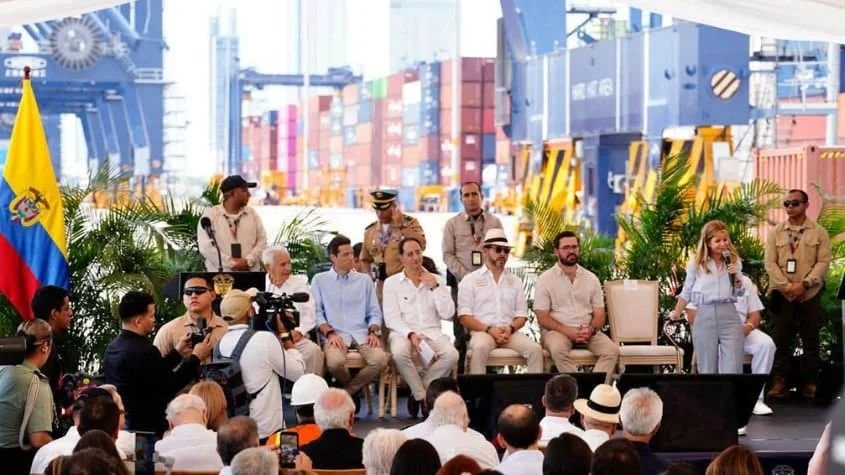
Liborio Cuéllar, General Manager of the Regional Port Society of Buenaventura (SPRB), emphasized the national urgency of the move. During the signing ceremony, Cuéllar remarked, "This is a pivotal moment for our national competitiveness. Our terminals are the lungs through which the country’s economy breathes. This decree is not just about Buenaventura; it is about the entire regional ecosystem and the country’s long-term prosperity. We are finally aligning our regulatory framework with the reality of international demand."
Manuel Buitrago, President of the Regional Port Society of Barranquilla, focused on the aspect of legal stability. "For years, we have been cautious about major expansions due to the uncertainty surrounding the end-of-concession periods. This decree provides the necessary juridical security to continue investing in technology and infrastructure. It allows us to plan for the next twenty years, rather than just the next five."
5. Implications: A Strategic Shift in Strategy
The implications of this decree extend far beyond the docks. By mandating the modernization of terminal infrastructure, the Colombian government is effectively forcing a transformation in the nation’s logistics sector.
A. Reducing the Logistics Tax
By focusing on the integration of road, rail, and fluvial transport, the decree addresses the high costs associated with inland logistics. If a port can offload a container directly onto a river barge or a train, the cost per ton drops significantly, making Colombian exports—such as coffee, flowers, and manufactured goods—more competitive in European and Asian markets.
B. Decarbonization and ESG Standards
The requirement for investments in energy efficiency and biodiversity protection is a bold step toward sustainable development. As international shipping lines face mounting pressure to reduce their carbon footprints, Colombian ports that offer "green" services—such as renewable energy for docked ships—will gain a distinct advantage in attracting global shipping alliances.
C. Strengthening Regional Integration
The decree serves as a catalyst for regional development. By facilitating the expansion of ports, the government is creating jobs and fostering auxiliary industries in port cities. This is particularly vital for coastal regions that have historically struggled with high unemployment rates despite their strategic locations.

D. A Blueprint for the Future
This decree sets a precedent for how public-private partnerships should function in emerging economies. By acknowledging the state’s role in protecting private capital (via the residual value mechanism) while simultaneously enforcing public goals (via the unified registry and environmental standards), the administration has created a balanced framework that encourages investment while safeguarding the public interest.
Conclusion: The Road Ahead
The modernization of the Colombian port system is more than a technical upgrade; it is a strategic repositioning of the nation within the global economy. As the global supply chain continues to evolve, Colombia is ensuring that its infrastructure is not an obstacle to growth, but a facilitator of it.
With the new decree in place, the Ministry of Transport expects to see a surge in project proposals starting in early 2027. The success of this policy will ultimately be measured by the speed at which these investments hit the ground and the subsequent reduction in transit times and costs for the Colombian exporter.
As President de la Espriella noted during the presentation, "A country that does not modernize its gateways is a country that chooses to remain isolated from the world. Today, Colombia chooses to lead."
For investors, port operators, and the logistics industry at large, the message is clear: the doors are open, the regulations are modern, and the future of Colombian infrastructure is set for a period of rapid, sustainable, and highly competitive growth.