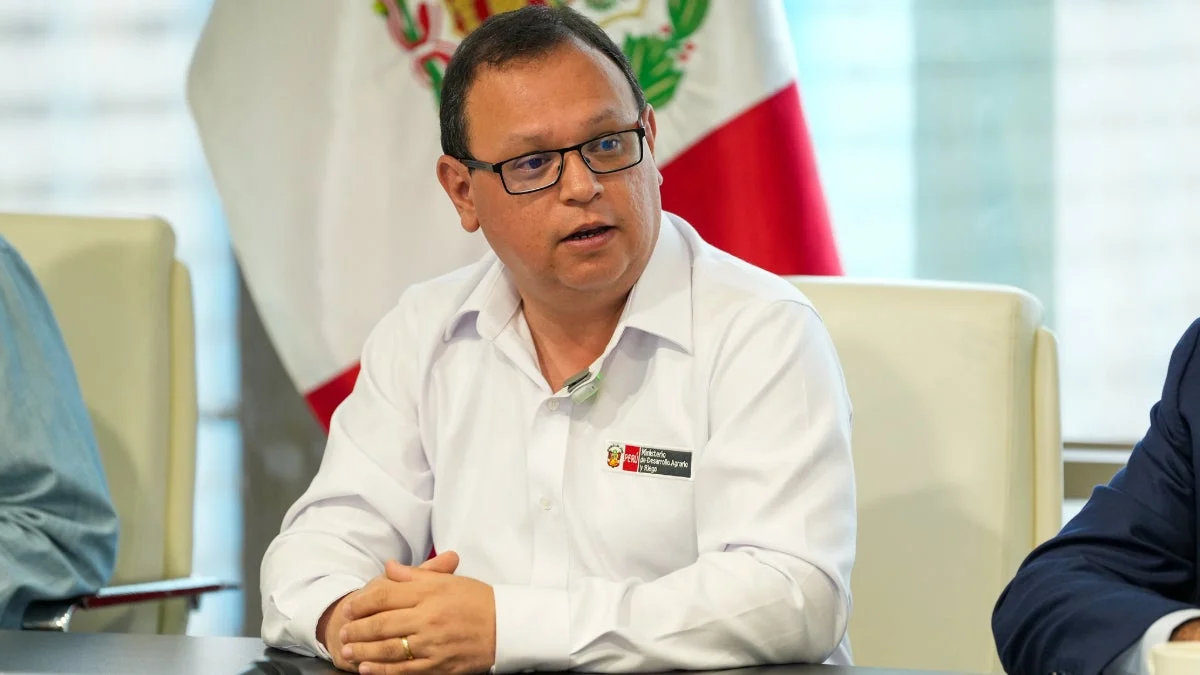
In a high-stakes political standoff, the Minister of Agrarian Development and Irrigation (Midagri), Marco Vinelli, has publicly questioned the legislative agenda of the Peruvian Congress. During an official visit to the Ichuña district in the Moquegua region, the minister voiced strong concerns regarding what he characterized as a premature and disruptive push by certain parliamentary factions to interpelate and censure cabinet members, specifically citing the cases of Interior Minister César Astudillo and Education Minister José Antonio Chang.
The Minister’s remarks come at a critical juncture for the administration, which is currently seeking the approval of 66 legislative powers to tackle urgent national issues, including rising criminality and the looming threat of an "extraordinary" El Niño phenomenon.
The Core Conflict: Legislative Oversight vs. Administrative Urgency
The tension centers on the competing priorities of the Executive and Legislative branches. While Minister Vinelli acknowledged the constitutional prerogative of the Congress to exercise oversight through interpellation and censure, he argued that the current timing is counterproductive to the nation’s urgent needs.
"We have been working 24/7 since July 28, as instructed by the President," Vinelli stated in an interview with RPP. "I believe there is an undue haste regarding these censure and interpellation motions being put forward by the members of Congress. I would urge them to prioritize the approval of the delegated powers we have requested, because I believe the country is waiting for that much more than what they are currently attempting to do."
The minister’s message is clear: the administration views the political maneuvering in the Chamber of Deputies as a distraction from the structural reforms and emergency measures required to manage the country’s most pressing vulnerabilities.
Chronology of Escalating Political Friction
The current situation is not an isolated event but rather the culmination of weeks of mounting pressure within the legislative halls:
- July 28: The current administration takes office, setting an ambitious agenda for national recovery and crisis preparedness.
- Early September: The Executive branch formally submits a request for 66 legislative powers, citing the need for "agile" governance to combat crime and manage natural disaster risks.
- Mid-September: Several opposition benches announce the filing of motions to summon Interior Minister César Astudillo and Education Minister José Antonio Chang to the floor for questioning.
- September 27: During a regional infrastructure delivery in Moquegua—where Minister Vinelli inaugurated eight reservoirs and two cochas—the minister issues his strongest rebuke yet, calling for a "ceasefire" on political questioning to allow for legislative progress.
Supporting Data: Why the 66 Powers Matter
The administration’s argument rests on the technical necessity of the requested powers. According to the Ministry, the legislative package is not merely an attempt to bypass traditional debate, but a tactical requirement for a swift state response.
Tackling Criminality
The proposed legislative powers include measures designed to strengthen the operational capacity of law enforcement. By granting the Executive the authority to enact specific reforms without the delay of a full legislative cycle for every minor adjustment, the government aims to close legal loopholes that currently allow criminal organizations to operate with impunity.
Preparing for the El Niño Phenomenon
Perhaps the most urgent component of the request involves disaster management. Experts have warned of an "extraordinary" El Niño event, which threatens to devastate agriculture and infrastructure across the coastal regions.
"The 66 powers are extremely important to us because they will provide agility to our actions and the strength to attack criminality," Vinelli explained. "Regarding the El Niño phenomenon, we are requesting powers so that, through the National Institute of Civil Defense (INDECI) and the Ministry of Defense, we can provide direct aid."
The minister emphasized that the current bureaucratic framework creates a lag time of seven to eight days for aid to reach victims. By streamlining the authority to deploy state resources, the administration hopes to cut this response time significantly, ensuring that the state is present on the ground the moment a crisis occurs.
Official Responses and Political Implications
The stance taken by Minister Vinelli reflects a broader strategy within the cabinet to frame the Congress as an obstructionist body. By positioning the Executive as the branch "working for the people" and the Congress as one "fixated on political power plays," the administration is attempting to shift public opinion.
The Moral Argument
Vinelli’s appeal was directed as much to the public as it was to the legislators: "I think no one should oppose these measures, because when a person becomes a victim of a disaster, we must ensure the State arrives immediately. We shouldn’t have to wait a week. I hope the representatives can understand that and respond not to the Executive, but to the population that is waiting for their answer."
The "Extraordinary" Threat
The Ministry of Agrarian Development and Irrigation continues to emphasize that the state of preparation for the climate crisis is in a critical phase. With daily monitoring of weather patterns, the government is preparing for potential massive flooding and agricultural losses. The legislative powers are viewed as the final piece of the puzzle to ensure that the necessary funding and personnel can be reallocated in real-time.
Looking Ahead: A Divided Government
As the situation develops, the path forward remains uncertain. The constitutional power of the Congress to hold the cabinet accountable is a fundamental tenet of the Peruvian democratic process. However, the government’s insistence that the legislature is prioritizing personal political agendas over national security and disaster preparedness creates a dangerous precedent of institutional gridlock.
The coming weeks will be decisive. If the Congress proceeds with the interpellations, it risks being perceived as indifferent to the looming climate crisis. Conversely, if the Executive fails to secure the requested powers, the administration may find itself without the necessary legal tools to manage the potential catastrophe of an extraordinary El Niño or the surge in organized crime.
For now, Minister Vinelli’s message remains one of defiance and urgency. "We are in the preparation phase and we will continue," he stated. "We are working every day to be as prepared as possible."
Whether this message will resonate with the legislative opposition remains the central question in the nation’s political landscape. As the country braces for both political instability and potential natural disasters, the demand for cooperation has never been higher, yet the political environment has rarely felt more fragile.
Key Points Summary
- The Conflict: A clash between the Executive’s need for "agile" legislative powers and the Legislative branch’s use of its oversight powers (interpellation/censure).
- The Stakes: 66 requested legislative powers are deemed essential for disaster relief (El Niño) and internal security (criminality).
- The Minister’s Stance: Marco Vinelli views the parliamentary focus on questioning ministers as a distraction that prevents the state from responding to citizen needs in a timely manner.
- The Public Appeal: The government is framing the request for powers as a moral imperative to help vulnerable populations, challenging the Congress to prioritize the public over political rivalry.