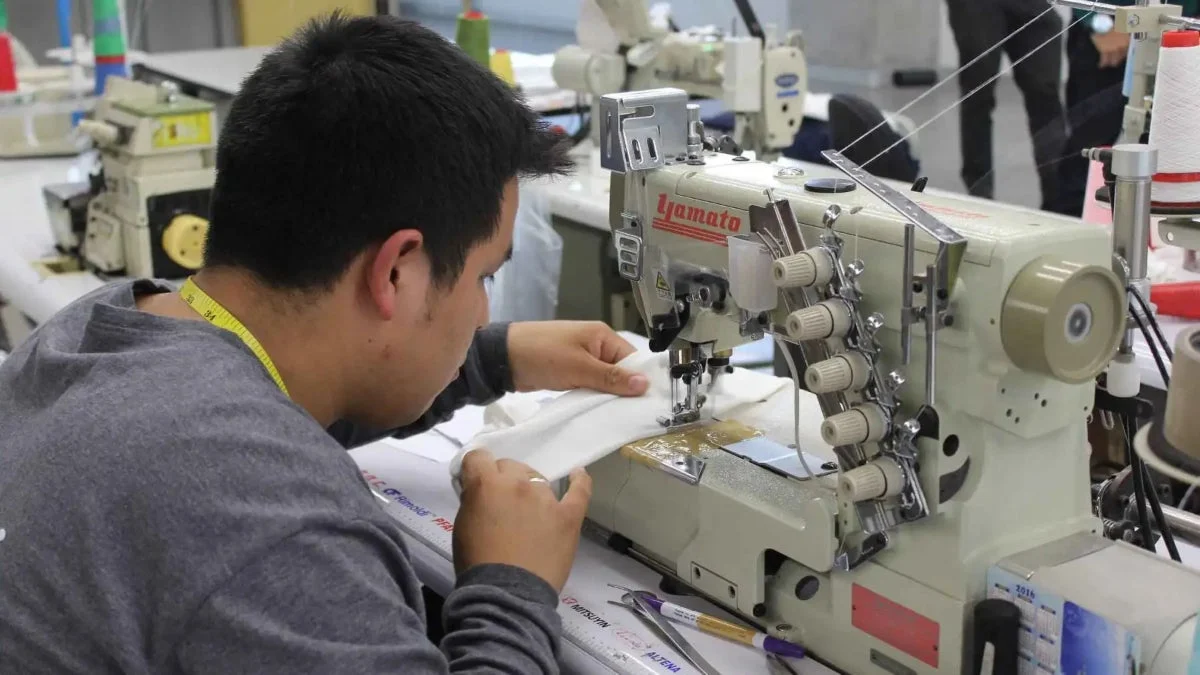
In a decisive move to salvage one of the nation’s most vital manufacturing sectors, the administration of President Keiko Fujimori has officially declared a 120-day state of emergency for the textile and apparel industry across Peru. Formalized through Supreme Decree 014-2026-Produce, the measure arrives at a critical juncture, as the sector struggles under the weight of long-term structural stagnation and the looming, existential threat posed by the El Niño climate phenomenon.
The government’s mandate is clear: the industry, which serves as a significant employer and a pillar of the national economy, requires immediate state intervention to prevent a systemic collapse that could lead to widespread job losses and the permanent erosion of Peru’s global competitiveness in the garment market.
The Core Crisis: Why Emergency Status?
The declaration of a state of emergency is not merely a bureaucratic formality; it is a recognition that the textile and apparel sector is currently operating in a state of high vulnerability. According to the Ministry of Production (Produce), the sector is suffering from a "loss of structural productive dynamism." This term encompasses a multifaceted decline, ranging from aging infrastructure and outdated production techniques to a significant reduction in market share both domestically and internationally.
Beyond these internal weaknesses, the external threat of the El Niño phenomenon hangs over the industry like a sword of Damocles. Climate models provided by the Multisectoral Commission for the National Study of the El Niño (ENFEN) indicate that anomalous sea warming is expected to persist through the autumn of 2027. For the textile industry, this presents a nightmare scenario: potential destruction of essential infrastructure, severe disruptions to cotton supply chains, and erratic demand patterns caused by unseasonable weather. The emergency decree is intended to preemptively insulate the sector from these climate-induced shocks, providing the legal and financial flexibility necessary to ensure operational continuity.
A Chronology of Decline: The Path to 2026
To understand the urgency of the current administration’s decree, one must analyze the steady erosion of the sector over the last eight years. The data reveals a slow-motion crisis that has quietly stripped the industry of its former vitality.
- 2018–2020: The Early Stagnation. The industry began the period with a value-added generation of S/ 5.76 billion. Even before the global supply chain disruptions of the early 2020s, Peru’s textile sector was already showing signs of fatigue, with productivity growth plateauing.
- 2021–2023: The Pandemic Aftermath. Like many global manufacturing hubs, Peru struggled to return to pre-2018 production levels. While some sectors recovered quickly, textiles remained trapped in a cycle of high input costs and reduced labor productivity.
- 2024–2025: The Deepening Deficit. By the end of 2025, the sector’s value-added contribution had plummeted to S/ 5.48 billion—a 5% contraction. During this period, the sector’s contribution to the national Gross Domestic Product (GDP) fell from 1.1% to 0.9%, signaling that the industry was losing ground relative to other sectors of the economy.
- 2026: The Breaking Point. The first seven months of 2026 recorded a harrowing 9.9% year-on-year drop in production. With capacity utilization at a dismal 58.4%, factories across the country are effectively idling for nearly half of the work week, a scenario that is unsustainable for long-term industrial viability.
Supporting Data: The Quantitative Reality
The technical analysis accompanying the decree provides a sobering look at the metrics defining the current crisis. The decline is not limited to a single sub-sector but permeates the entire supply chain, from raw material cultivation to the final assembly of finished garments.
Productivity and Industrial Metrics
- Labor Productivity: The sector has experienced a 4.6% decline in labor productivity, a metric that reflects both a lack of investment in modern machinery and a loss of skilled workforce.
- The Cotton Gap: One of the most alarming figures is the 53% collapse in the national production of cotton. As the primary raw material for Peruvian textiles, this reliance on imports to make up the deficit has left the industry vulnerable to global price fluctuations and logistics bottlenecks.
- Manufacturing Share: Within the broader manufacturing sector, textiles have seen their influence shrink from 8.1% to 7.4%, illustrating that the industry is not just underperforming relative to the total economy, but is losing its relative weight within the industrial base itself.
Official Responses and the Road Ahead
Following the issuance of the decree, the Ministry of Production has been tasked with a rapid-response mandate. The Ministry must finalize and approve the Plan for the Reactivation of the Textile and Apparel Sector within 15 business days. This plan is designed to be the operational blueprint for the 120-day emergency period.
The Four Pillars of the Reactivation Plan
- Impulse to Financing: Providing liquidity to MYPEs (micro and small enterprises) that are currently unable to secure credit from commercial banks due to the high-risk environment.
- Strengthening Capabilities: A focus on modernizing equipment and training workers in high-efficiency production techniques to bridge the productivity gap.
- Access to Public Procurement: A government-backed initiative to ensure that small manufacturers can successfully bid on state contracts, providing them with the stable demand needed to survive the emergency period.
- Market Expansion: A targeted push to open new international markets and promote Peruvian textiles as high-quality, sustainable alternatives in global retail.
The General Directorate of Business Development, under the Viceministerial Office of MYPE and Industry, has been named the oversight body responsible for ensuring these measures are not just drafted, but executed with accountability and transparency.
Broader Implications: A Test for the Fujimori Administration
The declaration of this emergency is a significant political and economic signal. By taking aggressive action to support the textile sector, the Fujimori government is attempting to demonstrate a "pro-production" stance that balances market-driven growth with necessary state intervention.
Implications for the Labor Market
The textile sector is a massive employer of women and informal workers in urban hubs like Gamarra. A collapse of this sector would have immediate social consequences, likely exacerbating unemployment rates and pushing more workers into the informal economy. The government’s plan is, in essence, a social safety net designed to prevent the evaporation of these jobs.
Implications for Climate Resilience
The integration of El Niño mitigation into an industrial policy is a sign of the new reality facing South American economies. It acknowledges that climate change is no longer just an environmental issue—it is an economic one. The success of this policy will depend on whether the government can effectively bridge the gap between "emergency relief" and "long-term adaptation." If the infrastructure remains vulnerable to floods or supply chain interruptions, financial aid will only provide a temporary reprieve rather than a permanent solution.
Political Context
Critics of the administration have pointed to the current political climate as a distraction, noting that recent debates regarding the "glass generation" of politicians and rhetorical threats within the legislative branch have dominated headlines. However, this decree suggests a move toward technocratic governance intended to reassure the business community that the administration is focused on concrete economic fundamentals. Whether the 120-day timeline is sufficient to turn the tide for a sector that has been declining for nearly a decade remains the central question.
Conclusion
The Peruvian textile and apparel industry stands at a crossroads. While the emergency decree offers a lifeline in the form of credit, procurement opportunities, and productivity support, the underlying structural issues—ranging from falling cotton output to inefficient capacity utilization—are deep-seated. The next 120 days will be a trial by fire. Should the Ministry of Production succeed in rolling out an effective, agile response, Peru may yet preserve its status as a competitive player in the global garment industry. If, however, the response is bogged down by the same bureaucratic inertia that has plagued the sector for years, the emergency may prove to be the final chapter in the decline of a once-thriving industrial titan.
As the nation watches the skies for signs of El Niño and the markets for signs of recovery, the textile industry remains the bellwether for the broader industrial health of the country. The government has placed its bets; now, it must deliver on the promise of stability.