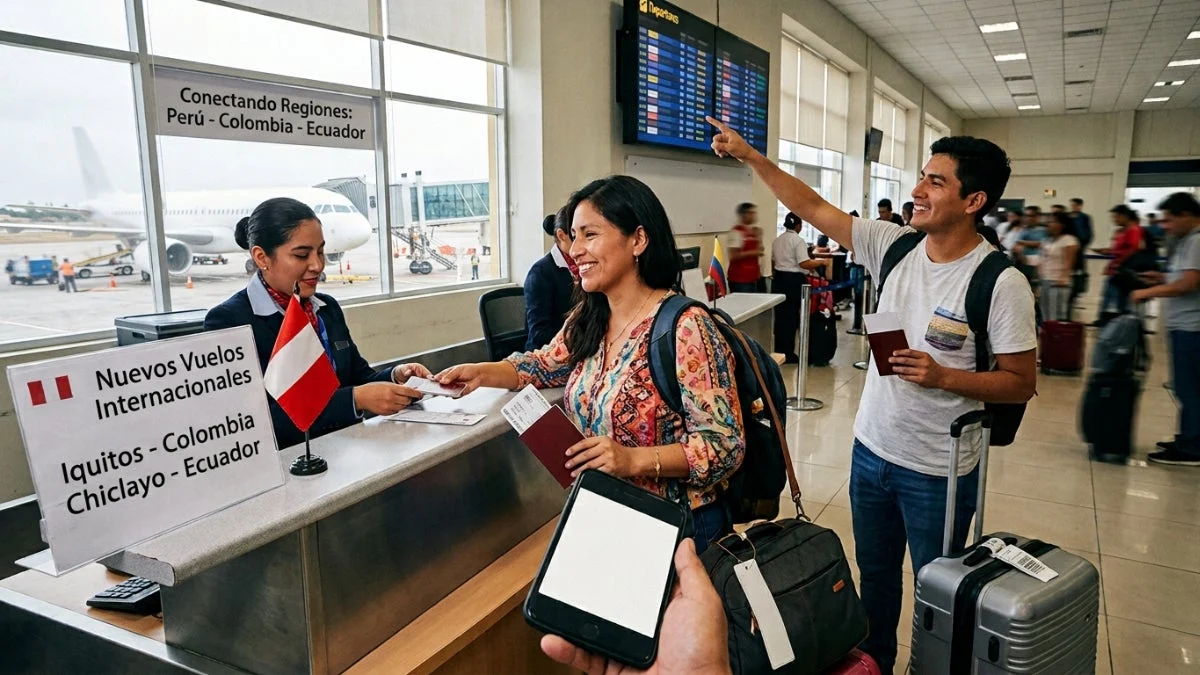
In a strategic shift aimed at transforming Peru’s aviation landscape, the Ministry of Transport and Communications (MTC) has unveiled an ambitious plan to break the traditional reliance on Lima as the country’s sole international gateway. By fostering direct connectivity from regional hubs such as Iquitos and Chiclayo, the government intends to catalyze tourism, trade, and economic dynamism across the Amazon and the northern coast.
The Directorate General of Civil Aviation (DGAC) recently confirmed that all necessary regulatory hurdles—including flight permits and aircraft certifications—have been cleared for a landmark international connection from Iquitos. Simultaneously, high-level negotiations are underway to establish routes linking the northern city of Chiclayo to strategic hubs in Ecuador and the historic heart of the Andes, Cusco.
The Strategy: Breaking the Lima-Centric Paradigm
For decades, the Jorge Chávez International Airport in Lima has functioned as the mandatory "bottleneck" for international travel to and from Peru. While this hub-and-spoke model provided efficiency for the capital, it created logistical hurdles for travelers in remote regions and limited the economic potential of secondary cities.
Paola Marín, Director General of Civil Aviation, emphasized that the government’s new policy is rooted in the concept of "decentralized connectivity." By allowing international flights to land directly in regional airports, the government aims to reduce transit times, lower costs for tourists, and provide local businesses with direct access to international markets.
"We are fundamentally changing how passengers move through Peru," Marín stated in an exclusive interview. "Our goal is to ensure that a tourist from abroad doesn’t have to pass through Lima to experience the wonders of the Amazon or the heritage of the north. We are creating a more agile, accessible, and inclusive aviation network."
Iquitos: Bridging the Amazon to the World
The most imminent development in this national strategy is the activation of a new route connecting Iquitos, the capital of the Loreto region, with a neighboring city in Colombia. This initiative represents a significant milestone for the Peruvian Amazon, which has historically been isolated by geography.
The Significance of the Route
Iquitos is the largest city in the world unreachable by road. Currently, travel to and from the city is almost exclusively dependent on air transit through Lima. By opening a direct international link, the MTC expects to:
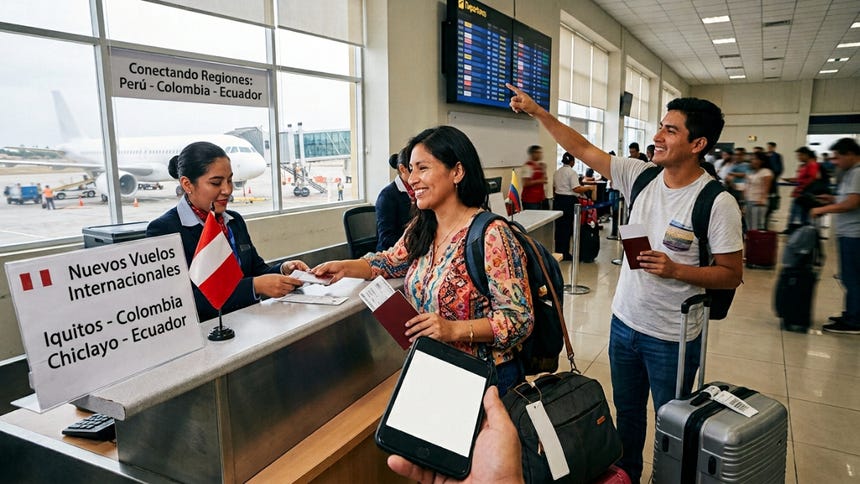
- Boost Ecotourism: Provide European and North American travelers, who often hub in Bogotá, with a direct pathway into the heart of the rainforest.
- Facilitate Cross-Border Trade: Reduce the cost of goods and supply chain lead times between the Amazonian regions of Peru and Colombia.
- Regional Integration: Foster cultural and social exchanges between border communities that share the same river ecosystems.
According to the DGAC, the regulatory framework for this route is already complete. "We have granted the necessary certifications for the aircraft and finalized the technical permits," Marín confirmed. "We are now in the final phase of coordination with the airline operator to announce the official launch date. It will happen before the end of this year."
Chiclayo: The Northern Hub of the Future
If Iquitos is the gateway to the Amazon, Chiclayo is being positioned as the primary hub for Northern Peru. Leveraging its existing connectivity with Panama—a major regional crossroads—the city is slated to become a critical node for both domestic and international traffic.
The Ecuador Connection
The MTC is currently in advanced negotiations to link Chiclayo with the Ecuadorian cities of Cuenca and Quito. This route is expected to serve as a vital corridor for business travelers and tourists exploring the "Moche Route" and the cultural landscapes of Southern Ecuador.
The Chiclayo-Cusco Domestic Link
Beyond international aspirations, the government is fast-tracking a direct flight path between Chiclayo and Cusco. This internal route is designed to capture the high volume of international tourists who arrive in the north for archaeological exploration and then wish to proceed to Machu Picchu without the inconvenience of navigating Lima’s airport congestion.
A key driver for this specific route is the highly anticipated visit of Pope Leo XIV in November. The government is prioritizing the operational readiness of this route to facilitate the expected surge in domestic and international pilgrims who will move between these two major cultural and religious hubs.
Chronology of Progress: A Timeline of Reforms
The current success in regional aviation is the result of a multi-year effort to modernize Peru’s aeronautical regulations and infrastructure.
- Early 2025: The MTC initiates the "Regional Skies" initiative, commissioning studies on airport capacity in Iquitos, Chiclayo, and Cusco.
- Q2 2026: Regulatory revisions are finalized to simplify the certification process for international carriers operating at regional airports.
- September 2026: DGAC announces the completion of certification for the Iquitos-Colombia route.
- October 2026: Negotiations for the Chiclayo-Cuenca route reach the final technical appraisal stage.
- November 2026 (Projected): Inauguration of the Chiclayo-Cusco route to accommodate the papal visit and end-of-year tourism influx.
Supporting Data and Economic Implications
The push for decentralization is supported by robust data regarding the growth of the Peruvian tourism sector. In 2025 alone, regional airports in Peru saw a 14% increase in passenger traffic, despite the lack of direct international connectivity.

Market analysts suggest that the new routes could have a multiplier effect on local economies:
- Job Creation: The operation of new international routes necessitates additional ground staff, customs officials, and increased hospitality services.
- Increased Spending: Data indicates that when tourists bypass the capital and land directly in regional hubs, they are 30% more likely to spend their entire holiday budget within those specific regions, rather than funneling funds back into the Lima metropolitan area.
- Cargo Logistics: The integration of belly-cargo capacity on these international flights will allow local agricultural producers in the north to export perishable goods directly to markets in Panama and Ecuador, significantly reducing spoilage and transport costs.
Official Responses and Stakeholder Perspectives
The aviation industry has largely welcomed the MTC’s proactive stance. Airline executives have noted that while the regulatory environment was once a barrier, the current "fast-track" approach taken by the DGAC has made regional expansion a viable business model.
However, challenges remain. Regional airports in Iquitos and Chiclayo are currently undergoing infrastructure upgrades to meet international safety and customs standards. Airport operators are working in tandem with the government to ensure that immigration and quarantine facilities are staffed and ready to handle the increased throughput.
"We are not just opening routes; we are building ecosystems," says a representative from the Association of Peruvian Airlines. "The partnership between the MTC and the private sector is the strongest it has been in a decade. We are optimistic that these routes will become the backbone of a new, decentralized Peruvian economy."
Looking Ahead: The Future of Peruvian Connectivity
The long-term vision of the MTC extends far beyond the immediate plans for Iquitos and Chiclayo. The government is already looking at future potential for other regions, including the expansion of flights from Arequipa to Santiago de Chile and potential direct flights from Trujillo to international markets.
As Peru prepares to host global travelers, the shift in its aviation strategy signals a nation that is maturing in its approach to infrastructure and tourism management. By decentralizing the skies, Peru is not merely making travel more convenient; it is empowering its regions to tell their own stories to the world.
The coming months will be a litmus test for the MTC’s policies. If the Iquitos-Colombia and Chiclayo-Cusco routes prove successful, they will serve as the blueprints for a permanent transformation of the Peruvian travel industry. For now, the message from the government is clear: the era of the Lima-centric travel experience is drawing to a close, and a more connected, regionalized, and accessible Peru is on the horizon.