By Financial Correspondent
The financial architecture of Peru’s social security system, EsSalud, is currently teetering on the edge of a sustainability crisis. With a staggering debt portfolio totaling S/5.624 billion (approximately $1.5 billion USD) owed by public and private entities, the institution is facing an existential threat to its ability to provide healthcare services to millions of citizens.
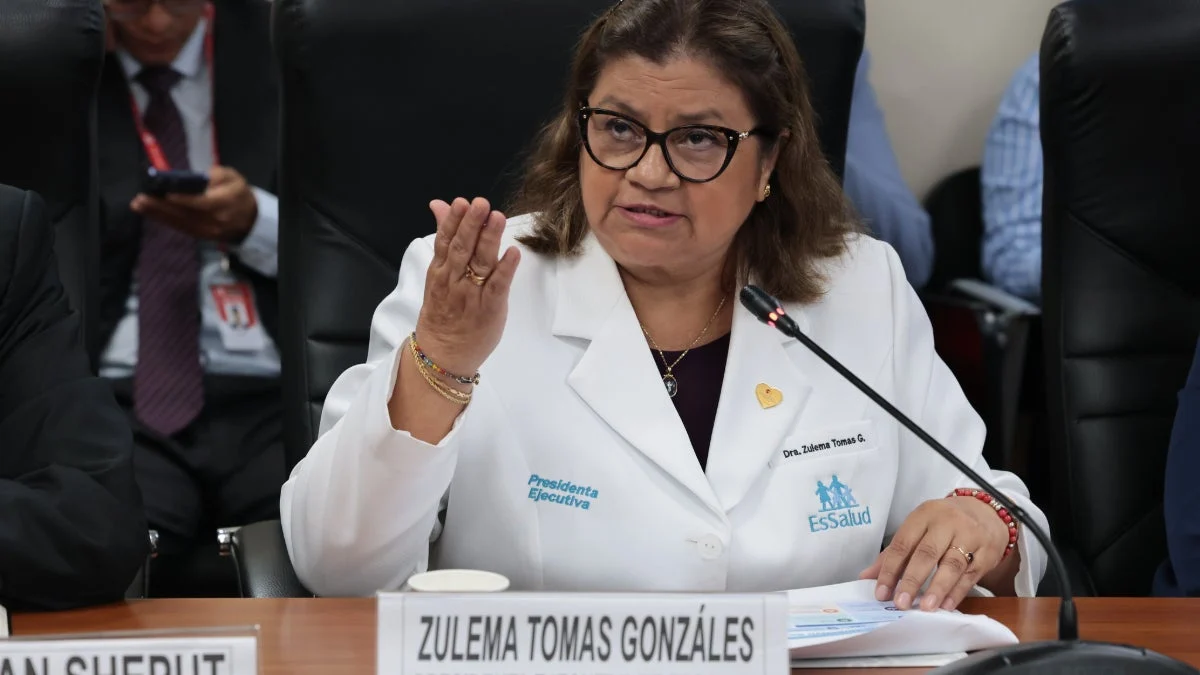
Zulema Tomás, the Executive President of EsSalud, recently took a firm stance before the Congressional Health Committee, detailing the gravity of the situation and proposing a structural overhaul of how contributions are managed and collected. The core of the issue lies in a systematic failure of regional and local governments to transfer the mandatory social security contributions deducted from employee wages, effectively paralyzing the flow of funds required to maintain hospitals and procure medical supplies.
The Core Conflict: A System of Non-Compliance
At the heart of the crisis is a fundamental misalignment between the Ministry of Economy and Finance (MEF), the regional governments, and EsSalud. While the MEF allocates specific budget lines to regional and local governments intended to cover payroll and social security obligations, these funds are frequently diverted or withheld by local authorities, leaving EsSalud to foot the bill for the healthcare of workers whose premiums have never actually reached the insurance coffers.
"The MEF transfers funds to regional governments, but we do not receive that money. Despite this, we continue to provide full medical attention to their workers," Tomás stated during her testimony. This sentiment, echoed by Minister of Labor Juan Sheput, highlights a culture of institutional impunity where healthcare providers are forced to subsidize the administrative failures of regional bureaucrats.
Breakdown of the Debt Portfolio
The S/5.624 billion debt is categorized into two distinct buckets:
- Tributary Debt (48% – S/2.718 billion): This represents the most egregious category—direct contributions withheld from workers’ paychecks that were never deposited by their employers. This is effectively a misappropriation of labor earnings.
- Non-Tributary Debt (52% – S/2.906 billion): These are additional liabilities and administrative debts owed to the institution.
Chronology of the Financial Erosion
The accumulation of this debt is not a recent phenomenon but the result of years of fiscal negligence.
- Pre-2020: Years of gradual accumulation of debt by regional governments went largely unchecked as EsSalud prioritized service delivery over aggressive collection.
- Mid-2023: The financial gap between EsSalud’s operational costs and its actual revenue began to widen significantly, driven by post-pandemic healthcare demand and inflation.
- Recent Months: Zulema Tomás and her executive team conducted an exhaustive audit of the institution’s accounts, revealing the full extent of the S/5.6 billion shortfall.
- Current Phase: The executive branch has now brought the matter to the Congressional Health Committee, seeking legislative intervention to bypass the current dysfunctional transfer system.
Supporting Data: Who Owes What?
The institutional analysis provided by EsSalud paints a clear picture of the primary culprits behind the financial instability. The data reveals that the public sector, specifically regional and local administrations, is the largest contributor to the deficit.
The Debtors’ Hierarchy
- Regional Governments: These entities top the list with a combined debt of S/1.461 billion. They are the primary targets of Tomás’s proposed legislative changes.
- The Private Sector: Private enterprises collectively owe over S/434 million. This segment represents businesses that have failed to comply with social security tax obligations, putting their employees’ health coverage at risk.
- Municipalities: Local municipal governments account for S/422 million in outstanding debt.
Combined, these three sectors account for over S/2.3 billion in "notified debt," a figure that continues to grow as the current transfer mechanisms remain ineffective.
The Proposed Legislative Revolution
To rectify this, Zulema Tomás has advocated for a seismic shift in how EsSalud is funded. Her proposal, which she hopes will be fast-tracked as a bill in Congress, centers on "Direct Transfer."
1. Direct MEF-to-EsSalud Transfers
Tomás argues that the current "middleman" system—where the MEF sends money to regional governments with the expectation that they will forward the social security portion to EsSalud—has failed. She is lobbying for a model similar to the one used by the Ministry of Health (Minsa), where the MEF transfers the funds directly to the institution.
"We are asking for a law that mandates the MEF to send the money directly to us," she emphasized. "We will then distribute those funds to the local health networks. This removes the temptation and the administrative blockage created by regional governments."
2. Utilizing "Saldos de Balance" (Budgetary Balances)
EsSalud has proposed using budgetary balances—unspent funds from previous fiscal cycles—to recover nearly S/2 billion of the accumulated debt. This would require specific legislative authorization to allow the institution to reallocate these existing, stagnant resources to cover the shortfall created by the non-transfer of contributions.
3. Eliminating the SUNAT Commission
Currently, the Superintendency of Tax Administration (SUNAT) charges a commission for the collection of EsSalud contributions. Tomás proposes the temporary elimination of this fee. According to institutional projections, this would instantly reclaim S/160 million for the healthcare system—funds that are currently being diverted to administrative overhead rather than patient care.
Official Responses and Political Implications
The proposal has ignited a debate within the Peruvian government. While the Ministry of Labor has signaled support for protecting the financial integrity of EsSalud, the Ministry of Economy and Finance remains cautious, as any change in transfer protocols would require a complete re-engineering of the national budget execution system.
Critics of the regional governments argue that these entities are prioritizing regional infrastructure projects or administrative payroll over the health of their own staff. However, regional governors have countered that they are often underfunded by the central government, leading to difficult choices regarding which debts to prioritize when liquidity is low.
The Human Impact
Beyond the ledger sheets, the implications are severe. When EsSalud is underfunded, it manifests as:
- Longer waiting times for surgical procedures.
- Shortages in the pharmacy supply chain, forcing patients to purchase their own medicine.
- Deteriorating infrastructure in regional hospitals that have not received the necessary maintenance funding.
Implications for the Future of Healthcare
The standoff between EsSalud and the regional governments is a microcosm of a larger challenge facing Peru: the decentralization of public services versus the need for centralized fiscal oversight.
If the legislative proposal for direct transfers is passed, it could set a precedent for other public institutions currently suffering from similar budgetary "leakage." Conversely, if the status quo remains, EsSalud may be forced to restrict coverage for regions that consistently fail to remit payments—a move that would be politically explosive but perhaps necessary to maintain the solvency of the national system.
As the Congressional Health Committee deliberates, the clock is ticking. The S/5.6 billion deficit is not merely a bureaucratic statistic; it is the financial backbone of a system tasked with the health of millions of Peruvians. Zulema Tomás’s call for reform is a clear ultimatum: modernize the payment structure, or risk the collapse of the nation’s social security safety net.
"We are here to serve the insured," Tomás concluded in her address to Congress. "But we cannot provide medicine or doctors with debt that exists only on paper. We need the money to move, and we need it to move directly to the source."
The coming months will be critical. Whether through a new law or an emergency decree, the resolution of this debt crisis will define the trajectory of public health in Peru for the next decade. The government must now decide if it will support the radical structural changes proposed by EsSalud or continue to patch a leaking vessel with temporary, ineffective measures.