Introduction: A Milestone in Regional Integration
In a landmark development for South American urban infrastructure, the Bolivian state-owned company Mi Teleférico has officially secured an international contract to operate and maintain the state-of-the-art TransMiCable system in the San Cristóbal locality of Bogotá, Colombia. This achievement marks a significant milestone for Bolivia, as it transitions from a local provider of urban cable solutions to an international consultant and operator of high-capacity mass transit systems.
The contract, awarded under Licitación Pública N.º TMSA-LP-01-2026, is valued at 390.824 billion Colombian pesos (approximately US$107.7 million). This partnership underscores the growing trend of South-South cooperation in engineering and public transport management, proving that regional expertise can compete successfully against global industry giants.
Main Facts: The Scope of the Operation
The agreement grants the consortium "Mi Cable San Cristóbal"—comprising the Empresa Operadora de Transportes Gran Américas S.A.S., Mi Teleférico, and Ingeniería, Tecnología y Conocimiento S.A.S.—the responsibility of managing one of Bogotá’s most anticipated mobility projects.
Key Contractual Details:
- Contract Duration: 124 months (10 years and four months).
- Total Investment: 390.824 billion COP (~US$107.7 million).
- Operational Scope: Integral passenger service provision, maintenance of electromechanical components, and infrastructure upkeep.
- Security and Safety: The mandate includes advanced vertical rescue protocols, comprehensive emergency response plans, and rigorous risk management frameworks.
- Facility Management: Beyond transit, the operator will oversee cleaning, 24/7 security surveillance, and environmental management programs.
The TransMiCable San Cristóbal project is designed to bridge the gap between peripheral, mountainous neighborhoods and the city’s central transport hubs, drastically reducing commute times for thousands of citizens who previously relied on slow, inefficient road-based transit.
Chronology: The Road to the Bogotá Contract
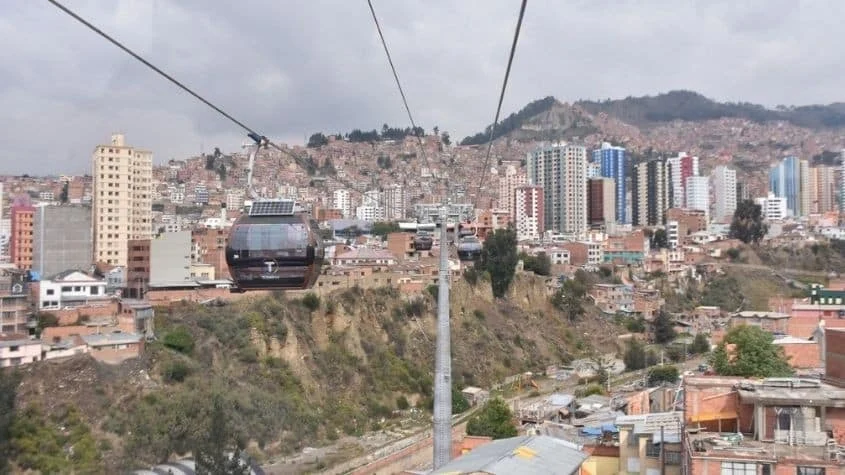
The path to this international success did not happen overnight. It is the result of years of refinement in La Paz, Bolivia, where Mi Teleférico transformed the urban landscape by building the largest aerial cable car network in the world.

2014–2020: Building the "Bolivian Model"
During these years, Mi Teleférico revolutionized urban mobility in the high-altitude cities of La Paz and El Alto. By successfully integrating complex cable car lines into the existing bus and road infrastructure, the company gained invaluable technical expertise in handling high-altitude challenges, crowd management, and public safety.
2024: Expanding Horizons
Recognizing that their model was highly replicable, the Bolivian government and the leadership of Mi Teleférico began marketing their operational capabilities to other nations. They participated in international transport forums, showcasing their "zero-accident" safety records and their ability to operate under extreme topographical conditions.
2026: The Bidding Process
The Bogotá transport authority (TransMilenio S.A.) opened the tender for the San Cristóbal line. The competition was fierce, involving international consortia from Europe and North America. However, the proposal presented by the "Mi Cable San Cristóbal" consortium stood out for its technical feasibility and its focus on social integration—a hallmark of the Bolivian experience.
September 2026: Official Adjudication
The official awarding of the contract was announced, solidifying Bolivia’s entry into the Colombian market and marking a new chapter in the company’s history as a provider of specialized transport services.
Supporting Data: Why Aerial Transit Matters
The choice of aerial cable systems for cities like Bogotá is not merely a matter of prestige; it is a calculated response to the city’s complex geography.

- Topographical Efficiency: The San Cristóbal locality is defined by steep, irregular terrain that makes the construction of traditional metro lines or heavy bus corridors prohibitively expensive and technically difficult.
- Time Savings: Studies on existing cable car systems in Latin America show an average reduction in travel time for residents of peripheral zones by 40% to 60%.
- Sustainability: Electric-powered cable cars offer a significant reduction in carbon emissions compared to diesel-powered bus fleets, aligning with Bogotá’s ambitious "Green City" goals.
- Social Connectivity: By physically connecting marginalized communities to the heart of the city, the system acts as a social equalizer, facilitating access to jobs, education, and healthcare.
Official Responses and Strategic Vision
Government representatives from both nations have lauded the agreement as a win-win scenario.
For the Bolivian administration, this project represents the "export of public knowledge." The CEO of Mi Teleférico noted in a recent press statement that the company is no longer just an operator, but a "knowledge-based exporter." The technical team currently preparing for the mobilization in Bogotá is composed of veteran engineers who participated in the original construction of the La Paz network.
On the Colombian side, city officials have emphasized that the selection process was strictly merit-based. "We needed a partner that understood the social challenges of operating in hilly, densely populated urban environments," a spokesperson for the Bogotá transport department stated. "Mi Teleférico’s track record in managing passenger flows in complex terrain made them the ideal candidate for the San Cristóbal project."
Implications: The Future of Latin American Transit
The success of this contract has broader implications for urban planning across the region.
1. The Rise of Regional Hubs
The victory of Mi Teleférico signals a shift in the global consulting market. For decades, cities in Latin America looked exclusively to European or Asian firms for large-scale transit operations. Now, local expertise is being recognized as superior in certain contexts—specifically in the management of high-altitude and rugged-terrain mass transit.

2. A Pipeline of Projects
Following the success in Bogotá, the Bolivian consortium has already expressed interest in further expansion. According to internal reports, the company is actively preparing to bid for and provide consultancy services for similar cable-based transit projects in:
- El Salvador: Projects focusing on modernizing the transport grid in the capital.
- Costa Rica: Consulting on feasibility studies for mountainous transit corridors.
- Panama: Proposals for aerial solutions to bridge difficult topography in urban areas.
3. Economic Impact for Bolivia
For Bolivia, this is a significant source of foreign currency and a way to diversify its economy away from traditional commodity exports. The influx of revenue from the Bogotá contract will allow the company to reinvest in the maintenance and technological upgrading of its existing networks in La Paz and El Alto, creating a virtuous cycle of improvement.
4. Technical Collaboration
The partnership also promises to foster a deeper technical exchange between Colombia and Bolivia. Engineering students and professionals from both countries are expected to participate in exchange programs to study the maintenance of electromechanical cable systems, fostering a new generation of transit experts in the Andean region.
Conclusion: A New Era of Connectivity
The awarding of the TransMiCable San Cristóbal contract to the Bolivian state entity is a testament to the power of perseverance and technical innovation. By overcoming the geographical challenges that define many Latin American cities, Bolivia has proven that it is possible to create world-class, sustainable public transport systems that prioritize the citizen.
As the implementation phase begins, all eyes will be on the "Mi Cable San Cristóbal" team. If successful, this venture will not only provide a lifeline to the residents of San Cristóbal but will also solidify Bolivia’s position as a regional leader in urban transport innovation for decades to come. The success of this project could be the blueprint for a more connected, efficient, and integrated South America, where local solutions address local problems with global-standard excellence.