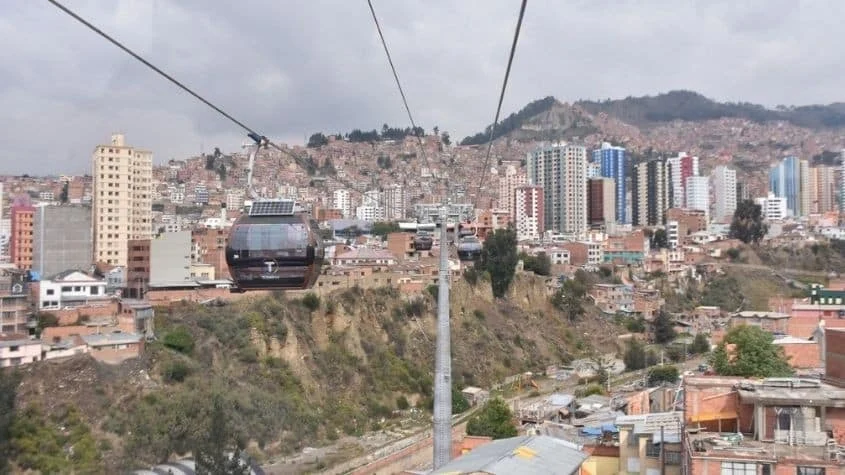
Bolivia’s ambitious urban transit infrastructure is set for a significant expansion. The government has officially secured the necessary funding to initiate technical studies for two new additions to the "Mi Teleférico" system in El Alto: the Carmesí and Caluyo lines. This development marks a pivotal moment for public transportation in the metropolitan area of La Paz and El Alto, reinforcing the nation’s commitment to an integrated, high-altitude cable car network that has become a global benchmark for urban mobility.
President Rodrigo Paz announced the breakthrough during the launch of the National Mass Titling Program, signaling that while the capital is secured, the projects must now navigate the essential administrative and bureaucratic procedures before physical site preparation and construction can begin.
Project Scope: The Carmesí and Caluyo Lines
The expansion strategy focuses on addressing the growing connectivity needs of El Alto’s densely populated districts. The two proposed lines represent a combined investment of US$ 275 million, highlighting the scale of the state’s commitment to infrastructure development.
The Carmesí Line: Linking Heights and Valleys
The Carmesí (Crimson) Line is designed to be a critical transit artery, linking the Alto Lima district—starting specifically at Plaza Busch in El Alto—with the lower-lying urban centers of La Portada, the Red Line’s Estación Central, and the bustling Pérez Velasco area.
With an estimated investment of US$ 145 million, the Carmesí Line is currently undergoing review by the Viceministerio de Inversión Pública y Financiamiento Externo. This line is expected to drastically reduce commute times for thousands of residents who currently rely on ground-based public transit, which often faces heavy congestion and steep, difficult terrain.

The Caluyo Line: Enhancing the Purple Axis
The Caluyo Line, valued at US$ 130 million, will serve as a strategic extension of the existing Purple (Morada) Line. Its route is planned to begin at the Avenida 6 de Marzo, adjacent to the El Alto Bus Terminal—a major transport hub—continuing through the "Cruce de Villas" area and terminating in the heart of Villa Dolores. Currently, this project is in the pre-feasibility stage, with technical teams assessing the viability of the route and its integration into the existing urban fabric.
A Brief Chronology of "Mi Teleférico"
The "Mi Teleférico" system is not merely a transport project; it is a symbol of Bolivia’s 21st-century modernization. Its evolution has been rapid and transformative:
- 2014: The inaugural Red, Yellow, and Green lines commence operations, effectively linking La Paz and El Alto and changing the transit paradigm for millions.
- 2017–2018: The network expands significantly with the addition of the Blue, Orange, White, Sky Blue, and Purple lines, cementing the system as the largest urban cable car network in the world.
- 2019: The Brown and Silver lines are inaugurated, further integrating the higher-altitude neighborhoods of El Alto into the core of the city.
- 2025–2026: Government focus shifts toward the modernization and technical upgrading of existing lines, alongside the planning of new extensions like Carmesí and Caluyo to meet rising passenger demand.
Modernization and Financial Framework: The US$ 62 Million Boost
While new lines dominate the headlines, the sustainability of the existing network remains a top priority. Minister of Public Works, Mauricio Zamora, recently highlighted the enactment of Law No. 1759, which provides a critical credit line of US$ 62 million.
These funds are earmarked for three primary objectives:
- System Upgrades: Replacing legacy components on original lines to ensure safety and efficiency.
- Capacity Expansion: Increasing the number of cabins and throughput on high-traffic lines to mitigate wait times during peak hours.
- Extension of the Café (Coffee) Line: This specific project aims to provide better connectivity to the peripheral districts that have seen significant demographic growth in the last five years.
Official Responses and Strategic Vision
During his address, President Paz emphasized that the securement of funding for the Carmesí and Caluyo lines is part of a broader socio-economic agenda. "Our goal is not just to build structures, but to build access," Paz noted. "By connecting the peripheral zones of El Alto to the administrative center of La Paz, we are providing thousands of citizens with the time and mobility they need to thrive."

Minister Zamora added that the technical studies are the most crucial phase. "We are committed to rigor. The geography of our cities requires precision engineering. By securing the funding early, we allow our engineers to perform the necessary geological and traffic flow studies without the pressure of funding shortfalls."
Implications for Urban Mobility and Social Integration
The expansion of "Mi Teleférico" carries profound implications for the social and economic integration of the region:
1. Environmental Impact
As a largely electric-powered system, the cable car network has been instrumental in reducing the carbon footprint of public transport in the La Paz-El Alto metropolitan area. By shifting thousands of daily commuters from diesel-powered buses and taxis to the cable car system, the city is effectively reducing air pollution and noise levels in high-density corridors.
2. Economic Productivity
Commute times are a significant drag on productivity in the region. Before the cable car, residents in the high plains of El Alto often faced two-hour commutes to reach their workplaces in the valley. The new lines are projected to reduce these times to under 40 minutes, directly contributing to the local economy by increasing the number of active hours residents can spend in the workforce or with their families.
3. Urban Development and Property Values
Infrastructure projects in Bolivia have historically acted as catalysts for urban development. The presence of a cable car station often spurs the creation of small businesses, retail shops, and improved public lighting in the surrounding areas. The new stations at Plaza Busch and the El Alto Bus Terminal are expected to serve as new "mini-hubs" for commerce, further decentralizing economic activity within the city.

Technical Challenges and Future Outlook
Despite the enthusiasm, the administration acknowledges the challenges ahead. Building at high altitudes requires specialized equipment and maintenance protocols. The "Mi Teleférico" company has built a strong reputation for safety, consistently maintaining one of the highest uptime percentages for public transit systems globally.
As the project moves from the administrative phase into the technical study phase, the public can expect increased activity from surveying teams. The government’s focus on the "pre-feasibility" stage for the Caluyo line ensures that the project remains economically sound before significant capital is deployed.
Conclusion
The announcement of the Carmesí and Caluyo lines, supported by the US$ 62 million modernization fund, signals that Bolivia is not slowing down in its pursuit of world-class urban infrastructure. Through a combination of strategic financing, technological investment, and a clear vision for social connectivity, the government is ensuring that the "Mi Teleférico" system remains the backbone of urban life in La Paz and El Alto.
As these projects advance, they will continue to serve as a model for developing nations, demonstrating how innovative thinking can solve the complex challenges of urban geography. For the citizens of El Alto, the prospect of these new lines represents more than just a commute—it represents a tangible improvement in their quality of life and a promise of continued investment in their neighborhoods.