In a pivotal development for Argentine public infrastructure, the Banco de Desarrollo de América Latina y el Caribe (CAF) has officially approved a significant financing package aimed at executing the largest sanitation and water treatment project in the history of the Río Negro province. This mega-project, valued at approximately 38,552 million Argentine pesos—equivalent to roughly S/ 86.8 million—is designed to resolve the chronic water scarcity issues that have long plagued the growing city of General Roca.
By expanding critical treatment facilities and upgrading aging distribution networks, this initiative marks a turning point for the Patagonian region, promising a continuous, high-quality water supply for more than 210,000 residents.
Main Facts: A Structural Solution for General Roca
The core of this project lies in its ambition to transition General Roca from a system of intermittent supply to one of absolute reliability. Currently, the city struggles with infrastructure that has been unable to keep pace with demographic expansion and environmental shifts.
The project is defined by three primary technical pillars:
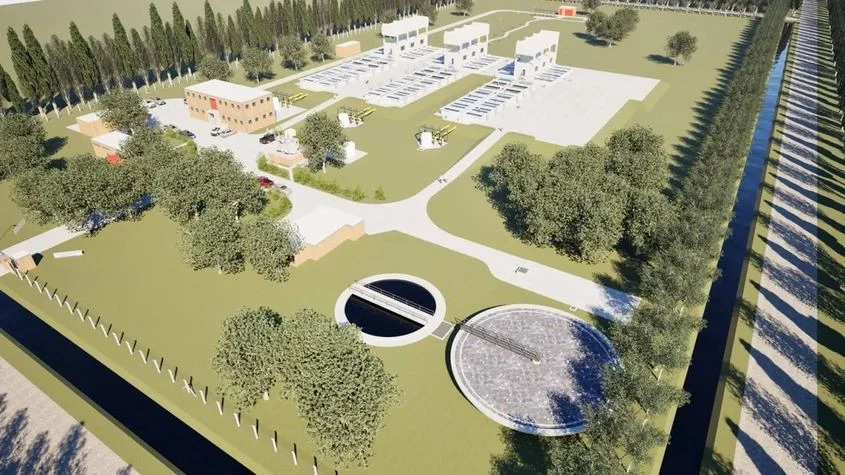
- System Capacity Expansion: The central focus is the massive expansion and technological optimization of the existing water treatment plant.
- Infrastructure Overhaul: The installation of over 41 kilometers of new high-capacity piping.
- Strategic Connectivity: The construction of a new 800-millimeter-diameter acueducto (aqueduct) designed to transport raw water efficiently from the Río Negro catchment area to the principal treatment facility in the Estefenelli district.
These works are not merely maintenance; they represent a fundamental redesign of the city’s hydraulic backbone, ensuring that the volume of potable water processed meets the current and future demands of a population that has been historically underserved.

Chronology: From Planning to Approval
The journey toward this project’s approval was marked by years of negotiations between local authorities, the provincial government of Río Negro, and international development entities.
- Initial Assessments (2022–2023): Engineers and urban planners identified a "critical bottleneck" in the Estefenelli treatment facility. Feasibility studies concluded that without a major structural intervention, the city would face severe rationing by 2028.
- Negotiation Phase (2024–2025): The provincial government presented the project to the CAF, highlighting its role in sustainable development and climate resilience. The proposal underwent rigorous environmental and economic impact assessments.
- Funding Approval (August 2026): The CAF board officially ratified the credit line. This decision unlocked the necessary liquidity to begin the procurement process for construction firms.
- Implementation Timeline (Late 2026–2028): Following the finalization of the tendering process, the construction phase is set to commence, with a two-year projected timeline for completion, contingent upon site conditions along the riverbanks.
Supporting Data: Addressing the Demand-Supply Gap
The significance of this investment cannot be overstated when looking at the demographic data of the Patagonia region. General Roca has experienced a steady population influx, putting immense pressure on the current water grid.
- Population Impact: The project directly benefits 210,000 inhabitants. This covers not only the urban core but also the industrial and agricultural peripheries that rely on processed water for production.
- Technical Specifications: The 41 kilometers of new piping are constructed with high-density materials designed to withstand the region’s temperature fluctuations, reducing the risk of pipe bursts and maintenance downtime.
- Efficiency Gains: By upgrading the pumping stations at the Río Negro source, the system expects to reduce energy consumption by roughly 15%, as modern, variable-frequency pumps will replace outdated, energy-intensive hardware.
Official Responses and Stakeholder Perspectives
Representatives from the CAF have emphasized that this investment aligns with the organization’s mission to foster "resilient infrastructure" in Latin America. According to a spokesperson from the development bank, the project serves as a model for how regional governments can utilize international credit to solve long-standing municipal problems.
"This is not just about laying pipes; it is about human dignity and economic stability," noted a local provincial official during the announcement. "For decades, the people of General Roca have lived with the uncertainty of water supply. With this funding, we are finally providing a permanent, 21st-century solution."
Opposition groups and local civil society organizations have largely welcomed the news but have called for high levels of transparency regarding the tendering process to ensure that the 38.5 billion pesos are allocated with zero tolerance for corruption. The provincial government has promised a public dashboard to track the progress of the work and the use of funds.

Implications: The Broader Impact
The implications of this infrastructure project extend far beyond the immediate goal of turning on the tap.
1. Economic Development
A reliable water supply is a prerequisite for private investment. The agriculture sector, particularly the fruit-growing industry surrounding General Roca, stands to benefit from more stable utility services. Furthermore, the construction phase itself is expected to create hundreds of direct and indirect jobs, providing a stimulus to the local economy during the 24-month build period.
2. Environmental Sustainability
The optimization of the catchment system from the Río Negro is designed with modern environmental safeguards. By reducing leakages and improving the filtration process, the project will minimize water waste, ensuring that the local ecosystem is not over-extracted. This is vital in the context of the Patagonia region, where climate change has made water cycles increasingly unpredictable.
3. Public Health
Access to clean, potable water is the most basic requirement for public health. By guaranteeing a continuous supply, the municipality aims to reduce the prevalence of water-borne illnesses and improve the general quality of life in underserved neighborhoods that currently rely on water trucks or inconsistent supply lines.
4. A Blueprint for Future Projects
The success of this partnership with the CAF may serve as a template for other Argentine provinces. Many parts of the country suffer from aging hydraulic infrastructure that was built for the population levels of the 1970s and 80s. If the General Roca project proceeds on time and within budget, it will provide a strong argument for further international financing for similar "water-resilience" projects across the Argentine interior.

Conclusion: A New Era for Río Negro
The approval of the CAF-funded project for General Roca is more than just a financial milestone; it is a declaration of intent for the future of the Patagonia region. As the province moves toward a more climate-resilient future, the ability to manage water resources effectively will become the primary metric of successful governance.
With the financial, technical, and political groundwork now laid, the residents of General Roca look toward the next two years with the expectation of a permanent end to the water shortages that have defined their recent past. As the heavy machinery prepares to break ground, the project stands as a testament to the power of regional infrastructure investment to change lives, foster economic growth, and ensure long-term sustainability.
The coming months will be critical as the tendering process moves forward, but for now, the path is clear: the modernization of General Roca’s water system is no longer a distant ambition—it is a reality in motion.