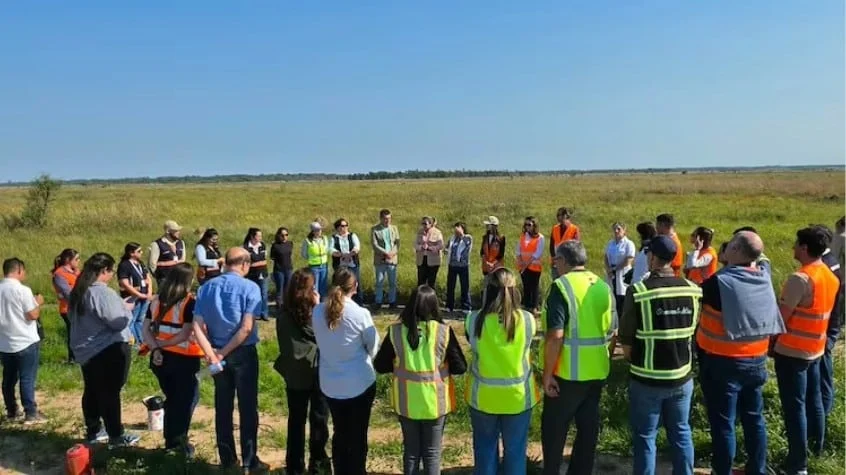
PARAGUAY – The landscape of public healthcare in the northern region of Paraguay is set for a historic transformation. Following the formal handover of the designated project site in the department of San Pedro, the consortium of contractors has officially commenced the preliminary planning and engineering phase for the new Hospital General de San Estanislao. This ambitious infrastructure project represents one of the most significant investments in public health in the nation’s recent history, promising to bridge the gap in specialized care for hundreds of thousands of citizens.
A Vision for Regional Healthcare Transformation
The project, which has been in the conceptualization and bureaucratic planning stages for several years, is now moving firmly into the tangible development phase. The handover of the land serves as the starting gun for a massive logistical and construction undertaking. With over 23,000 square meters of total construction area, the facility is designed not merely as a local clinic, but as a regional hub capable of delivering high-complexity medical care that was previously only accessible in the capital, Asunción.
For the approximately 370,000 residents living in the San Pedro department and its surrounding districts, this facility represents more than just bricks and mortar; it signifies the end of a long-standing reliance on arduous travel for critical health services. By decentralizing specialized care, the Paraguayan government aims to ensure that high-quality medical outcomes are a right, not a privilege determined by geography.
Project Chronology: From Blueprint to Patient Care
The development of the Hospital General de San Estanislao has been meticulously structured into three distinct phases to ensure operational excellence and long-term sustainability:
Phase I: Planning and Engineering (Months 1–5)
The current stage involves the finalization of engineering blueprints, environmental impact assessments, and structural site planning. During this period, architects and civil engineers are working to integrate the complex mechanical, electrical, and plumbing (MEP) requirements necessary for a modern hospital. This includes mapping out medical gas lines, specialized ventilation for operating theaters, and sterile zone layouts.

Phase II: The Construction Phase (24 Months)
Once the blueprints receive final approval, the project will move into a two-year intensive construction period. This phase will involve heavy machinery, a large-scale workforce, and the installation of the facility’s shell. Given the scale of the building, the project management team has emphasized a phased approach to structural completion to keep the development on schedule.
Phase III: Maintenance and Operational Handover (18 Months)
Uniquely, the contract includes a comprehensive 18-month maintenance provision post-construction. This ensures that the building systems, from the climate control to the hospital-grade sanitation infrastructure, remain in peak condition long after the ribbon-cutting ceremony. This commitment to lifecycle management is a forward-thinking move intended to prevent the rapid degradation often seen in public infrastructure projects.
Technical Specifications: A High-Complexity Facility
The Hospital General de San Estanislao is designed to meet international standards for high-complexity medical centers. The facility’s capacity is a testament to its scale:
- Total Bed Capacity: 189 beds.
- Intensive Care: 32 specialized ICU beds for critical patients.
- General Hospitalization: 157 beds for standard recovery and post-surgical observation.
- Emergency and Urgent Care: A dedicated block with 41 beds designed for rapid triage and stabilization.
- Specialized Treatments: 10 dialysis stations for patients with chronic renal conditions and 10 dedicated stations for daily oncology treatments.
Beyond bed capacity, the hospital will house four state-of-the-art operating rooms equipped with the latest surgical technology. The diagnostic wing will feature advanced imaging services—including digital X-ray, ultrasound, and potentially CT scan capabilities—alongside a centralized laboratory for rapid blood and tissue analysis.
Maternal and Infant Care
Recognizing the specific needs of the San Pedro population, the hospital includes a dedicated maternity block. This area will feature four specialized delivery rooms and two surgical suites exclusively for cesarean sections, ensuring that neonatal and maternal health services are provided in a safe, sterile, and technologically advanced environment.

The Strategic Importance of Decentralization
For years, the "centralization trap" has forced residents of rural and semi-urban departments in Paraguay to migrate or travel hours to Asunción to access specialists, oncology care, or high-risk maternity services. The construction of the San Estanislao facility is the cornerstone of a broader government strategy to rectify these systemic inequalities.
"This is not just about building a hospital; it is about building equity," noted a government representative during the site handover. By placing a high-complexity center in the heart of San Pedro, the state is effectively lowering the barrier to entry for life-saving treatments. Patients who previously had to forgo care due to the financial and physical burden of travel will now have a local, professional, and well-equipped facility at their disposal.
Economic and Social Implications
The construction phase itself will serve as a localized economic engine. The hiring of local contractors, laborers, and material suppliers will inject capital into the San Pedro economy. Once operational, the hospital will transition into a major employer, requiring a diverse staff of physicians, specialized nurses, laboratory technicians, pharmacists, and administrative personnel.
Furthermore, the existence of such a facility often acts as a catalyst for urban development. New housing, service industries, and small businesses typically emerge in the vicinity of large-scale medical centers, creating a "health hub" effect that can transform the socioeconomic profile of the surrounding town.
Official Responses and Public Expectations
The announcement has been met with significant optimism from local leaders and medical professionals. Local health advocates have long lobbied for a facility of this magnitude, noting that the existing health centers in the region are often overwhelmed by the volume of patients.

While the scale of the project is significant, the Ministry of Health has assured the public that the rigorous planning phase is designed to avoid the common pitfalls of infrastructure delays. By prioritizing the engineering and design phase during the first five months, the consortium intends to minimize "change orders"—the costly and time-consuming modifications that frequently derail public works projects.
Looking Toward the Future
As the planning phase progresses, the eyes of the nation will remain fixed on San Pedro. The Hospital General de San Estanislao stands as a symbol of Paraguay’s commitment to modernizing its public health infrastructure.
With the first phase of planning now underway, the focus shifts to ensuring that the project remains on schedule and within budget. If successful, the hospital will not only improve the health indicators of the San Pedro population but will serve as a replicable model for similar health-infrastructure projects throughout the country.
The road ahead is long—spanning nearly four years from the start of planning to the end of the maintenance period—but for the 370,000 residents of this northern region, the foundation of a healthier future has finally been laid. The transformation of San Pedro’s medical landscape is no longer a distant promise; it is an active construction site.