The Municipal Government of Huarmey has officially entered the final phase of its flagship infrastructure project, "Improvement and Expansion of Urban Mobility Services in the Streets of the Buenos Aires Settlement (Stage I)." This ambitious undertaking is designed not merely to pave roads, but to fundamentally alter the quality of life for residents by enhancing connectivity, safety, and hygiene in a critical sector of the province.
As the project approaches completion, it stands as a testament to local government efforts to address the historical infrastructure deficit that has long plagued peripheral urban zones. By integrating modern civil engineering with a focus on human-centric urban design, the municipality is setting a new standard for development in the region.
Main Facts: The Scope of the Intervention
The core objective of this project is the comprehensive overhaul of the transit infrastructure within the Buenos Aires Settlement. This initiative focuses on the critical need for structural upgrades to ensure that the area can handle both modern vehicular traffic and pedestrian flow with increased safety.
Key technical milestones achieved thus far include:
- Completion of Pedestrian Infrastructure: All sidewalks and pedestrian walkways have been finished to modern accessibility standards, ensuring that vulnerable populations—such as the elderly and those with limited mobility—can navigate the streets with dignity and ease.
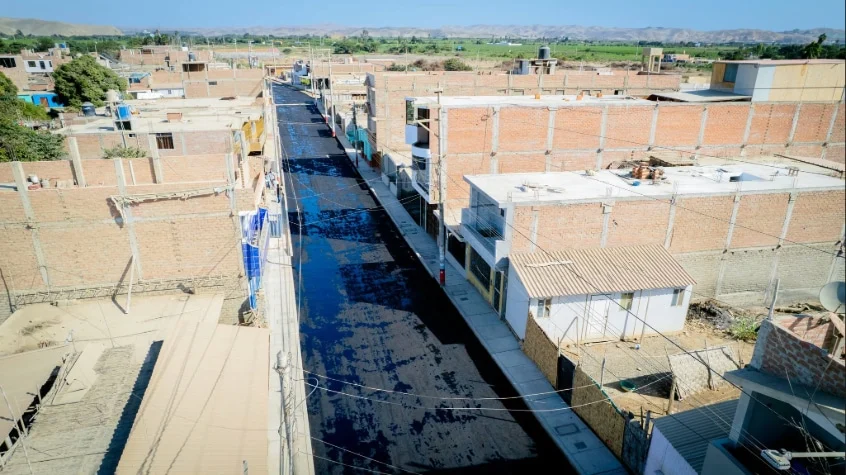
- Surface Preparation: The completion of the application of asphalt primer (imprimante asfáltico). This is a critical technical step that ensures the base layer is adequately sealed to receive the final asphalt carpet, preventing moisture ingress and sub-base degradation.
- Traffic Management: The project incorporates specific designs to regulate traffic flow, which will reduce congestion and noise pollution, significantly enhancing the neighborhood’s residential character.
Chronology of Development
The trajectory of the Buenos Aires urban renewal project reflects a systematic approach to infrastructure planning.
Initial Planning Phase: The project was born out of a diagnostic study identifying the Buenos Aires Settlement as an area with high potential for growth but constrained by dirt roads, uneven terrain, and a lack of organized pedestrian spaces.

Execution and Challenges: Construction began with the excavation and leveling of the terrain, followed by the installation of necessary underground drainage systems to mitigate the impact of seasonal rains—a common concern in coastal Peruvian regions.
Mid-Project Progress: Throughout the middle months of the year, construction crews focused on the heavy lifting of masonry for sidewalks and the preparation of the road base. This period involved significant coordination with local utility companies to ensure that all street-level improvements were synchronized with existing water, sewer, and electrical lines.
Current Status: As of late August 2026, the project is in the "Final Finishing" phase. The technical teams are performing final inspections of the road base in preparation for the pouring of the final asphalt layer. This phase is characterized by strict quality control protocols to ensure the longevity of the infrastructure.
Supporting Data: Engineering and Social Impact
Infrastructure projects are often measured in cubic meters of concrete or square meters of asphalt, but their success is ultimately measured by their socioeconomic impact. The project in the Buenos Aires Settlement is supported by several key indicators:
- Public Health Improvement: One of the most immediate benefits identified by the municipal office is the reduction of particulate matter in the air. By replacing dirt roads with a sealed asphalt surface, the project drastically reduces the amount of dust that residents breathe daily, which is linked to respiratory issues in children and seniors.
- Economic Connectivity: Improved roads facilitate the movement of goods and services, including essential emergency vehicles such as ambulances and fire trucks, which previously faced difficulties navigating unpaved or poorly maintained routes.
- Pedestrian Safety: The inclusion of formal, elevated sidewalks separates pedestrian traffic from vehicular lanes, a crucial design element that reduces the risk of traffic accidents.
Official Perspectives: Municipal Commitment
In official statements regarding the progress of the project, representatives from the Provincial Municipality of Huarmey emphasized that this work is a priority within the 2026 municipal agenda.
"Our commitment to the Buenos Aires Settlement is absolute," stated a spokesperson for the Municipal Engineering Department. "We recognize that urban mobility is the backbone of development. By providing stable, clean, and safe streets, we are not just paving the way for vehicles; we are paving the way for the future of our children."

The municipal administration has also highlighted that this project is part of a broader vision for the province. The inclusion of imagery showing the modernization of health centers (such as the Yanaoca District Health Center) alongside road projects illustrates a holistic approach where infrastructure works hand-in-hand with social services.
Implications for the Future of Huarmey
The completion of the Buenos Aires I Stage project carries significant implications for the future of urban planning in Huarmey.
1. The Multiplier Effect
Infrastructure development often acts as a catalyst for private investment. Once the public sector provides the foundation (roads, sidewalks, and drainage), it is common to see an increase in private home renovations and the establishment of small businesses. The improved accessibility makes the area more attractive for local commerce, thereby fostering local economic growth.
2. Standardizing Urban Quality
By adopting rigorous construction standards for the Buenos Aires Settlement, the municipality is establishing a benchmark. This makes it increasingly difficult for future developments to accept sub-par infrastructure, effectively raising the bar for all provincial urban projects moving forward.
3. Strengthening Civic Trust
Effective delivery of public works is the primary driver of trust between citizens and their government. By moving efficiently through the final stages of this project, the municipal government is reinforcing its credibility and demonstrating that tax revenues are being translated into tangible, long-term assets for the community.
Looking Ahead: Beyond the Pavement
While the current focus is on the asphalt and sidewalks, the broader implications involve environmental sustainability and long-term maintenance. The municipality has indicated that once the construction is finalized, a maintenance schedule will be implemented to ensure the longevity of the new surfaces. This includes drainage maintenance to prevent the accumulation of water, which is the primary enemy of asphalt in coastal climates.

Furthermore, the integration of the Buenos Aires project into the city’s master plan ensures that this sector is no longer treated as an isolated settlement but as an integral, connected part of the provincial capital.
Conclusion
The transformation of the Buenos Aires Settlement in Huarmey is more than a mere construction site; it is a manifestation of progress. As the final layers of asphalt are laid, the residents of this community stand to gain a significantly improved standard of living. From cleaner air to safer commutes, the benefits of this project will be felt for generations.
The Provincial Municipality of Huarmey, by prioritizing these essential urban works, continues to demonstrate that it understands the fundamental needs of its constituents. As the project crosses the finish line, the focus will shift from construction to the enjoyment of a more modern, accessible, and inclusive urban space. The residents of Buenos Aires can look forward to a new chapter where their streets are no longer a barrier to their daily lives, but a bridge to their future.