Overview: Strengthening the Pan-American Corridor
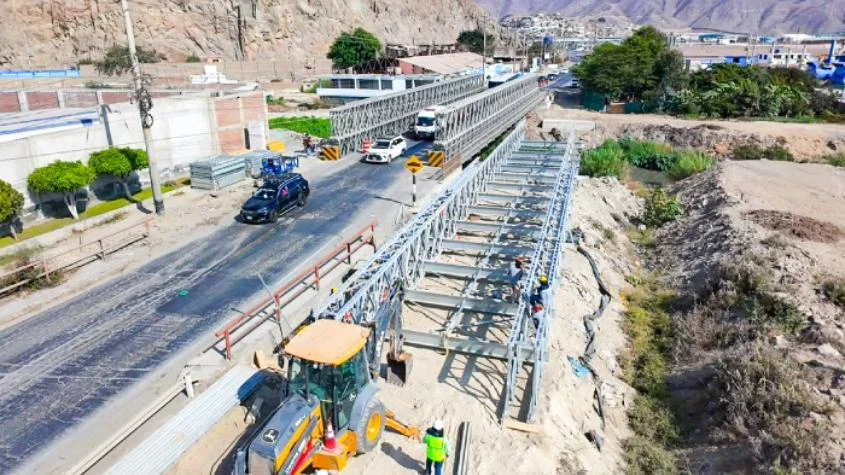
In a significant move to bolster the reliability of Peru’s primary transport network, the Ministry of Transport and Communications (MTC), acting through its executive branch, Provías Nacional (PVN), has accelerated the installation of a strategic modular bridge in the Ancash region. Located at kilometer 443+660 of the Pan-American North highway (Route PE-1N) in the province of Santa, this temporary structure serves as a vital component in the government’s broader plan to modernize and maintain critical national infrastructure.
The project, which represents an investment of approximately S/ 629,000, is designed to serve as a bypass solution. By providing an alternative route, the modular bridge will allow for the comprehensive, periodic maintenance of the existing Coishco bridge—a structure that currently bears the heavy burden of daily transit between major economic hubs in northern Peru.
Main Facts and Technical Specifications
The new modular bridge, spanning 36.576 meters in length, is engineered to meet the immediate demands of high-volume traffic flow. While the existing bridge is a dual-lane structure, the modular addition is designed as a single-lane bridge to facilitate traffic management during the repair phase.
Key Project Details:
- Location: Km 443+660, Pan-American North (PE-1N), Santa, Ancash.
- Structure Type: Modular bridge (temporary).
- Dimensions: 36.576 meters in length.
- Budget: Approximately S/ 629,000.
- Estimated Completion: September 2026.
- Project Lead: Provías Nacional (PVN), Ancash Zonal Unit.
The installation process is not merely limited to the bridge itself; it encompasses a complex series of civil engineering tasks, including the construction of robust access roads, the reinforcement of the sub-structure, and the precise assembly of the modular components. These elements ensure that the structure can handle the heavy vehicular load typical of the Pan-American highway while maintaining structural integrity.
Chronology of Operations
The development of this project has followed a rigorous schedule managed by the Ancash Zonal Unit of Provías Nacional.

Phase I: Planning and Logistics
Initial phases focused on the procurement of modular components and the certification of the budget. Given the importance of the Pan-American highway as a lifeline for trade and passenger transit, the MTC prioritized the procurement of high-durability modular steel sections capable of being deployed rapidly.
Phase II: Civil Works and Substructure
The early summer months were dedicated to the groundwork. This included leveling the terrain for the access routes and preparing the concrete supports that would anchor the modular bridge. This phase was critical, as the geography of the Santa province requires precise geotechnical engineering to prevent erosion or shifting during the rainy seasons.
Phase III: Launching and Assembly
Over the past several weeks, the project entered its most visible phase: the launching of the bridge. This involves the systematic sliding of the assembled bridge sections across the designated gap. Parallel to this, the engineering teams have been conducting continuous safety monitoring.
Phase IV: Final Integration and Safety Protocols
As of late August, the focus has shifted toward final adjustments, safety testing, and the implementation of traffic control measures. The integration process includes the installation of signaling, reflective road markers, and safety barriers to protect both the commuters and the site personnel who continue to work in the vicinity.
Supporting Data and Economic Impact
The investment of S/ 629,000 is a targeted expenditure aimed at preventing long-term economic losses. The Pan-American North is a primary artery for the transport of agricultural, industrial, and consumer goods. Any disruption to this route—whether caused by structural failure or unplanned maintenance—can have immediate ripple effects on the supply chain.

By opting for a modular solution, the MTC has chosen a cost-effective and time-efficient strategy. Modular bridges are prefabricated, which minimizes on-site construction time and reduces the duration of traffic restrictions. This approach allows the ministry to maximize the lifespan of the permanent Coishco bridge without compromising the movement of goods and people during the renovation period.
Official Responses and Safety Recommendations
The Ancash Zonal Unit of Provías Nacional has maintained a policy of transparency regarding the progress of the works. Specialists from the unit have been coordinating daily with local authorities to ensure that traffic flow remains as fluid as possible during the construction phase.
MTC Guidelines for Road Users:
The MTC has issued a series of recommendations for motorists traveling through the Santa province:
- Adherence to Signage: Drivers are strictly instructed to follow all temporary road signs, speed limits, and traffic warnings installed in the vicinity of the construction zone.
- Continuous Monitoring: Traffic management protocols are in effect 24 hours a day. The MTC urges drivers to be mindful of heavy machinery entering and exiting the highway.
- Speed Restrictions: Due to the narrowing of the road during the transition to the modular bridge, speed limits have been reduced. Compliance is essential to prevent accidents.
- Patience During Maintenance: As the project nears its completion in September, the MTC acknowledges the inconvenience caused to local residents and commercial transporters, expressing gratitude for their cooperation in ensuring a safer, more robust road network.
Implications for Future Infrastructure
The deployment of the Coishco modular bridge is part of a larger national strategy to modernize Peru’s road infrastructure. As climate change increases the frequency of extreme weather events and natural disasters in coastal regions, the ability to rapidly deploy modular, temporary bridges has become a core competency of the MTC.
This project serves as a case study for future interventions. The success of the installation and the adherence to the September deadline will likely influence how the MTC manages future maintenance projects on the Pan-American corridor. By proactively maintaining the permanent structure through the use of a modular alternative, the government is demonstrating a shift toward predictive, rather than reactive, infrastructure management.

Strategic Regional Importance
The province of Santa and the broader Ancash region are vital to the national economy, hosting significant mining, fishing, and agricultural enterprises. Ensuring that the transportation infrastructure in this area is resilient is not merely a regional priority but a national one. The bridge project, while modest in its budget compared to massive highway overhauls, is a critical cog in the machine that keeps the Peruvian economy moving.
Conclusion: Looking Ahead
As the final phase of the installation approaches, the focus remains on the seamless transition between the existing bridge and the new modular structure. Once the installation is complete in September, the MTC will commence the scheduled maintenance of the permanent Coishco bridge. This cycle of maintenance is essential to extend the life of the permanent structure by decades, ultimately saving taxpayers millions in potential replacement costs.
The MTC’s efforts in Santa represent a commitment to the "Roads for Growth" initiative, highlighting the importance of engineering precision and fiscal responsibility. As the project reaches its conclusion, it stands as a testament to the importance of proactive infrastructure management and the continued dedication of the personnel at Provías Nacional to the connectivity of the Peruvian nation.
For ongoing updates regarding traffic conditions on the Pan-American North and further details on MTC infrastructure projects, road users are encouraged to monitor the official channels of the Ministry of Transport and Communications.