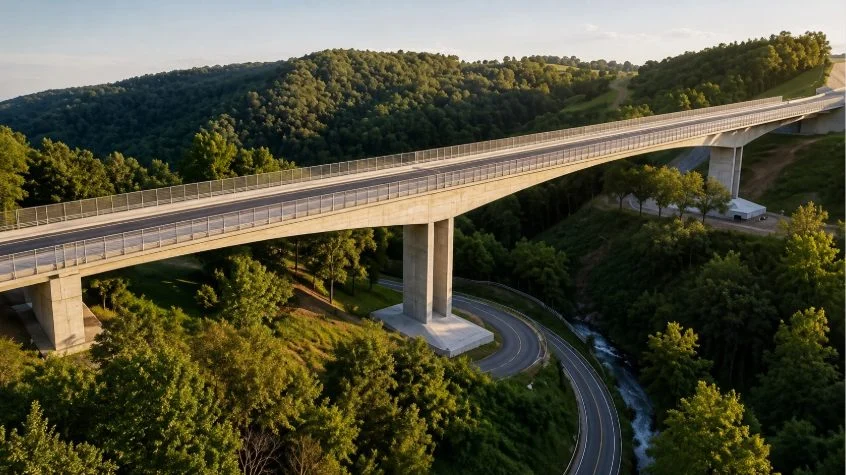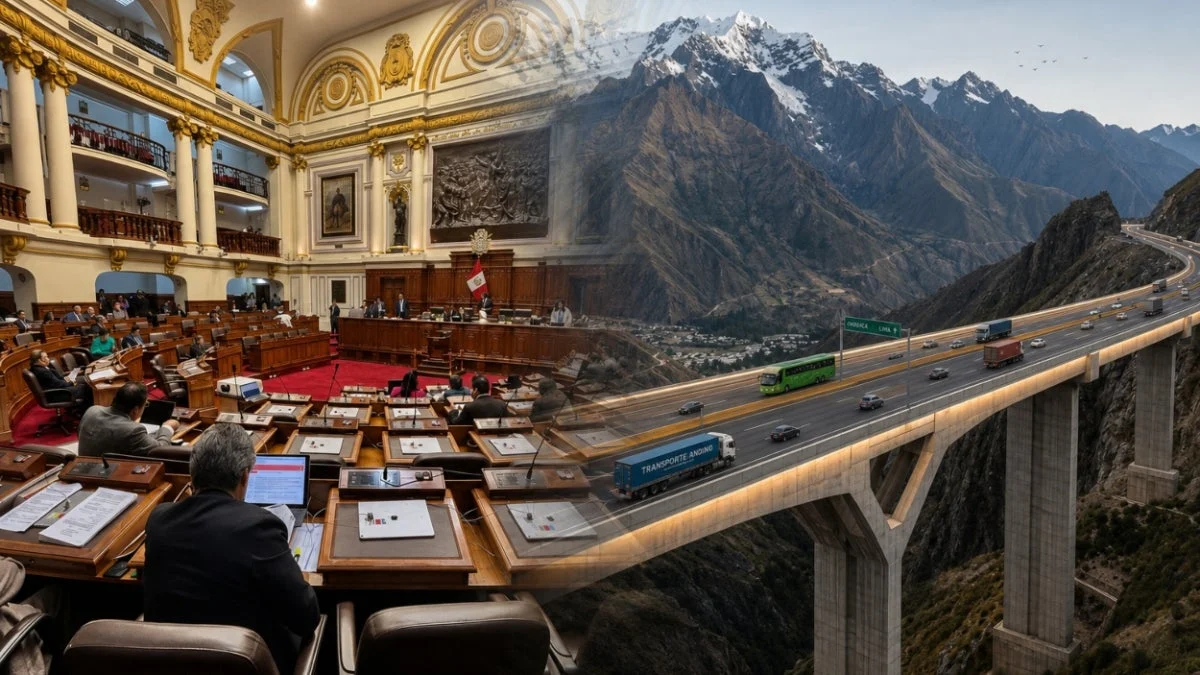
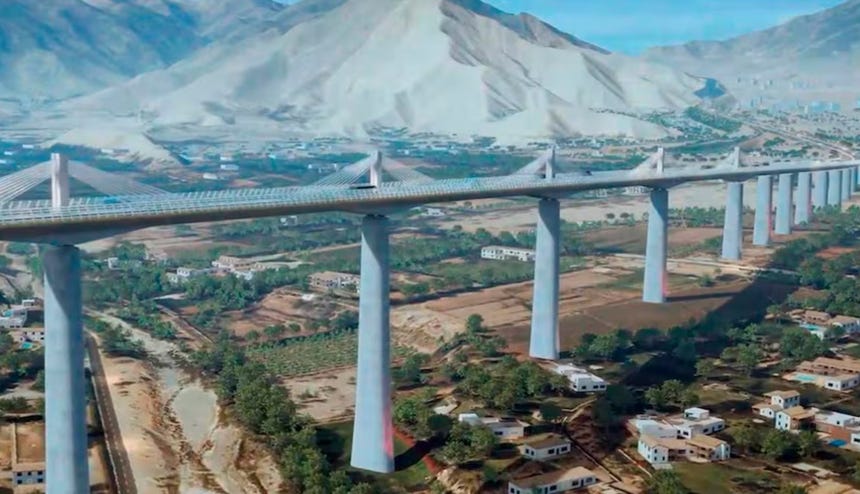
The ambition to modernize Peru’s connectivity—a massive undertaking designed to link Lima with the central Andes in a mere three hours—has hit a critical, perhaps existential, impasse. The "Nueva Carretera Central" (New Central Highway), a megaproject valued at over S/30 billion, has been dealt a staggering blow following the recent legislative session of the Congressional Permanent Commission.
Despite being marketed as the crown jewel of national infrastructure, the project was conspicuously absent from the supplemental credit package approved on the night of July 14. What began as a government request for S/400 million to jump-start construction, later slashed to S/200 million by the executive branch, ultimately received zero soles in the final legislative vote. This decision has plunged the project into uncertainty, leaving stakeholders, regional authorities, and the public questioning the political viability of the entire endeavor.
A Chronology of Disappointment
To understand the gravity of the current situation, one must look at the trajectory of the project over the last several months. The Nueva Carretera Central has been a volatile subject, characterized by ambitious promises that consistently clash with budgetary realities and bureaucratic gridlock.
- February 2026: The project faced intense public scrutiny following the revelation of a massive funding shortfall. With only S/190 million allocated in the annual budget, regional authorities in Junín organized a 48-hour strike, signaling deep dissatisfaction with the central government’s perceived apathy.
- March 2026: The Ministry of Transport and Communications (MTC) formally requested an additional S/400 million from the Ministry of Economy and Finance (MEF). The goal was to fund critical early-stage interventions, most notably the San Juan de Pariachi tunnel, which serves as the logistical gateway for the entire project.
- Mid-2026: The project survived a near-death experience regarding its management structure. Provías Nacional had initially moved to terminate the technical assistance contract with PMO Vías (the consortium comprising French firms Egis and Setec) over corruption allegations in a separate project in Panama. The government eventually walked back this decision, choosing to keep the consortium under stricter oversight protocols to avoid further delays.
- July 14, 2026: The Congressional Permanent Commission approved a massive supplemental credit package of S/9.596 billion for various sectors. In a move that shocked proponents of the highway, the previously debated S/200 million allocation for the project was entirely removed from the final text.
The Financial Chasm: From Billions to Zero
The disparity between the project’s estimated cost—exceeding S/30 billion—and the actual available budget is staggering. Currently, the project holds only S/190 million in funds, an amount that industry experts describe as a "drop in the ocean" for a project of this scale.
The S/400 million requested by the MTC in March was not intended for full-scale construction, but rather for the essential "nitty-gritty" of infrastructure development: the expropriation of land, the technical supervision of initial segments, and the physical initiation of the San Juan de Pariachi tunnel. When the executive branch submitted its legislative proposal, it had already moderated its request to S/200 million. The fact that even this reduced figure was stripped away by Congress suggests a profound breakdown in communication—or perhaps a fundamental lack of consensus—between the legislative and executive powers.

Regional Outcry and Official Responses
The reaction from the Junín region was swift and scathing. Zósimo Cárdenas, the Regional Governor of Junín, did not mince words when addressing the press. "We are completely uncomfortable and surprised. We had demanded more than what was programmed; only S/200 million had been put on the table when the minimum we required was S/400 million. And now, worse, there is absolutely nothing," Cárdenas stated in an interview with RPP.
Cárdenas placed the blame squarely on the shoulders of the legislative body. While acknowledging that the MEF and the Presidency of the Council of Ministers (PCM) had initially included the funding in their proposal, he noted that the ultimate authority rested with the Congress. "I believe there is a clear congressional responsibility here," he asserted, suggesting that the project is being used as a political bargaining chip at the expense of regional development.
From the perspective of the Ministry of Transport, the narrative remains one of "maintaining the goal." Prior to this latest legislative setback, the Ministry had publicly reiterated its commitment to beginning the first construction phases before July 28, 2026. However, without the necessary supplemental funds to advance the procurement and land acquisition processes, that timeline is now widely considered to be physically and legally impossible.
Implications: The Long Road Ahead
The implications of this funding vacuum are multi-faceted and potentially long-lasting:
1. The Risk of Obsolescence
The project is not just a road; it is a complex engineering feat that requires sustained, multi-year funding. By starving the project of immediate capital, the government risks losing the momentum gained through international technical assistance. If the procurement processes for the various segments are not funded, the competitive bids currently being managed by international entities may expire or be withdrawn, leading to a costly restart of the entire tender process.
2. The Credibility Gap
The government has consistently presented the Nueva Carretera Central as a strategic priority. By failing to secure the requested funding in a massive, multi-billion-sol credit package, the administration is effectively signaling that the project is not a priority. This creates a "credibility gap" that will make it harder for the government to secure international financing or private sector partnerships in the future.
3. The 2035 Deadline Threat
The Comptroller General’s office has already issued multiple warnings regarding the technical inconsistencies within the project’s documentation. Reports have indicated that the current pace of development, exacerbated by funding delays, could push the completion date to 2035. This would represent a four-year delay from the original 2031 target. With the recent removal of funding, even the 2035 date appears optimistic.
4. Economic and Social Impact
The existing Central Highway is perpetually clogged, plagued by safety hazards, and frequently shut down by landslides or traffic accidents. It is the primary artery for food and mineral supplies to the capital. The failure to advance the new, modern alternative translates to continued economic losses for the central region and a diminished quality of life for the thousands of travelers who rely on the current, inadequate route.
Conclusion: A Project at a Crossroads
The "Nueva Carretera Central" is currently caught in a political tug-of-war that has little to do with engineering or infrastructure and everything to do with fiscal policy and power dynamics. The removal of the S/200 million allocation from the supplemental credit package is more than just a budgetary footnote; it is a signal that the project has lost its political momentum.
For the inhabitants of the central highlands and the logistics sector in Lima, the dream of a three-hour transit remains exactly that—a dream. As the project sits in a state of financial limbo, the cost of inaction will continue to mount. Whether the government will attempt to bridge this gap through future budget adjustments or whether the project will be relegated to the list of "unfinished promises" remains to be seen. What is clear is that without a unified, non-partisan commitment to funding and execution, the Nueva Carretera Central will continue to be a highway to nowhere.