Introduction: A New Chapter for Geological Infrastructure
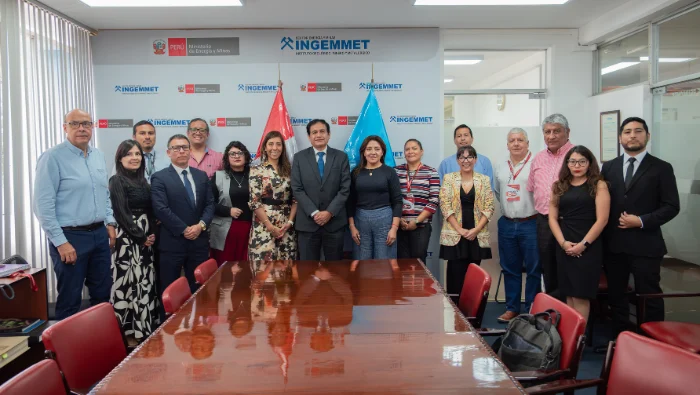
In a significant development for the Andean nation’s extractive sector, the Geological, Mining, and Metallurgical Institute (INGEMMET) has reaffirmed its strategic alliance with the World Bank. The collaboration, formalized through a high-level technical meeting, marks a pivotal moment for the Program for the Improvement of Competitiveness and Sustainability of Mining Investments (MECOSIM).
As Peru seeks to maintain its status as a global leader in copper and precious metals production, the integration of advanced technology, rigorous geoscientific research, and institutional modernization has become non-negotiable. This partnership aims to bridge the gap between raw geological data and sustainable, data-driven mining policies that can withstand the scrutiny of a global market increasingly focused on Environmental, Social, and Governance (ESG) criteria.
Main Facts: The Core Objectives of the Mission
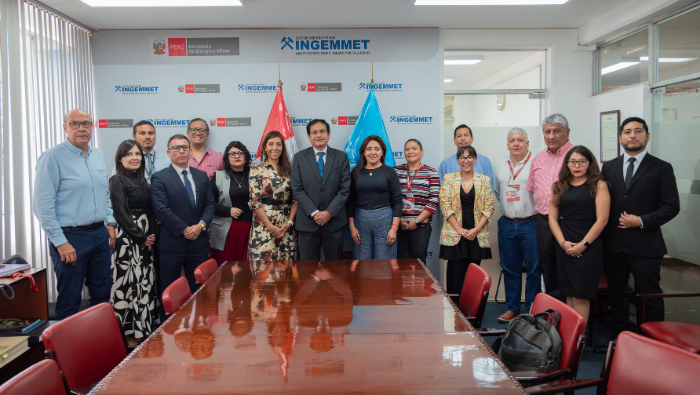
The recent technical mission served as the official introduction of INGEMMET’s Executive President, Ing. Walther León, to the World Bank’s delegation. Under León’s leadership, the meeting focused on accelerating four critical pillars that define the MECOSIM agenda. These pillars are not merely administrative tasks; they represent the backbone of Peru’s future geological infrastructure.
1. The National Core Repository (Litoteca)
The expansion and modernization of the National Litoteca are essential for providing investors and researchers with access to physical geological evidence. By archiving and categorizing core samples from across the country, INGEMMET creates a "geological library" that reduces exploration risk and fosters innovation in discovery.
2. The Geochronology Laboratory
Precision is the hallmark of modern mining. The development of a state-of-the-art geochronology laboratory will allow INGEMMET to determine the age and composition of geological formations with unprecedented accuracy. This data is vital for mapping mineral deposits and understanding the metallogenic evolution of the Peruvian Andes.
3. Prospecting and Mineral Potential Research
The transition from reactive geological mapping to predictive, prospectivity-focused research is a key goal. By leveraging artificial intelligence and big data, the partnership aims to identify "blind" deposits—those not visible at the surface—thereby ensuring the longevity of Peru’s mining pipeline.
4. Comprehensive Digital Transformation
Administrative efficiency and public transparency are the final legs of the MECOSIM stool. By digitizing geological archives and automating the processing of mining rights, INGEMMET intends to reduce bureaucratic bottlenecks that have historically hindered exploration activities.
Chronology: Building the Partnership
The relationship between INGEMMET and the World Bank has evolved significantly over the last decade, transitioning from advisory roles to deep, operational integration.
- Initial Engagement (Pre-2020): Preliminary discussions regarding the need for modernizing Peru’s geological data management systems to compete with international mining jurisdictions like Australia and Canada.
- The Conceptualization of MECOSIM: The formalization of the MECOSIM program, designed to address the systemic challenges of the Peruvian mining sector through technical assistance and funding.
- Institutional Alignment (2024-2025): A period of focus on aligning INGEMMET’s internal processes with international best practices as stipulated by the World Bank’s rigorous project management standards.
- The Current Technical Mission (September 2026): The official induction of President Walther León, signaling a shift toward the execution phase of the program’s most ambitious projects, including the laboratory upgrades and digital infrastructure deployment.
Supporting Data: The Economic Case for MECOSIM
Peru’s mining sector accounts for approximately 10% of the national GDP and nearly 60% of its exports. However, global competition for capital is fiercer than ever. Data indicates that for every dollar spent on geological research, the return on investment for the national economy—through tax revenue, infrastructure development, and employment—is exponential.
The MECOSIM program is supported by the necessity of "de-risking" the Peruvian mining landscape. Investors frequently cite the lack of digitized, accessible, and high-quality geological data as a primary obstacle to entering new greenfield exploration projects. By centralizing information through the digital transformation initiative, INGEMMET is effectively lowering the "entry barrier" for junior exploration companies, which are the engine of discovery for new mineral reserves.
Official Responses and Institutional Strategy
During the recent working session, Ing. Walther León emphasized that the partnership with the World Bank is more than a technical exchange; it is a commitment to the institutional integrity of the Peruvian state.
"Our goal is to modernize the way we perceive and manage our subsoil," León stated during the meeting. "By aligning our geoscientific capabilities with international standards, we are not only facilitating investment but also ensuring that our mining industry operates on a foundation of scientific certainty and environmental responsibility."
The World Bank delegation highlighted that the success of MECOSIM hinges on the "continuity of institutional technical capacity." They noted that INGEMMET’s ability to sustain these initiatives, even amidst political fluctuations, will be the determining factor in the long-term success of the investment programs. The Bank reaffirmed its support for the project, citing it as a benchmark for how multilateral organizations can partner with government agencies in emerging economies to foster sustainable resource development.
Implications: The Road Ahead
The implications of the INGEMMET-World Bank alliance extend far beyond the boardroom.
For the Mining Industry
Private sector actors can expect a more transparent and predictable regulatory environment. As the digital transformation pillar matures, the processing time for mining concessions and the accessibility of geological maps will likely improve, fostering a more competitive exploration market.
For Scientific Research
The new Geochronology laboratory will position Peru as a regional hub for geological studies in South America. It will allow local scientists to conduct high-level research without the need to export samples to laboratories in the United States or Europe, effectively keeping technical expertise within the country.
For National Sustainability
Perhaps most importantly, the partnership emphasizes "responsible mining." By better understanding the geological and environmental impact of mineral extraction, INGEMMET can provide the government with the necessary data to design policies that mitigate ecological damage while maximizing social benefit.
Conclusion: A Catalyst for Future Generations
The collaboration between INGEMMET and the World Bank under the MECOSIM framework is a strategic investment in the future of Peru. As the global energy transition accelerates, the demand for critical minerals—such as copper for electric vehicles and renewable energy grids—will continue to rise. Peru, with its vast mineral wealth, is poised to play a central role in this global shift.
However, wealth in the ground is only as valuable as the information used to extract it. Through this partnership, INGEMMET is evolving from a traditional regulatory body into a modern, data-driven institution. The commitment to the four pillars of MECOSIM—the Litoteca, the laboratory, prospectivity research, and digital transformation—ensures that Peru will remain a preferred destination for global mining investment, grounded in science, transparency, and sustainability.
As the mission concluded, the message from both parties was clear: the path toward a competitive and sustainable mining sector in Peru is paved with international cooperation and a relentless pursuit of technical excellence. The work ahead is rigorous, but the potential rewards for the nation’s economic development are profound.