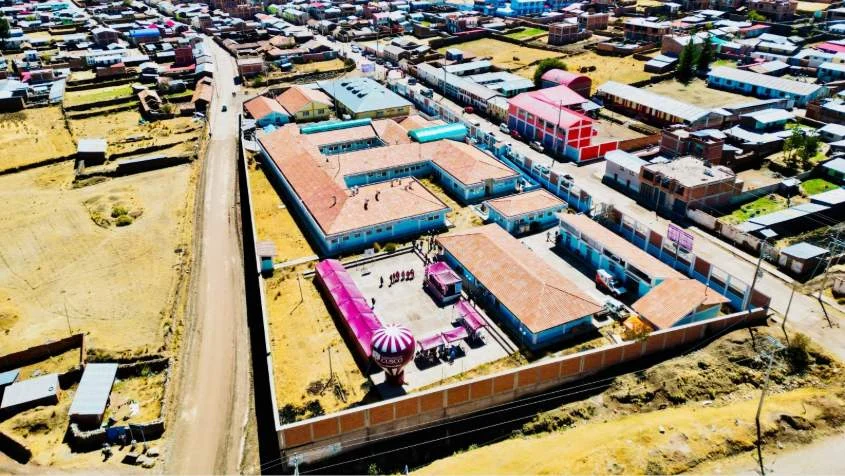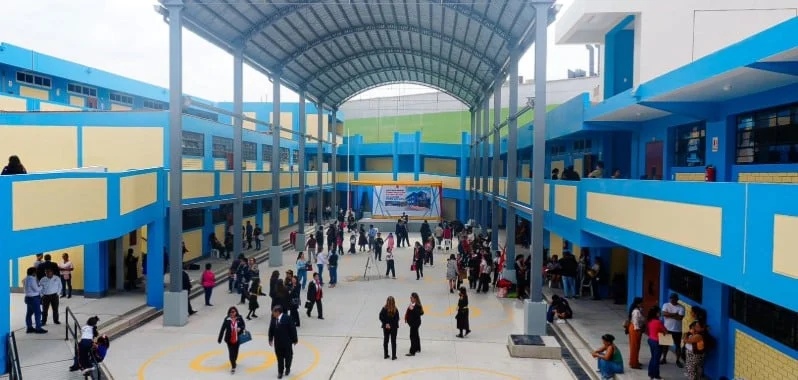
In a landmark achievement for regional public infrastructure, the Provincial Municipality of Chiclayo has officially inaugurated the modernized facilities of the Institución Educativa N° 10022 Miguel Muro Zapata. This project, which stands as a testament to municipal perseverance in the face of bureaucratic hurdles, provides a high-tech learning environment for over 1,300 students ranging from early childhood (inicial) to primary education levels.
The delivery of this project marks the end of a long-standing struggle for the school community, transforming what was once a site of halted construction into a beacon of educational progress. Under the leadership of Mayor Janet Cubas, the local government successfully navigated the complexities of public works, prioritizing the future of Chiclayo’s youth over the administrative inertia that had previously plagued the site.
A Chronology of Persistence: From Stagnation to Completion
The journey of the Miguel Muro Zapata school is a reflection of the broader challenges currently facing infrastructure development in Peru. Initially slated for renovation under the "Reconstrucción con Cambios" (Reconstruction with Changes) program—an initiative designed to rehabilitate areas affected by natural disasters—the project fell victim to the national administrative transition.
The Stagnation Phase
Following the dissolution and subsequent restructuring of the Authority for Reconstruction with Changes (ARCC), numerous projects across the northern coast were left in a state of limbo. The Miguel Muro Zapata school was among those halted, with construction left unfinished and the student body displaced or forced to operate in substandard, makeshift conditions. For years, the community lobbied for a resolution, as the physical decay of the previous structure posed safety risks and hindered academic performance.
The Municipal Intervention
Recognizing that the delay was directly impacting the fundamental rights of its citizens, the Provincial Municipality of Chiclayo made the strategic decision to intervene. Abandoning reliance on the stalled national program, the municipality moved to utilize its own fiscal resources to take control of the project. This shift was critical; it allowed for the resumption of work without the bureaucratic bottlenecks that had paralyzed the original plan.

Completion and Inauguration
After a rigorous period of construction, the facility was recently handed over to the school administration. The inauguration ceremony served as a celebration of the community’s resilience, attended by municipal officials, parents, teachers, and students who have been the primary stakeholders in this lengthy process.
Architectural and Technological Specifications
The investment of over 9 million soles was not merely directed toward brick and mortar; it was a targeted effort to bridge the digital and physical divide in public education. The new facility is designed to meet modern pedagogical standards, ensuring that students in Chiclayo have access to the same quality of infrastructure as their counterparts in more affluent urban centers.
Infrastructure Highlights
- Five Integrated Pavilions: The campus is organized into five distinct blocks, optimizing circulation and safety for the primary and initial student cohorts.
- Capacity: The facility now boasts 24 fully equipped classrooms, designed with ergonomic furniture and modern lighting systems to foster a productive learning environment.
- Specialized Learning Zones: Unlike the previous structure, the new school features dedicated laboratories for science and technology. These spaces are equipped to host hands-on experiments and digital learning, which are essential for developing the analytical skills required in the 21st-century workforce.
- Library and Resource Centers: A central library serves as the heart of the school, providing a quiet space for research and reading, integrated with digital access points.
- Recreational and Physical Education Areas: Recognizing the importance of holistic development, the project includes upgraded playgrounds and sports areas that meet safety and accessibility standards.
Supporting Data: Why This Investment Matters
The economic and social implications of this investment are profound. In many provinces of Peru, the "infrastructure gap" in education remains one of the greatest barriers to social mobility.
According to municipal data, the school serves a dense urban population, and the previous lack of adequate space resulted in overcrowding and forced multi-grade shifts that degraded the quality of instruction. By expanding the physical footprint to include 24 modern classrooms, the municipality has effectively eradicated the overcrowding crisis at the Miguel Muro Zapata school.
Furthermore, the decision to fund this project with municipal resources underscores a shift in governance. By taking ownership of the project, the municipality has demonstrated that local governments are increasingly becoming the primary drivers of essential infrastructure, effectively bypassing the complexities of centralized federal procurement when it fails to deliver on its promises.

Official Responses and Strategic Vision
During the inauguration, Mayor Janet Cubas highlighted that the project was not just a construction endeavor, but a "commitment to the social contract."
"We understood that we could not wait indefinitely for national-level changes to occur while our children suffered in inadequate classrooms," Mayor Cubas stated during the ceremony. "The Miguel Muro Zapata school is proof that when local resources are managed transparently and with a clear focus on the public good, we can turn the tide on the stagnation that has historically affected our province."
The municipal administration has signaled that this project is part of a broader strategy to revitalize educational facilities across Chiclayo. By establishing a template for how stalled projects can be recovered through local intervention, the municipality is positioning itself as a leader in regional administrative efficiency.
The Broader Implications: A Model for Peru?
The success of the Miguel Muro Zapata school carries significant implications for national policy. As Peru continues to grapple with the aftermath of various institutional reforms—including the restructuring of the ARCC—the case of Chiclayo provides a viable roadmap for other municipalities.
Implications for Decentralization
The project serves as a practical example of "effective decentralization." It highlights that when municipal governments are empowered to take charge of local infrastructure, the results are often more aligned with the immediate needs of the population. It also serves as a warning to central authorities: if the federal government cannot provide consistent support for reconstruction, local authorities will increasingly seek to fill the void, potentially reshaping the balance of power between the central and provincial governments.

Economic Impact
Beyond the academic benefits, the construction phase provided a significant boost to the local economy. The 9-million-sol investment supported local engineering firms, construction supply chains, and labor markets in Chiclayo. As the school enters its operational phase, it will also act as a focal point for community engagement, fostering social cohesion in the surrounding neighborhoods.
Long-Term Educational Outcomes
The long-term impact of this facility will be measured in student performance. With access to modern science labs and technology centers, the students of Miguel Muro Zapata are now better prepared to compete in regional and national academic assessments. The school’s environment is now a "competitiveness factor" that will likely lead to higher enrollment rates, lower dropout rates, and a more motivated teaching staff.
Conclusion
The transformation of the Institución Educativa N° 10022 Miguel Muro Zapata is more than a successful public works project; it is a symbol of resilience. By overcoming the bureaucratic failure of the national reconstruction program, the Provincial Municipality of Chiclayo has set a new standard for public investment.
As the school doors open to the next generation of Chiclayo’s youth, the facility stands as a reminder that the quality of public infrastructure is the bedrock of democracy. With its new labs, modern classrooms, and upgraded recreational spaces, the school is well-positioned to serve as a hub of innovation and learning for years to come. For the students and families of Chiclayo, the wait is finally over, and the path to a brighter, more competitive future has been paved in stone, steel, and a firm commitment to progress.