In a chilling development for press freedom in Peru, international concern has mounted following a new attempt to initiate criminal proceedings against Gustavo Gorriti, the director of IDL-Reporteros. The move, spearheaded by prosecutor Edward Casaverde, marks a significant escalation in what observers describe as a systematic campaign of judicial harassment against investigative journalists who exposed the most profound corruption scandals in the country’s recent history.
The International Stand for Press Freedom
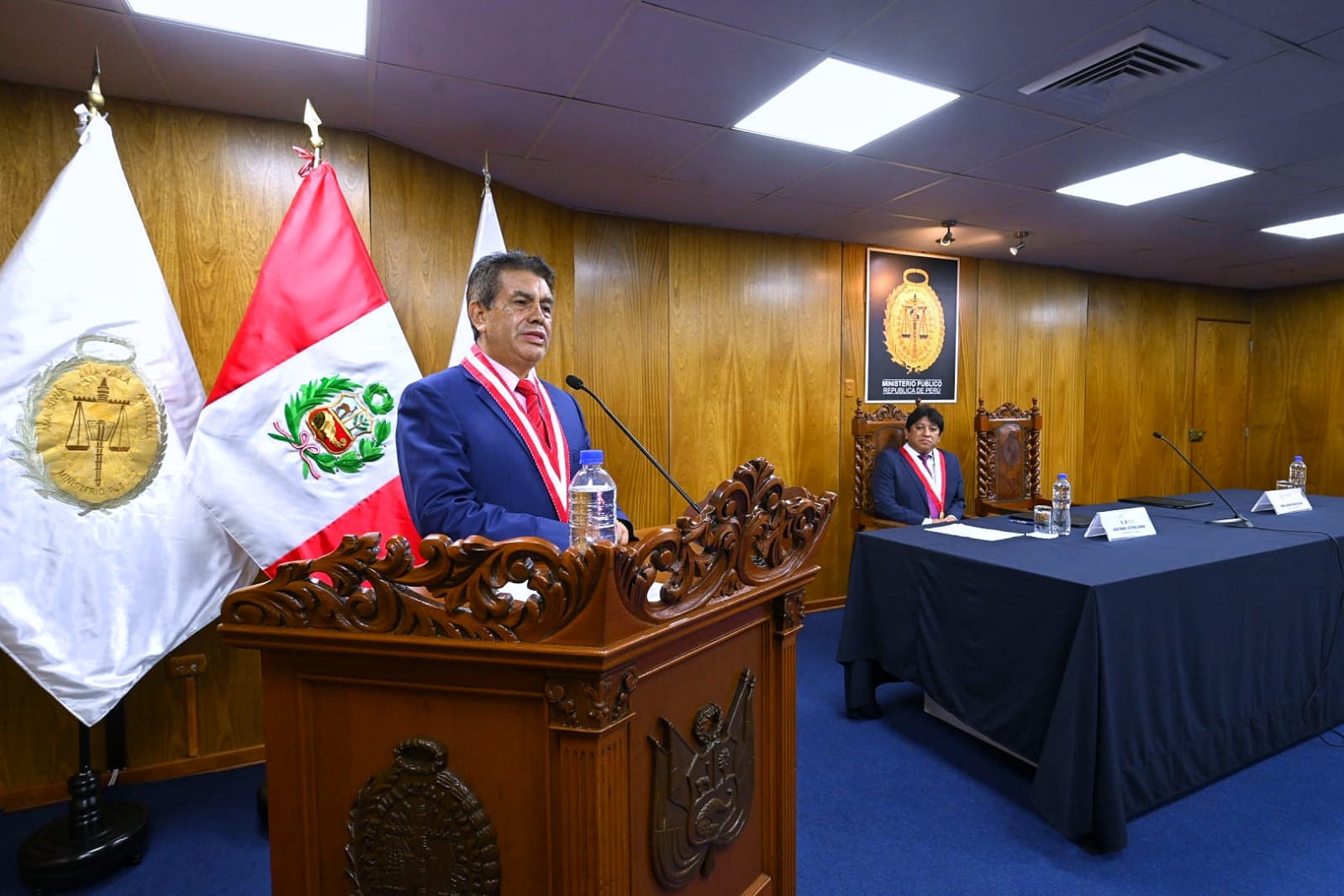
The alarm was sounded from New York by Joel Simon, director of the Journalism Protection Initiative at the Craig Newmark Graduate School of Journalism at CUNY. In a formal letter addressed to the Attorney General of Peru, Tomás Aladino Gálvez, Simon explicitly urged the Prosecutor’s Office to refrain from opening an "accusatory process" against Gorriti.
Simon, who previously served as the executive director of the Committee to Protect Journalists (CPJ) for 15 years, did not mince words: "Initiating an accusatory process against Gustavo Gorriti in retaliation for his journalistic work would represent a clear violation of freedom of the press." This intervention underscores the global stakes of the case, framing the Peruvian prosecution not as a legitimate legal action, but as a direct assault on the fundamental tenets of democratic accountability.
Chronology of a Contradiction: The "Casaverde vs. Casaverde" Case
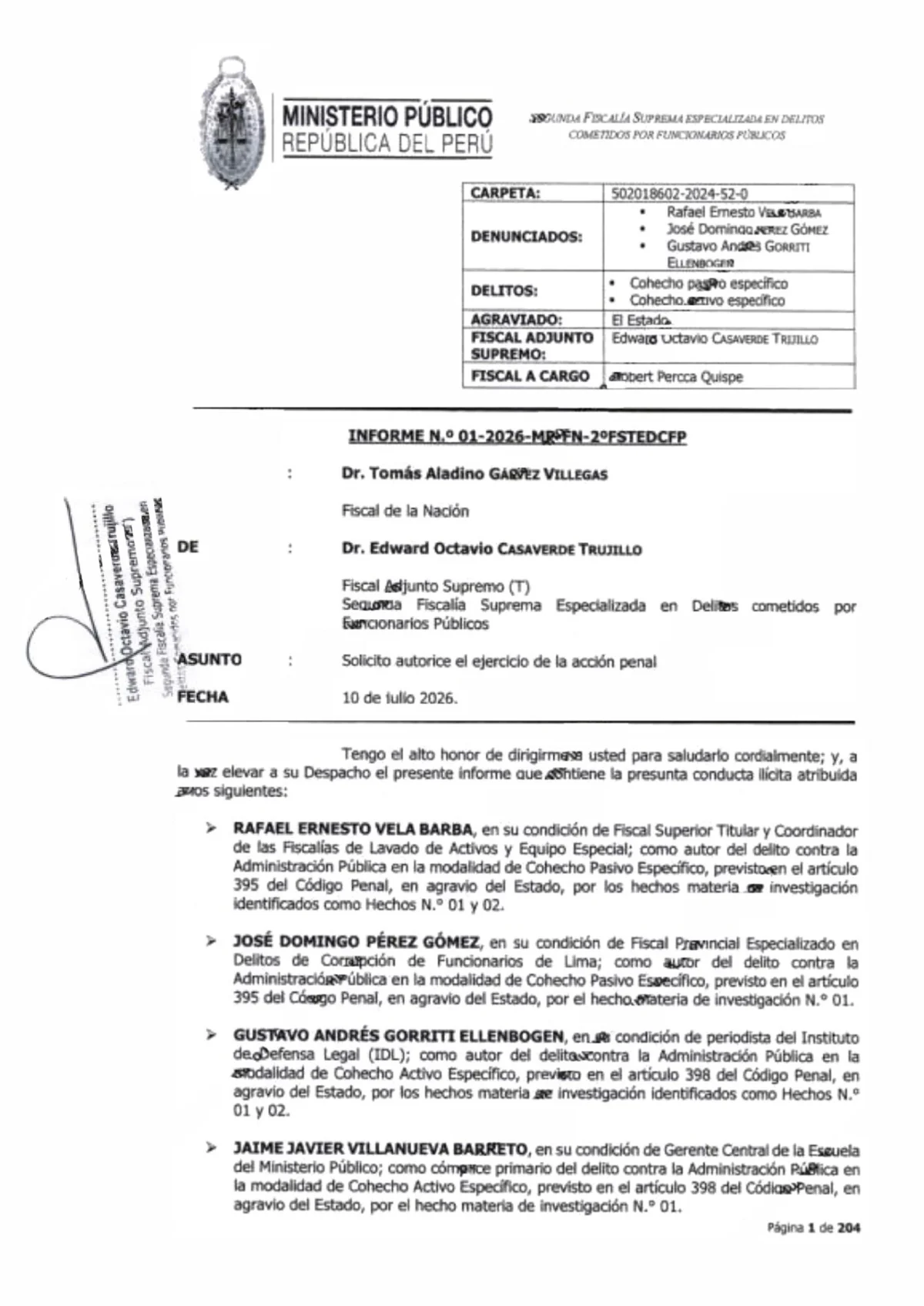
At the center of this legal storm is a document submitted by prosecutor Edward Casaverde on July 10, requesting authorization to prosecute Gorriti for alleged bribery. However, the document has been widely dismissed by legal experts—including analyst Rosa María Palacios, who famously labeled it "a mess" (un mamarracho)—for its glaring lack of legal foundation and logical consistency.

The most damning aspect of Casaverde’s current stance is its radical departure from his own previous findings. Less than a year ago, in a report evaluating the exact same case, Casaverde concluded that the evidence was insufficient and ordered the case to be archived. In that earlier decision, he effectively cleared the accused. The subsequent, inexplicable pivot to pursue a criminal case has left observers questioning what external pressures or political maneuvering forced the prosecutor to abandon his prior legal reasoning in favor of a narrative that contradicts his own work.
The Anatomy of Revenge: Lava Jato and the "Cuellos Blancos"
To understand the current aggression against IDL-Reporteros, one must look at the historical context of the Lava Jato (Car Wash) and Lava Juez (Cuellos Blancos) investigations. These inquiries exposed the systemic corruption linking the highest echelons of public power and private corporations.
The current prosecution is widely viewed by civil society as a retaliatory strike orchestrated by those who were exposed, investigated, and sanctioned during those landmark cases. The strategy is clear: utilize disinformation, fabricate conspiracies, and manipulate legal procedures to portray the act of investigative journalism—and the resulting uncovering of corruption—as a criminal "exchange of favors."
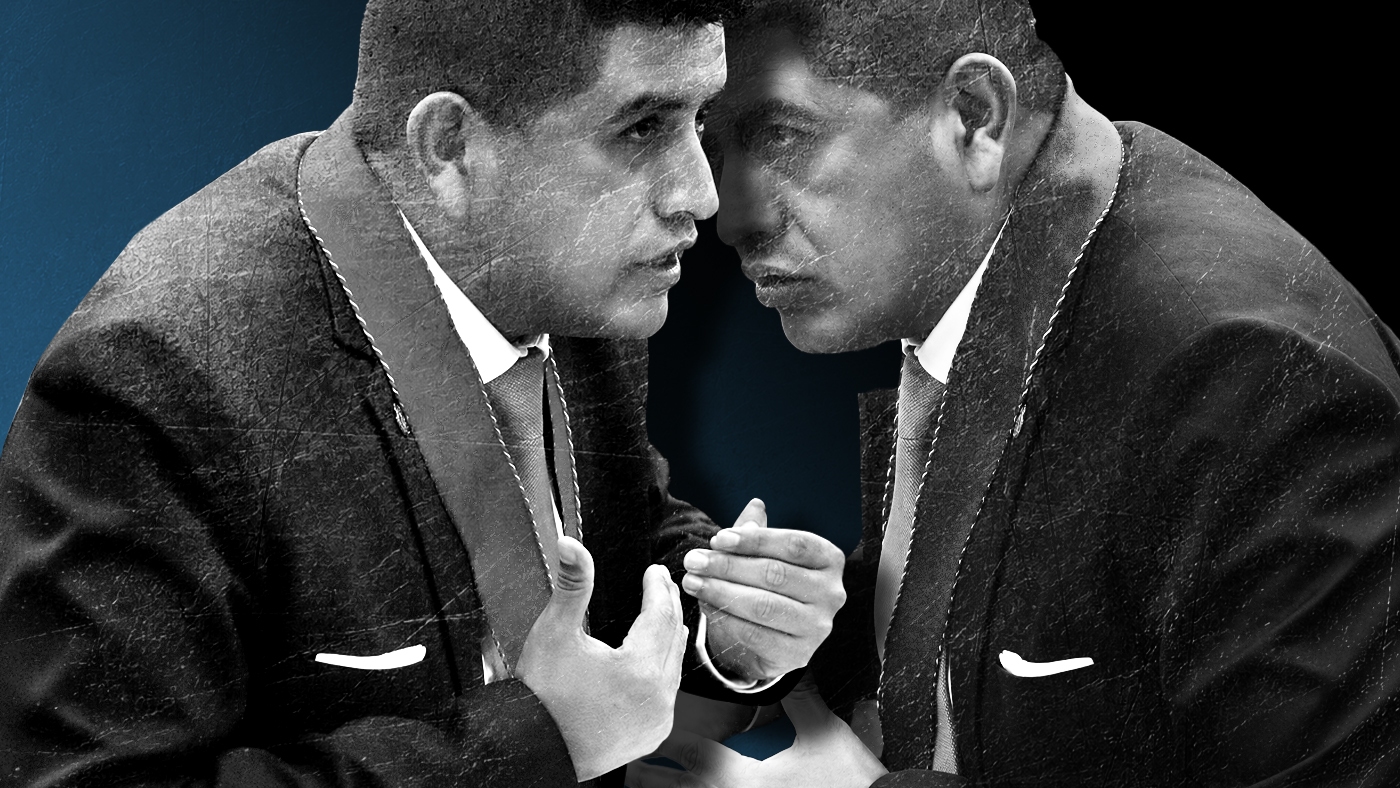
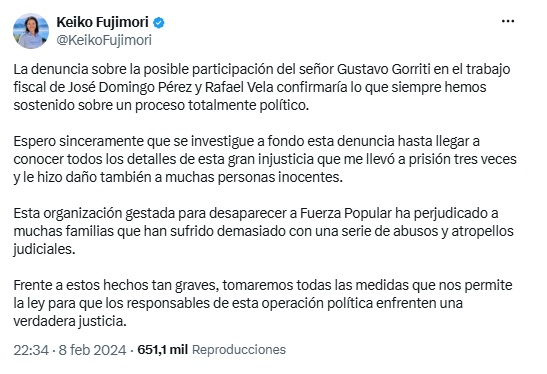
The political architecture of this offensive involves key figures who have long sought to discredit the judiciary. The campaign was significantly bolstered by members of Fuerza Popular, with Keiko Fujimori herself leading the charge by publicly endorsing the "testimonies" of key witnesses like Jaime Villanueva, subsequently turning them into the foundation for a formal penal complaint against the journalists who investigated them.
The Return of the "Mafia" to the Public Ministry
The current landscape within the Public Ministry has returned to a state of pre-investigation control by those whom IDL-Reporteros originally exposed. Several high-ranking officials who were previously removed for their alleged links to the Cuellos Blancos network have returned to power:
- Tomás Aladino Gálvez: Once removed by the National Justice Board (JNJ) for his alleged involvement in the corruption scandal, he has returned to the Supreme Prosecutor’s Office and now holds the position of Attorney General.
- Luis Arce: Previously dismissed for his ties to César Hinostroza and his resignation from the National Jury of Elections, he has been reinstated to all his prerogatives.
- Víctor Raúl Rodríguez Monteza: Known for his attempts to interfere with the Cuellos Blancos investigation by alerting those under suspicion, he has also returned to his role as Supreme Prosecutor.
- Patricia Benavides: Removed following the Operación Valkiria scandal, she has also been restored to her position as Supreme Prosecutor, further consolidating the influence of those who were the subjects of the very investigations that defined the last decade of Peruvian anti-corruption efforts.
The Fragile Foundation of the Accusation
The current case against Gorriti relies almost exclusively on the testimony of Jaime Villanueva. This creates a glaring paradox: while prosecutor Casaverde uses Villanueva as his "star witness," the Attorney General, Tomás Aladino Gálvez, has authored a 279-page document in a separate case—Operación Valkiria—where he systematically discredits Villanueva’s testimony in over 400 instances.
In those documents, Gálvez repeatedly characterizes Villanueva’s statements as "inaccurate," "contradicted by other facts," and "biased." If the Attorney General himself has deemed Villanueva’s testimony devoid of value in cases involving his own political allies, the decision by Casaverde to rely on that same testimony to prosecute a journalist reveals an ideological bias rather than a pursuit of justice.
Implications for the Future of Investigative Journalism
The report prepared by Casaverde is riddled with factual errors that go beyond mere mistakes, touching upon what in legal terms is defined as "inexcusable ignorance." The document incorrectly identifies Gorriti’s role, the history of his organization, and the nature of the protest movements he allegedly directed.
However, the most dangerous element of the report is its philosophical attack on the journalistic profession. By presenting the standard interaction between a journalist and their sources as a "corrupt exchange," the prosecution is effectively criminalizing the core functions of a free press. If the standard of "communicational bribery" were applied to global history, the Pentagon Papers, Watergate, and the Panama Papers would never have seen the light of day.
By targeting the methodology of investigative journalism, the prosecution is signaling that the objective is not to find the truth, but to silence those who expose it. As Gorriti stated, the goal is to "present the corrupt of yesterday as honorable citizens" while simultaneously framing journalists as criminals.

Conclusion: A Noble, If Dangerous, Cause
The current scenario in Peru is one of profound institutional regression. The groups of power that were weakened by the Lava Jato and Lava Juez investigations have not opted for reform; they have opted for a scorched-earth campaign against their critics. The goal is to use the threat of imprisonment as an instrument of intimidation, forcing the public to accept a version of events where the perpetrators of corruption are innocent, and the journalists who revealed them are the villains.
Despite the mounting pressure, Gustavo Gorriti remains steadfast. "Defending the right to the truth, whose vigorous arm is investigative journalism, was never and will never be easy," he remarked. "The price of doing so may be high, but I cannot think of a more noble cause."

As this case proceeds, the international community continues to watch with concern. The trial of Gustavo Gorriti is not merely about an individual journalist; it is a litmus test for the rule of law and the survival of democratic transparency in Peru. If the judiciary is allowed to be weaponized against those who hold power to account, the fundamental right to information for all citizens is effectively extinguished.