In a resounding testament to the growing influence of women in Science, Technology, Engineering, and Mathematics (STEM), the School of Higher Technological Education (EEST) of SENATI has achieved a historic milestone on the international stage. Representing Peru with distinction, the institution secured ten prestigious awards at the Korea International Women’s Invention Exposition (KIWIE) 2026, a premier global forum dedicated to highlighting the innovations of female researchers, entrepreneurs, and inventors.
This achievement not only celebrates individual brilliance but also underscores the efficacy of SENATI’s pedagogical model, which bridges the gap between academic research and the practical needs of the industrial sector. By securing three gold, three silver, and four bronze medals, the institution has solidified its position as a powerhouse of applied technology in Latin America.
The Core Achievement: KIWIE 2026
The Korea International Women’s Invention Exposition is more than a competition; it is a vital ecosystem for technological transfer and intellectual property (IP) development. Organized by the Korea Women Inventors Association (KWIA) and supported by the Korea Intellectual Property Office (KIPO), the event serves as a launchpad for women to showcase technologies that address real-world challenges.
At the 2026 edition, the EEST of SENATI stood out among a highly competitive field of universities and research centers from around the world. The ten awarded projects were not merely theoretical exercises; they were functional, scalable solutions designed to solve critical bottlenecks in industrial safety, health, and manufacturing efficiency.
Spotlight on Award-Winning Innovations
The diversity of the winning projects highlights the breadth of technical expertise fostered within SENATI’s workshops:
- Industrial Safety: A sophisticated security device utilizing ultrasonic detection for industrial juice extractors, effectively mitigating workplace accidents.
- Mechanical Optimization: An electromechanical system designed for the motorized application of adhesives, coupled with a specialized vapor extraction system for PVC piping, aimed at improving both worker health and production precision.
- Healthcare Infrastructure: A robust, anti-seismic protection system designed specifically for hospital cribs, ensuring patient safety in regions prone to geological instability.
- Quality of Life: Various technologies aimed at enhancing operational productivity and environmental safety in high-risk industrial environments.
Chronology of a Success Story
The journey to the KIWIE podium was a rigorous process that spanned several months of development, prototyping, and intellectual property registration.
- Identification Phase: Following the EEST’s research-driven curriculum, students and instructors identified specific pain points within the Peruvian industrial sector.
- Prototype Development: Throughout the academic year, these teams worked in state-of-the-art facilities, applying the "Dual Education" model—a signature of SENATI that balances theoretical knowledge with hands-on practice.
- Intellectual Property Filing: Before entering the international arena, the projects were processed through internal review boards to ensure technical feasibility and patentability.
- Submission and Evaluation: The projects were submitted to the KWIA review committee, where they were judged by international experts on criteria including originality, market potential, and technical complexity.
- The Announcement (September 2026): The official results were broadcast, confirming that all ten submitted projects from SENATI had been recognized with medals.
Supporting Data: The Impact of Women in STEM
The success of SENATI at KIWIE 2026 serves as a quantitative argument for the necessity of diversity in industrial innovation. According to recent international reports, patent filings by women remain lower than those of their male counterparts globally. However, the surge in participation from institutions like the EEST demonstrates that when the barrier to entry—specifically in terms of access to laboratories and mentorship—is lowered, the innovation output increases exponentially.
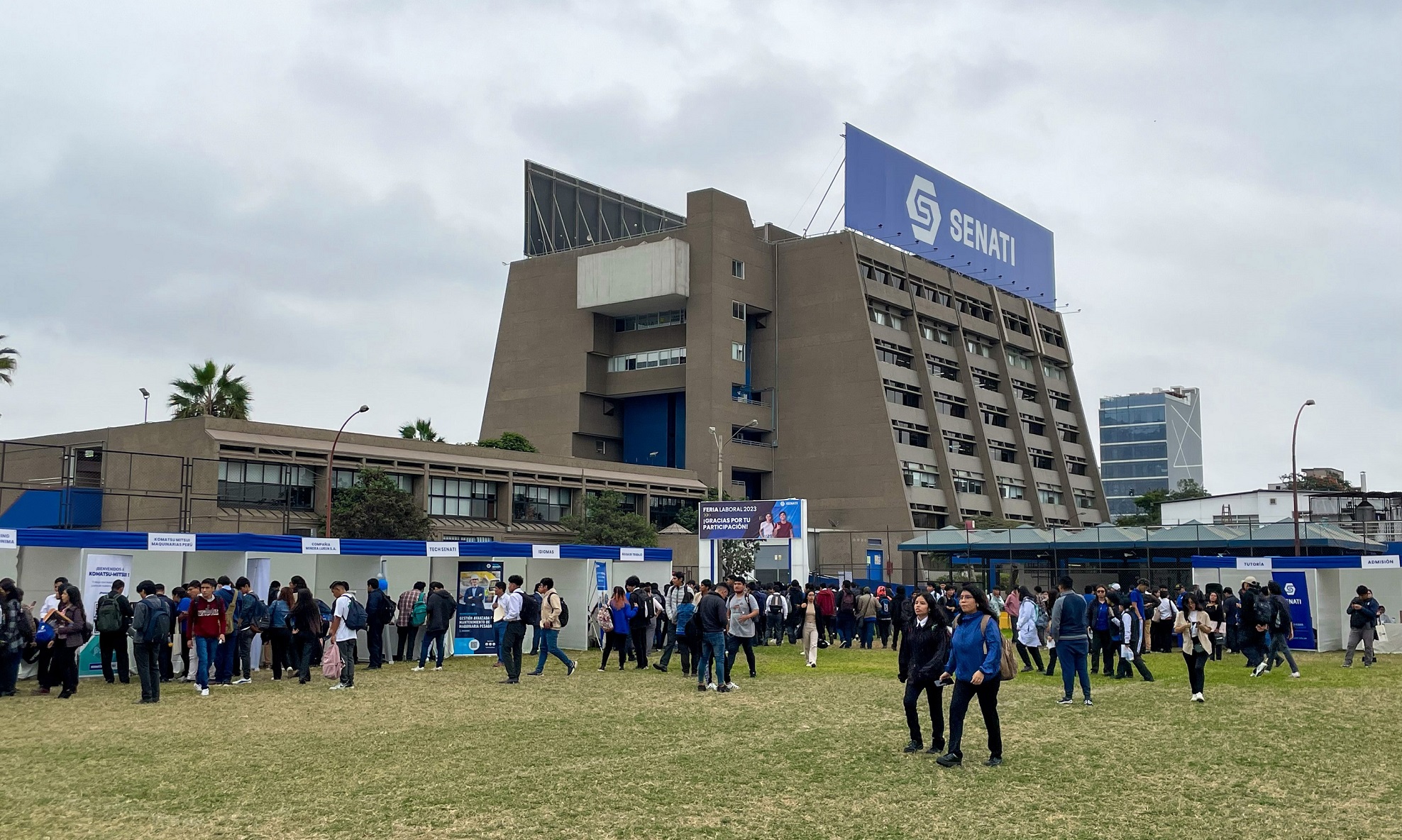
By institutionalizing research as a core requirement of the four-year engineering degree, the EEST of SENATI has created a "pipeline of talent" where 50% of the learning takes place in industrial environments. This ensures that the innovations recognized in Korea are not just "lab projects" but viable, market-ready solutions that could potentially be licensed or implemented by Peruvian companies.
Official Responses and Perspectives
The academic community and the researchers themselves view these awards as a turning point for Peruvian technological sovereignty.
Karen Cuba, a lead researcher and professor at the EEST of SENATI, emphasized the broader significance of the awards:
"These distinctions visibilize the crucial contribution of women to invention and technological development. Women do not just participate in engineering and technology; they are active architects of solutions. They identify problems, conceptualize systemic fixes, secure intellectual property, and lead projects that carry weight in both the industrial sector and the wider society. At SENATI, our mission is to ensure that every student, teacher, and researcher finds the pathway to convert their ideas into concrete technologies."
Reflecting on the international recognition, Cuba added:
"We are demonstrating that it is possible, from Peru, to develop technology that answers the real-world challenges faced by various industries. The talent we are molding has the capacity to design solutions and carry them to scenarios where they generate tangible impact. This is the potential we seek to strengthen through our engineering curriculum."
Implications: A New Era for Peruvian Industry
The ripple effects of this achievement are expected to be felt across several domains in the coming years:

1. Strengthening the Intellectual Property Culture
The recognition by KIPO (the Korean Intellectual Property Office) provides a seal of quality that enhances the credibility of Peruvian patents. This encourages students to prioritize the legal protection of their ideas, a fundamental step in fostering a knowledge-based economy.
2. Boosting Industry-Academia Collaboration
The success of these projects is likely to attract investment from private firms looking to optimize their own processes. By showcasing technologies for safety and efficiency, the EEST of SENATI positions itself as a natural R&D partner for the manufacturing, health, and construction sectors.
3. Inspiring the Next Generation
Representation matters. By highlighting the achievements of these women, SENATI is creating a new generation of role models. Young women in secondary education, observing this success, are more likely to pursue careers in heavy engineering and high-tech sectors, helping to close the gender gap in technical fields.
4. Official Commemoration
The final act of this successful cycle will be the formal presentation of the awards. In coordination with Indecopi (The National Institute for the Defense of Competition and Protection of Intellectual Property), a ceremony will be held in Peru to celebrate the inventors. This underscores the collaborative effort between the academic sector and government institutions to promote a national culture of innovation.
Institutional Background: The EEST of SENATI
To understand the context of this victory, one must look at the unique architecture of the School of Higher Technological Education (EEST) of SENATI. It remains the only institution in Peru exclusively dedicated to high-level technological education with a focus on "strategic engineering."
- The Dual Model: By spending more than 50% of their time in pilot plants and advanced workshops, students are not merely observers of technology; they are operators and innovators.
- Professional Integration: The curriculum is structured so that from the fifth semester onward, students are immersed in corporate environments. This "earn-while-you-learn" approach allows students to accumulate up to two years of professional experience before even receiving their bachelor’s degree.
- Strategic Vision: The EEST does not just train technicians; it trains leaders capable of managing complex projects, launching their own tech startups, or navigating the middle and upper management of global corporations.
As the EEST of SENATI continues to refine its approach to applied research, the success at KIWIE 2026 acts as a benchmark. It proves that with the right combination of high-tech infrastructure, mentorship, and a commitment to gender equality, Peruvian talent is not only competitive but leading the way in the global search for technological solutions.
As the world faces increasingly complex industrial challenges—from climate change to the automation of dangerous labor—the innovations originating from these Peruvian laboratories are set to become an integral part of the global technological landscape.