The global landscape of artificial intelligence is undergoing a tectonic shift. For the past several years, the paradigm of AI has been defined by the "cloud-first" model: massive data centers, remote servers, and an inescapable reliance on high-speed internet connectivity. Tools like ChatGPT and Claude have revolutionized productivity, yet their dependence on external servers has sparked mounting concerns regarding data privacy, corporate espionage, and the sheer financial burden of recurring subscription models.
Now, a coalition of technology giants is orchestrating a fundamental change in how we interact with intelligence. By prioritizing "Local AI"—computing power capable of executing complex neural processes without an internet connection—the industry is seeking to reclaim control, security, and efficiency. Leading this charge is AMD, which has unveiled a dual-pronged strategy aimed at decentralizing AI, shifting it from the ephemeral cloud into the physical, tangible domain of offices and personal workstations.
Main Facts: The Decentralization of Intelligence
The crux of this new technological era lies in the introduction of two revolutionary platforms: AMD Helion and AMD Ryzen AI Halo.
AMD Helion represents an industrial-grade supercomputing architecture designed specifically for the modern enterprise. By enabling the synchronization of thousands of processing cores within a single server rack, Helion allows businesses to host their own private AI ecosystems. This infrastructure is not merely for storage; it is designed to facilitate "Agentic AI"—the next evolutionary leap in autonomous software.
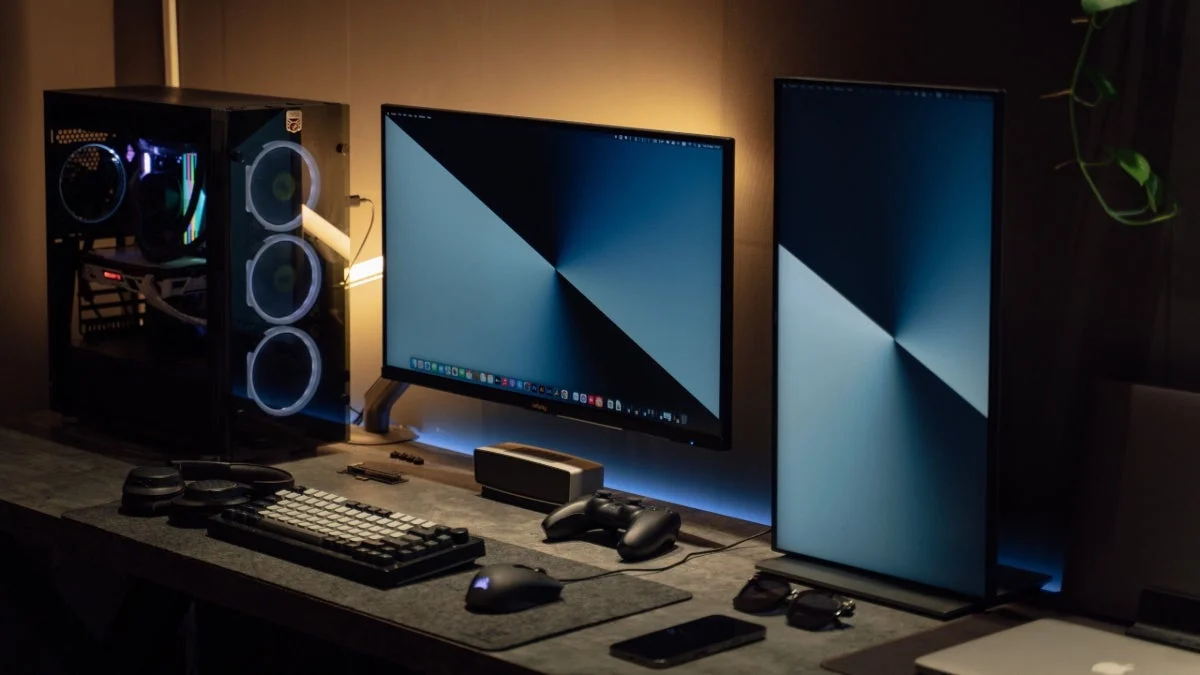
Complementing this is the Ryzen AI Halo, a high-performance desktop platform that brings the power of a data center to the individual professional. Capable of running large language models (LLMs) with up to 300 billion parameters locally, Ryzen AI Halo turns a standard workstation into a private, offline AI laboratory. By removing the need to ping external servers, companies can now process sensitive intellectual property, proprietary financial data, and personal records without the data ever leaving the building.
Chronology: A Roadmap to Local Autonomy
The transition to local AI is not a sudden trend, but the result of years of research and supply-chain alignment.
- 2023–2024 (The Cloud Era): AI growth was dominated by hyperscalers. The market accepted the latency and privacy trade-offs of cloud-based AI in exchange for rapid model development.
- Early 2025 (The Privacy Push): Regulatory bodies and corporate legal teams began flagging the risks of sending proprietary code and customer data to third-party AI models. The industry began searching for a "Zero-Trust" AI solution.
- Late 2026 (The AMD Breakthrough): AMD formalizes its "Local AI" strategy, announcing the Ryzen AI Max 400 series and the Helion architecture.
- November 2026 (The Deployment Milestone): The official rollout of the Helion-enabled supercomputer ecosystem commences, with major partners like Cisco, Dell, and HP integrating the new hardware into their enterprise offerings.
- 2027 and Beyond (The Age of Agentic AI): The industry expects a widespread shift toward localized autonomous agents, effectively ending the dominance of browser-based, subscription-only AI platforms.
Supporting Data: The Power of Localized Processing
To understand the magnitude of this shift, one must look at the specifications of the new hardware. The Ryzen AI Max 400 series, which powers the Ryzen AI Halo platform, is designed to eliminate latency. When an AI agent needs to perform a task—such as analyzing a complex legal document or compiling a proprietary software suite—it does so at the speed of the local bus, rather than the speed of the user’s internet connection.
Data from initial benchmarks suggests that local processing reduces the "time-to-first-token" by over 70% compared to cloud-based competitors. Furthermore, by utilizing liquid cooling systems—a standard feature in the new enterprise partnerships with firms like Wiwynn—the hardware can maintain peak performance for extended periods, allowing for the continuous training of models without thermal throttling.
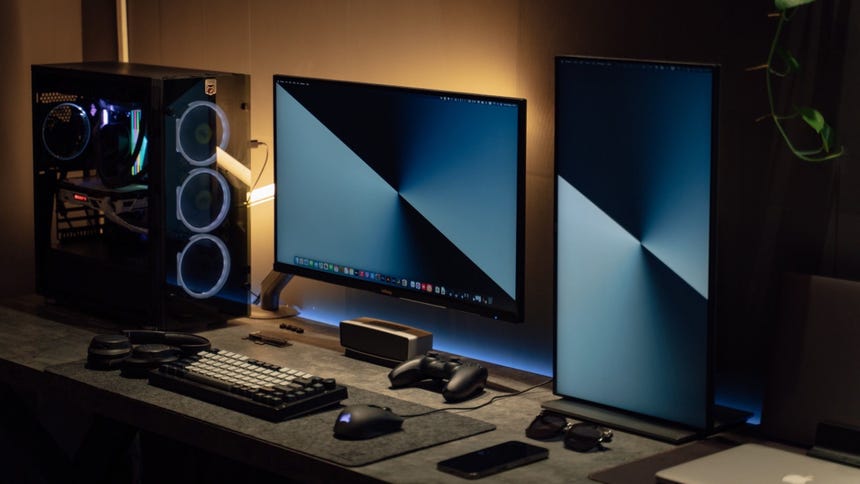
The industry is moving toward a "democratized power" model. With the ability to host models with 300 billion parameters on a desktop, small firms now have the same computational reach that was previously reserved for Silicon Valley giants.
Official Responses: Industry Collaboration
The shift to local AI is not a solitary effort. AMD has secured the support of the world’s most influential hardware providers to ensure that the transition to the Helion and Ryzen AI Halo ecosystems is seamless.
"We are moving from a world where AI is a service you rent, to a world where AI is a tool you own," said a spokesperson from the manufacturing coalition. Partners including Cisco, Dell Technologies, HP, Lenovo, and Wiwynn have committed to re-engineering their thermal management and network architectures to accommodate these high-density AI chips.
HP, in particular, has announced the integration of the Ryzen AI Max 400 series into its ZBook Ultra G3A, a workstation targeting high-end creative and engineering professionals. By standardizing these chips, manufacturers are signaling that the era of the "thin client"—a computer that relies on a server to do the heavy lifting—is being replaced by the "intelligence-heavy workstation."
Implications: The Rise of Agentic AI
Perhaps the most profound implication of this technology is the rise of the "AI Agent." Current AI tools are largely passive, acting as chatbots that respond to prompts. Agentic AI, however, is designed to take initiative.
These autonomous assistants can navigate complex workflows, manage software updates, execute code, and even make data-driven decisions on behalf of the user. Because these agents operate locally, they can be granted "trusted access" to sensitive files that no IT department would ever allow to be uploaded to a public cloud service.
1. Security and Privacy
The most immediate benefit is the total insulation of data. When an AI processes information locally, there is zero risk of data leakage via public APIs. For industries like healthcare, law, and national defense, this is the "Holy Grail" of AI adoption.
2. Economic Disruption
The current "SaaS" (Software as a Service) model for AI—where users pay monthly subscriptions to access models—is under direct threat. By owning the hardware and the localized software, businesses can move toward a CAPEX (Capital Expenditure) model. Once the equipment is purchased, the operational cost of running the AI drops significantly, eliminating the recurring monthly fees that currently plague balance sheets.
3. Latency and Connectivity
For regions with unstable internet or for mobile professionals working in remote environments, the ability to maintain full AI functionality while offline is a competitive advantage. The "always-online" requirement of modern software has often been a bottleneck; local AI removes this restriction entirely.
A Competitive Battlefield
The move by AMD has not gone unnoticed. NVIDIA, Intel, and Apple are all racing to pivot their architectures to support high-performance local AI.
NVIDIA continues to dominate the high-end server market, but the push for "compact supercomputing" by AMD is encroaching on the territory of traditional desktop and mobile workstations. Meanwhile, Apple’s focus on the Neural Engine in its silicon line suggests a long-term goal of making every iPhone and Mac a local AI hub.
However, the collaboration between AMD and major OEMs (Original Equipment Manufacturers) like Lenovo and HP gives the platform a distinct advantage in the enterprise sector. By focusing on integration, standardization, and cooling, they are making local AI a "plug-and-play" experience for IT departments worldwide.
Conclusion: The Future is Local
The era of the "Cloud AI" is not ending, but it is being refined. While massive global models will continue to reside in the cloud for general-purpose inquiries, the high-value, high-security, and high-complexity work is moving to the edge.
As we approach November 2026, the arrival of AMD’s Helion and Ryzen AI Halo marks a significant victory for the consumer and the enterprise alike. It represents a return to personal sovereignty over data and computing. The computer of the future will not just be a tool for accessing the web; it will be a powerhouse of autonomous intelligence, capable of solving the world’s most complex problems from the quiet solitude of an office desk, without ever needing to log in to a remote server.
The industry has made its intent clear: it is time to bring the intelligence home.