In a move that marks a definitive escalation in the ongoing conflict between the Russian state and the global technology infrastructure, the Federal Security Service (FSB) of Russia has officially placed Pável Dúrov, the billionaire founder of the encrypted messaging giant Telegram, on an international wanted list. This unprecedented legal action stems from formal charges accusing the entrepreneur of complicity in terrorist activities and sabotage, setting the stage for a high-stakes geopolitical and legal confrontation that could result in a life sentence if Dúrov is apprehended.
The Core Accusations: A Clash of Ideology and Security
The FSB’s indictment is sweeping, alleging that Telegram has functioned as a critical infrastructure for criminal networks, intelligence agencies, and extremist groups. According to official statements released by the security agency, the platform has persistently refused to comply with Russian federal laws regarding the moderation and removal of content linked to "sabotage, mass murder, and cyber-fraud."
The accusations go beyond mere negligence. Russian authorities claim that Telegram has become a playground for foreign intelligence operatives—specifically those from Ukraine—who utilize the app’s anonymity features to orchestrate complex psychological and physical operations. The FSB detailed a specific modus operandi in which intelligence agents allegedly pose as young women to lure victims into fraudulent financial transfers. Once the victim is compromised, the operatives reportedly switch to extortion, forcing the victims to commit acts of sabotage, including arson against transport infrastructure, energy grids, and banking institutions, under the threat of being exposed for allegedly "financing the enemy."
The Russian security services underscored the human cost of this digital ecosystem, citing thousands of millions of dollars in damages and a tragic toll of casualties, including women and minors.
Chronology of a Fractured Relationship
The relationship between Pável Dúrov and the Russian state has been fraught with tension for over a decade. To understand the gravity of the current warrant, one must look at the historical trajectory of the "Mark Zuckerberg of Russia."
- 2006–2011: Dúrov gains fame as the creator of VKontakte (VK), the Russian answer to Facebook. During this period, he successfully resisted early attempts by the state to exert control over the platform.
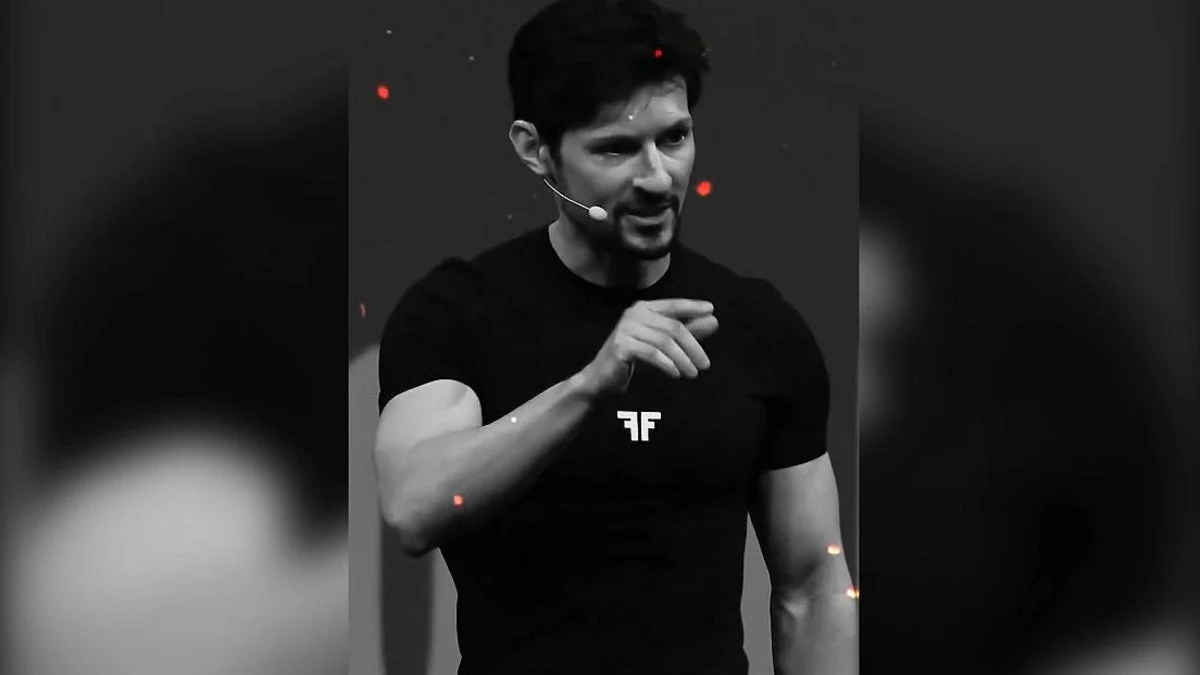
- 2011: A defining moment in Dúrov’s public defiance occurs when the holding company Mail.ru attempts to acquire VK. Dúrov famously posts a photograph on social media showing himself giving the middle finger to the camera—a gesture that has resurfaced today as a symbolic response to the FSB’s warrant.
- 2014: The pressure from the Kremlin becomes insurmountable. Dúrov leaves Russia, resigns from his position at VK, and eventually watches as the platform falls under the control of Mail.ru, a firm with deep ties to state-affiliated entities.
- 2013–Present: Telegram is born in exile. Focused on end-to-end encryption and user privacy, it rapidly becomes the default communication tool for activists, journalists, and, as the FSB claims, bad actors worldwide.
- 2018: Russia officially bans Telegram after the company refuses to hand over encryption keys to the FSB. Despite the ban, the app remains the most popular communication tool in the country, with millions of users bypassing restrictions via VPNs.
Supporting Data: The Case of the "Daivinchik" Network
The FSB’s case is supported by specific evidence regarding the recruitment of Russian youth. The agency reported the arrest of 46 individuals, aged 18 to 22, who were allegedly radicalized or coerced through a Telegram chatbot known as "Daivinchik/Leo."
Originally marketed as a dating service, the bot was purportedly repurposed by handlers to identify vulnerable or disgruntled youth, leading them into a web of criminal activity. This specific data point is intended to frame Telegram not as a neutral platform, but as a deliberate vector for domestic destabilization.
Furthermore, the state points to the disparity between Telegram and domestic alternatives like the messaging service "MAX," which claims a user base of 86 million citizens. By highlighting the success of "MAX" while demonizing Telegram, the Russian government is signaling a desire to transition its digital sovereignty toward platforms that remain fully compliant with domestic surveillance mandates.
The Response: Defiance and Legal Realities
Telegram’s response to the announcement was characteristically brief and provocative. Within hours of the FSB’s statement, the official Telegram account on the social network X (formerly Twitter) reposted the decade-old photo of Dúrov offering the middle finger. This digital gesture serves as a clear indication that the platform does not intend to submit to the demands of the Russian authorities.
Legal experts, such as Vladimir Zherebenkov, who has been consulted by the Russian news agency TASS, emphasize the extreme gravity of the situation. "This is a very serious accusation," Zherebenkov noted. "If the culpability is proven, we are talking about a potential life sentence."
The current strategy of the Russian state is to pursue an "arrest in absentia," which would then facilitate a request for extradition through Interpol. However, given Dúrov’s international status and the fact that he has spent years building Telegram’s headquarters in jurisdictions outside of Russia’s direct sphere of influence, the success of such an extradition attempt remains highly speculative.
The Implications: A Global Precedent
The conflict between Pável Dúrov and the FSB is more than a localized dispute; it is a microcosm of the global struggle over the regulation of the internet.
1. The Death of Digital Neutrality
The Russian government’s insistence that Telegram is responsible for the acts committed by its users represents a significant shift in the legal theory surrounding tech companies. If platforms are held criminally liable for the conduct of their users on a state level, the model of the "neutral host" that has governed the internet for thirty years faces a potential existential crisis.
2. The Weaponization of Privacy
For Telegram, encryption is the core product. For the FSB, that same encryption is a "black box" that facilitates terrorism. As the Kremlin tightens its grip on the digital space, the divide between privacy-centric Western-style tech and state-controlled national tech is widening. This case serves as a warning to other platforms that the "walled garden" approach to digital security may no longer be tolerated in Russia.
3. The Future of Telegram in Russia
Despite being officially blocked since 2018, Telegram remains the most influential media source in the country. The paradox of the current situation is that the Russian government is simultaneously using Telegram to distribute its own propaganda while seeking to destroy the man who built it. The move to declare Dúrov a terrorist could be a prelude to a more aggressive technical effort to completely decouple the Russian internet (the "RuNet") from the Telegram network.
4. The Geopolitics of Extradition
Should Russia succeed in utilizing Interpol’s mechanisms, it would place the international police body in a difficult position. Interpol is generally prohibited from becoming involved in political or military matters. Dúrov’s legal team will undoubtedly argue that the charges are politically motivated, rooted in his refusal to facilitate state surveillance. The outcome of this legal battle will likely set a precedent for how international organizations handle high-profile, politically sensitive extradition requests involving tech billionaires.
Conclusion
The declaration of Pável Dúrov as a wanted man in Russia is a watershed moment. It signifies the end of any remaining pretense of cooperation between the architect of modern Russian digital communication and the state. As the Kremlin attempts to exert total control over the information environment, and as Dúrov continues to leverage the principles of encryption and defiance, the battle over Telegram moves from the digital realm into the highest levels of international law.
For the millions of users who rely on the platform daily, the situation is a reminder of the fragility of the tools they use. Whether this serves as a final push to force Telegram into submission or as the catalyst for a total decoupling of Russian communications from the global tech infrastructure remains to be seen. One thing, however, is certain: the era of the "neutral" messaging app in the shadow of the Kremlin has officially come to an end.