Executive Summary: A Landmark Infrastructure Milestone
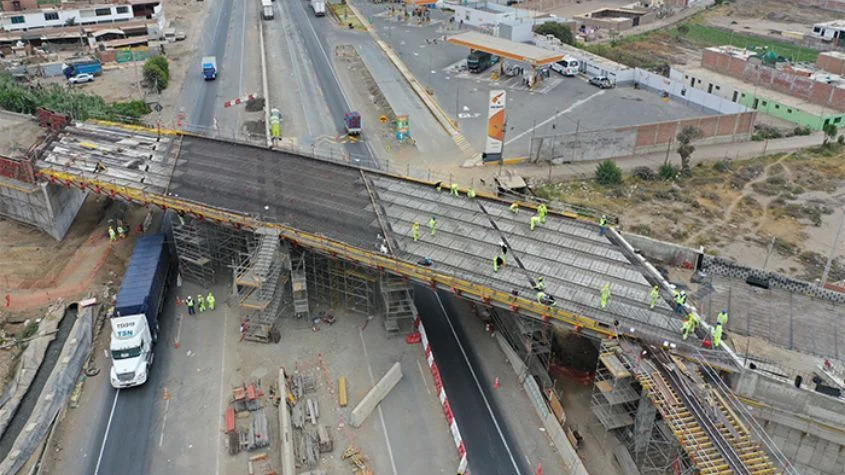
The province of Alto Amazonas, located in the heart of the Loreto region, is witnessing the steady rise of what is poised to become the most significant commercial hub in the Peruvian Amazon. The construction of the new Yurimaguas Market has officially surpassed 36% of its physical completion, marking a pivotal moment in a multi-year effort to modernize local commerce.
During a surprise inspection conducted on Saturday, September 7, Regional Governor René Chávez verified that the development is proceeding optimally, adhering strictly to the established technical timelines. With a staggering investment exceeding 77 million soles, the project is not merely a construction endeavor but a strategic socioeconomic intervention designed to formalize trade, enhance food security, and provide a dignified environment for both merchants and consumers who have endured years of inadequate facilities.
1. Main Facts: Scope and Scale of the Development
The Yurimaguas Market project is designed to be a comprehensive ecosystem for trade, moving away from traditional, fragmented market models to a centralized, high-capacity facility.
- Financial Investment: The project is backed by a budget of over 77 million soles, representing one of the most substantial public investments in provincial infrastructure in recent history.
- Current Progress: As of the latest site inspection in early September, the project has reached the 36% completion milestone.
- Strategic Location: Positioned as the central nexus for agricultural and livestock trade in the Alto Amazonas province, the facility is expected to catalyze economic growth for the entire Loreto region.
- Core Objectives: The primary goals include the modernization of the local supply chain, the improvement of sanitary conditions for food distribution, and the creation of a centralized hub that can support the growing population of Yurimaguas.
2. Chronology: From Historic Demand to Modern Reality
The journey toward this construction has been characterized by years of public demand. For decades, the merchants of Yurimaguas operated in informal or dilapidated spaces, struggling with issues ranging from sanitation to insufficient storage.

- Phase I: Needs Assessment and Planning (2018–2022): The project underwent a rigorous planning phase where local leaders and regional authorities identified the site’s necessity. This period involved community consultations to address the specific needs of local farmers, fishermen, and retail vendors.
- Phase II: Tender and Budget Allocation (2023): With the approval of the 77 million sole investment, the bidding process concluded, allowing for the selection of contractors capable of executing a project of this scale in a challenging Amazonian climate.
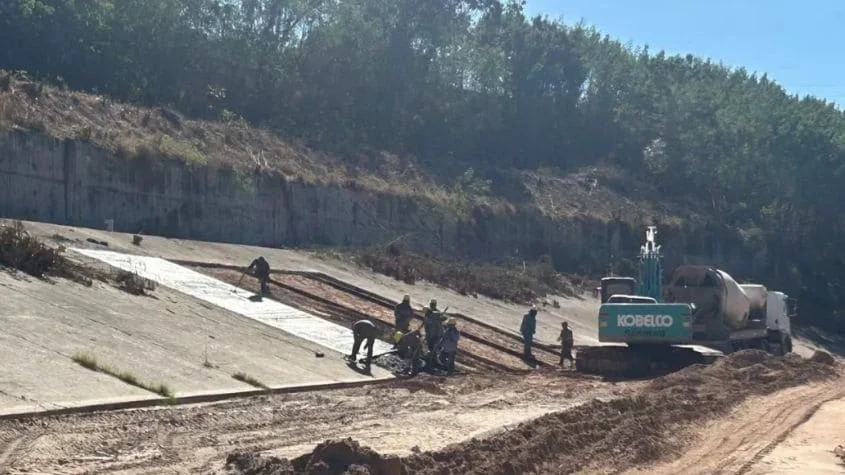
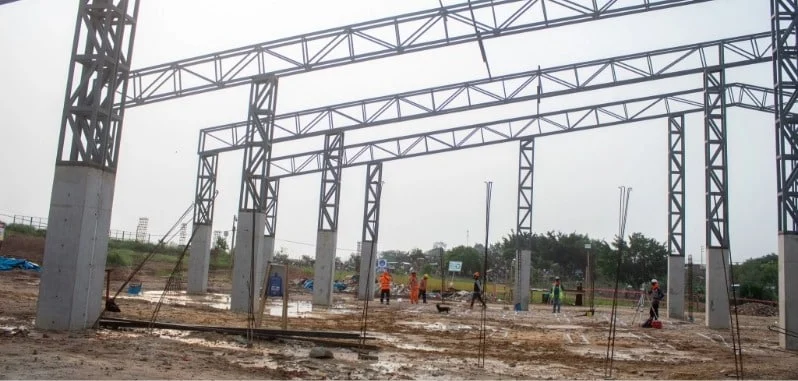
- Phase III: Groundbreaking and Early Execution (2024): Construction began with site preparation, foundation laying, and structural steel works. Despite logistical challenges inherent to the Amazon basin, the project maintained steady progress.
- Phase IV: Current Status (September 2026): Reaching 36% completion marks the shift from structural foundation work to the development of the primary vertical elements and specialized internal installations.
3. Technical Specifications and Modern Infrastructure
The new Yurimaguas Market is not a traditional open-air market; it is an engineered facility designed to meet international standards of safety, hygiene, and logistical efficiency.
Architectural Layout and Zoning
The project is divided into distinct zones to ensure the efficient flow of goods and people:
- Sales and Administrative Modules: The facility features dedicated zones for dry goods, textiles, and specialized retail, alongside a modern administrative wing to manage market operations and security.
- Cold-Chain Integration: One of the most critical aspects of the project is the inclusion of industrial-grade refrigerators and freezers. These will serve the meat, poultry, seafood, and dairy sectors, drastically reducing food spoilage and ensuring that local products reach consumers in optimal condition.
- Logistics and Waste Management: The design incorporates high-capacity loading docks, dedicated storage warehouses, and an advanced solid waste management system to maintain sanitary standards—a major improvement over the existing infrastructure.
Complementary Facilities
Beyond the sale of goods, the market complex serves as a community anchor. It includes:
- A Multi-Purpose Fairground: A space featuring a dedicated stage for cultural, social, and commercial events.
- Logistical Support: A large patio of maneuvers (loading and unloading area) and expansive parking facilities to accommodate both heavy transport vehicles and private customers.
4. Official Responses and Institutional Commitment
During his visit on September 7, Governor René Chávez emphasized that the project’s success is a direct result of political will and a focus on social service.

"This is not just a building; it is a promise kept to the people of Alto Amazonas," Governor Chávez stated during his inspection. He noted that the technical reports confirm that the construction team is working within the planned schedule. "We are seeing a transformation. The pace at which the work is moving guarantees that the province will soon have the infrastructure it deserves, allowing our local merchants to trade in conditions that are modern, clean, and safe."
The regional government has highlighted that the project serves as a cornerstone of their administration’s development plan. By focusing on the "service social" aspect, the government aims to provide a facility that empowers small-scale entrepreneurs and farmers to transition into a more formal and profitable commercial environment.
5. Socioeconomic Implications: The Path Ahead
The completion of the Yurimaguas Market, anticipated for next year, carries profound implications for the local and regional economy.
Economic Formalization
By providing a centralized and regulated space, the market will serve as a catalyst for the formalization of hundreds of small businesses. This allows for better taxation, standardized pricing, and improved access to credit for vendors who previously operated without a fixed, recognized address.

Strengthening the Agricultural Supply Chain
The Amazon region produces a wealth of agricultural products, yet logistical bottlenecks often prevent these goods from reaching markets efficiently. The new facility will act as a collection and distribution center, enabling farmers in the Alto Amazonas province to scale their operations, knowing they have a reliable destination for their harvest.
Improving Public Health
The transition from informal, unmonitored markets to a facility with proper waste management and cold-chain systems will have a direct positive impact on public health. The reduction of food-borne illnesses and the improvement of sanitary environments are core components of the regional government’s broader health and safety strategy.
Future Outlook
As the construction enters the next phase—shifting from core structural work to the installation of high-tech systems and internal finishes—the focus will remain on maintaining the pace of development. With a targeted completion date in 2027, the region looks forward to a new era of commerce. The successful delivery of this project will set a new benchmark for public infrastructure in the Peruvian Amazon, proving that large-scale development is possible even in remote and logistically challenging provinces.
The transformation of Yurimaguas is well underway, and as the steel and concrete rise above the landscape, so too does the promise of a more prosperous, organized, and modernized future for the people of Loreto.