Executive Summary: A Robust Expansion in Connectivity
Peru’s infrastructure landscape is undergoing a period of significant revitalization. According to the latest data released by the Supervisory Agency for Investment in Public Transport Infrastructure (Ositrán), the nation witnessed a substantial surge in capital expenditure across its concessioned transport network. Between January and August 2026, total investments reached USD 895.3 million, marking an impressive 29.6% increase compared to the same period in 2025.
This upward trajectory reflects a concerted effort by both the public sector and private concessionaires to modernize the country’s logistical backbone. From the ambitious expansion of the Jorge Chávez International Airport to the steady progress of the Lima and Callao Metro Line 2, the data confirms that Peru is successfully accelerating its infrastructure development agenda, even amidst complex economic conditions.
Chronology and Periodic Performance
The year 2026 began with high expectations for the infrastructure sector, and the performance figures through August have largely met those projections. The growth is not merely a result of year-end spikes but rather a consistent trend observed throughout the first eight months of the year.
January – August 2026 Performance
The cumulative investment of USD 895.3 million serves as a bellwether for the country’s economic health. The 29.6% year-on-year growth is particularly noteworthy, as it suggests that logistical bottlenecks are being addressed with renewed urgency.
August 2026 Snapshot
In the month of August alone, the sector recorded investments totaling USD 69.9 million. This monthly figure highlights the continuous flow of capital into active construction sites, maintenance programs, and technological upgrades. Key highlights from August include:
- Aerospace Infrastructure: The primary driver of investment in August, accounting for USD 49 million.
- Highway Network: A total of USD 13.2 million was directed toward the maintenance and enhancement of road connectivity.
- Urban Transit: The Metro Line 2 project added USD 5.15 million in specialized equipment and station infrastructure.
- Maritime Ports: Terminal operations, led by the Port of Paita, contributed USD 1.87 million toward capacity expansion and safety measures.
Supporting Data: Sector-by-Sector Breakdown
The distribution of these investments reveals a clear prioritization of sectors that are vital for both international trade and domestic mobility.
1. The Aerospace Boom
The airport sector has emerged as the frontrunner in capital allocation. Recording USD 484.7 million in the first eight months of 2026, the sector saw a massive 53.6% growth compared to the previous year.

- Lima Airport Partners (LAP): The expansion of the Jorge Chávez International Airport remains the crown jewel of this investment. In August alone, LAP accounted for USD 47.4 million, focusing on the infrastructure required to meet rising passenger and cargo demand.
- Regional Airports: The First Group of Airports (Primer Grupo de Aeropuertos) invested USD 1.59 million, emphasizing the necessity of routine maintenance. Upgrades to the electrical systems in Chiclayo, Piura, Talara, and Tumbes ensure that regional connectivity remains safe and compliant with international standards.
2. Strategic Highway Enhancements
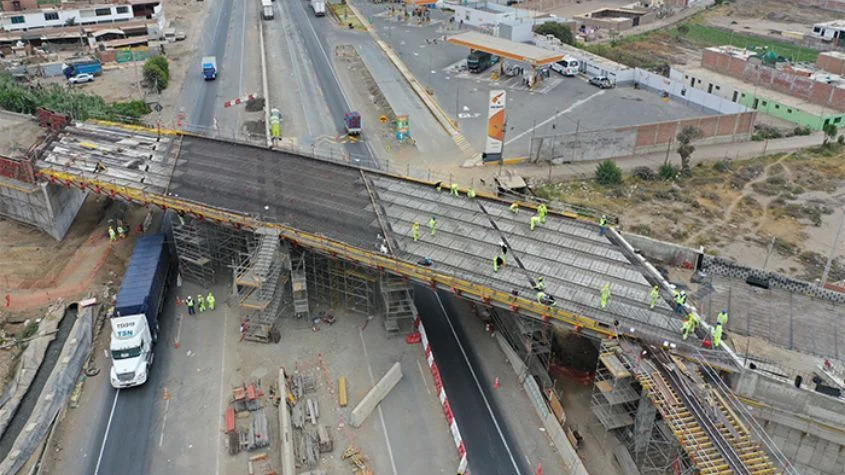
Highway investment saw a staggering 188.5% increase, reaching USD 94 million by August. This massive surge reflects a commitment to fixing infrastructure damaged by previous climate events, such as the 2023 coastal El Niño (FEN).
- IIRSA Sur (Tramo 4): With an investment of USD 5.68 million, efforts focused on road safety and the crucial Asillo-San Antón improvements, alongside urban integration projects in the Sangari population center.
- IIRSA Norte: This concession added USD 3.59 million to the national tally, primarily through the construction of accessory works designed to improve transit flow.
- Autopista del Sol: Recording USD 1.83 million, the project focused on the Chiclayo bypass and the rehabilitation of the Trujillo-Chiclayo corridor, a vital link for the northern regions.
3. Urban Transit: Lima Metro Line 2
As the largest infrastructure project in the nation’s history, Line 2 of the Lima and Callao Metro continues to draw significant capital. With USD 303.3 million invested through August (a 2% increase over the previous year), the project is reaching a critical stage of technical implementation. In August, funds were specifically earmarked for electromechanical equipment, platform screen doors, and passenger control systems—the "smart" components required for modern urban transit.
Official Perspectives and Oversight
Ositrán, as the regulator, maintains a strict supervisory role. By monitoring these investments, the agency ensures that private concessionaires adhere to their contractual obligations, preventing delays and ensuring that funds are utilized for their intended purposes.
The cumulative investment figure of USD 14.82 billion as of August 31, 2026, against a total commitment of USD 22.94 billion, indicates that Peru is approximately 64.6% of the way through its current cycle of massive transport concessions. This progress rate is considered healthy, indicating that while there is still significant work ahead, the pace of execution is sustainable.
Economic and Social Implications
The implications of this investment surge extend far beyond the construction sites.
Boosting National Competitiveness
Reliable transport infrastructure is a prerequisite for economic growth. By reducing transit times for goods and passengers, these investments directly lower the cost of doing business in Peru. Improved road connectivity in the north and south, combined with world-class airport facilities, strengthens Peru’s position as a regional hub for logistics and tourism.
Climate Resilience
A significant portion of the road investments, particularly in the northern corridor, is explicitly tied to post-2023 climate rehabilitation. By investing in better drainage and structural reinforcement, the government and its partners are effectively "future-proofing" the country against the cyclical impacts of the El Niño phenomenon. This proactive stance is essential for long-term economic stability.

Urban Mobility and Quality of Life
The continued development of the Lima Metro Line 2 is arguably the most impactful project for the average citizen. As the system moves toward full operational status, the reduction in commute times for thousands of residents in the capital will lead to significant improvements in productivity and overall quality of life. The focus on station safety systems and modern electromechanical components in August underscores a commitment to providing a world-class transit experience.
Future Outlook
As Peru enters the final quarter of 2026, the data suggests that the momentum is unlikely to slow down. The government’s continued focus on Public-Private Partnerships (PPPs) remains the primary engine for infrastructure development.
Looking forward, stakeholders should watch for the completion of key milestones in the Jorge Chávez airport expansion, which is expected to trigger a new phase of international commercial activity. Furthermore, as highway concessions move from rehabilitation to expansion, the focus will likely shift toward digital integration and smart traffic management systems.
In conclusion, the USD 895.3 million invested in the first eight months of 2026 stands as a testament to the resilience and ambition of the Peruvian infrastructure sector. By prioritizing strategic projects that address both immediate maintenance needs and long-term modernization goals, Peru is laying a solid foundation for sustainable economic growth in the decade ahead.
For more information on these projects, stakeholders are encouraged to monitor the official communications from Ositrán and participate in the ongoing discourse regarding the country’s logistics development.