By Editorial Staff
The Government of the Province of Salta, Argentina, has officially commenced an extensive infrastructure rehabilitation project aimed at fortifying the concrete canal lining of the Tartagal River. Located in the heart of Tartagal, the administrative center of the San Martín department, this critical waterway is undergoing a comprehensive structural overhaul. The project is designed to bolster regional resilience against the severe weather patterns characteristic of the summer season, with local authorities racing to complete the construction before the onset of the heavy rains.
This intervention represents a strategic investment in public safety and urban infrastructure, addressing long-standing concerns regarding the degradation of municipal hydraulic systems. By stabilizing the canal, the provincial government seeks to mitigate flood risks and ensure the long-term functionality of one of the region’s most vital drainage arteries.
Main Facts: The Scope of the Rehabilitation Project
The rehabilitation project is not merely a superficial repair but a structural reinforcement of a critical municipal asset. According to the technical specifications released by the Secretariat of Public Works of Salta, the project involves a significant deployment of resources and engineering expertise.
The primary objectives of the intervention include:
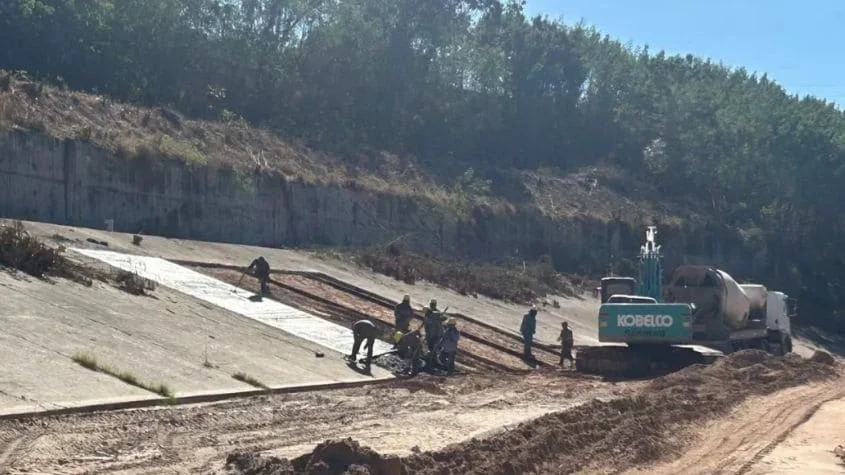
- Structural Reconstruction: The project covers the reconstruction of more than 6,012 square meters of concrete slabs. This work is essential to restore the integrity of the canal bed and prevent seepage or structural failure.
- Vertical Reinforcement: The plan includes the construction and repair of 134 linear meters of wall over-elevation. These walls act as the primary defense against water overflow during high-velocity flow events.
- Topographical Stabilization: Beyond the concrete work, the project entails extensive land leveling and the strategic placement of soil bags (bolsones de suelo). These measures are intended to prevent erosion and stabilize the surrounding embankments.
- Infrastructure Accessibility: Initial phases of the operation focused on the opening of new access roads. These pathways are crucial for the deployment of heavy machinery and the transport of materials required for large-scale concrete pouring.
The work is concentrated along the stretch of the river spanning from the Packham Avenue bridge to the crossing at National Route 34, extending further downstream toward the local gasoduct infrastructure.

Chronology: From Planning to Execution
The project follows a rigorous timeline designed to navigate the logistical challenges of the region’s geography and the urgency of the upcoming rainy season.
Phase 1: Diagnostic and Engineering (Q1-Q2 2026)
The technical team from the Secretariat of Public Works conducted a multi-month assessment of the canal’s condition. Following years of wear and tear, compounded by environmental factors, the team identified critical failure points that threatened to compromise the city’s flood defense system during the summer months.
Phase 2: Procurement and Mobilization (Mid-2026)
The provincial government initiated the public tender process, prioritizing contractors with proven experience in hydraulic engineering. Upon the selection of the winning bid, the project moved into the mobilization phase, which involved the clearing of vegetation and the development of heavy-machinery access points to ensure the site could be worked on efficiently.
Phase 3: Current Execution (Q3 2026 – Ongoing)
Work is currently underway, with a high intensity of activity focused on the slab reconstruction. The project managers have prioritized the most vulnerable sections—specifically those near the National Route 34 intersection—to minimize the impact on local traffic and vital utility corridors, such as the nearby gasoduct.
Phase 4: Projected Completion (Late 2026)
The overarching goal is to achieve total operational capacity for the canal before the height of the summer rains. This deadline is non-negotiable, as the canal serves as the primary drainage mechanism for urban runoff in Tartagal.
Supporting Data: Why This Infrastructure Matters
The San Martín department is a region frequently challenged by extreme meteorological phenomena. The Tartagal River, while a natural feature, functions as the backbone of the city’s drainage network. When the canal lining suffers from degradation, the result is not just minor leakage but a substantial increase in the risk of urban flooding.

The Economic Impact of Inaction:
Infrastructure failure in municipal waterways often leads to cascading costs. Beyond the immediate repair of the canal, local governments frequently face emergency remediation costs if a breach occurs during a storm. By investing in proactive maintenance, the provincial government is opting for a cost-effective strategy that avoids the much higher expense of disaster recovery and potential litigation arising from property damage.
Hydraulic Engineering Standards:
The decision to utilize high-grade concrete slabs and reinforced walls reflects modern hydraulic engineering standards in Argentina. The use of soil bags as a temporary and semi-permanent reinforcement measure provides a flexible solution to shifting terrain, which is a common occurrence in the sediment-heavy riverbeds of northern Argentina.
Official Responses: Government Commitment
The Secretariat of Public Works has emphasized that this project is a top priority for the Salta provincial government. A spokesperson for the department noted: "Our objective is to restore the integrity of municipal infrastructure that had been neglected for years. We recognize that the canal is not just a structure, but a safeguard for the people of Tartagal. By investing in the reconstruction of these 6,000 square meters, we are directly investing in the peace of mind of the residents."
The project has been characterized by the government as part of a broader "Infrastructure Recovery Plan" aimed at addressing structural deficits across various municipalities in the province. The transparency of the procurement process and the technical oversight provided by the Secretariat aim to ensure that the work meets the highest quality standards, providing durability that will last for decades.
Implications: Regional Development and Safety
The implications of this project extend far beyond the immediate construction site.
1. Urban Safety and Flood Mitigation
The most immediate implication is the improved safety profile for the neighborhoods surrounding the Tartagal River. The canal’s ability to manage high volumes of water is the primary factor in determining the city’s flood vulnerability. By completing the reconstruction, the government is effectively hardening the city’s defense against the flash flooding that has historically impacted the San Martín department.

2. Infrastructure Sustainability
There is a growing trend in Argentina towards "preventative infrastructure." Rather than waiting for catastrophic failure, local and provincial governments are moving toward routine, planned maintenance. The Tartagal canal project serves as a case study for this shift, proving that proactive intervention is a viable and responsible use of taxpayer funds.
3. Economic Stability
Infrastructure works are major employers of local labor. By commissioning this project, the provincial government has stimulated the local economy in Tartagal, providing work for local contractors, heavy machine operators, and materials suppliers. This economic injection is vital for the region, which often faces cyclical challenges related to resource extraction and agricultural fluctuations.
4. Future-Proofing
The project design takes into account the potential for increased rainfall intensity. As climate patterns become more unpredictable, the engineering specifications for such projects are being revised to handle higher peak flows. The inclusion of wall over-elevations is a direct response to these changing environmental variables, ensuring that the canal will remain relevant and effective even as meteorological conditions evolve.
Conclusion
The ongoing rehabilitation of the Tartagal River canal is a testament to the importance of maintaining fundamental public infrastructure. Through careful planning, professional engineering, and a clear timeline, the Government of Salta is taking the necessary steps to secure the future of the city. As the project enters its critical phase, the focus remains on quality, efficiency, and the protection of the community. With the completion of the 6,000-square-meter slab reconstruction and the strengthening of the canal walls, Tartagal will be significantly better positioned to face the upcoming summer season with confidence and resilience.