The dream of a high-speed, modern corridor connecting the bustling capital of Lima with the central highlands of Junín—a project designed to slash travel time to a mere two and a half hours—is currently caught in a bureaucratic and fiscal tug-of-war. Despite being branded as a flagship infrastructure priority for the administration of President Keiko Fujimori, the "Nueva Carretera Central" faces a precarious future, clouded by a massive funding gap and a growing disconnect between political promises and technical execution timelines.
As the Ministry of Transport and Communications (MTC) navigates a critical negotiation period with the Ministry of Economy and Finance (MEF), the project remains in a state of suspended animation. While the government maintains an optimistic outlook for a 2027 start date, independent technical assessments suggest that the reality of the construction cycle may be far more protracted than the executive branch is willing to admit.
The Core Conflict: Ambition Versus Fiscal Reality
At the heart of the debate is a simple but daunting question: Does the Peruvian state have the financial appetite to commit to one of the most ambitious engineering challenges in its history?
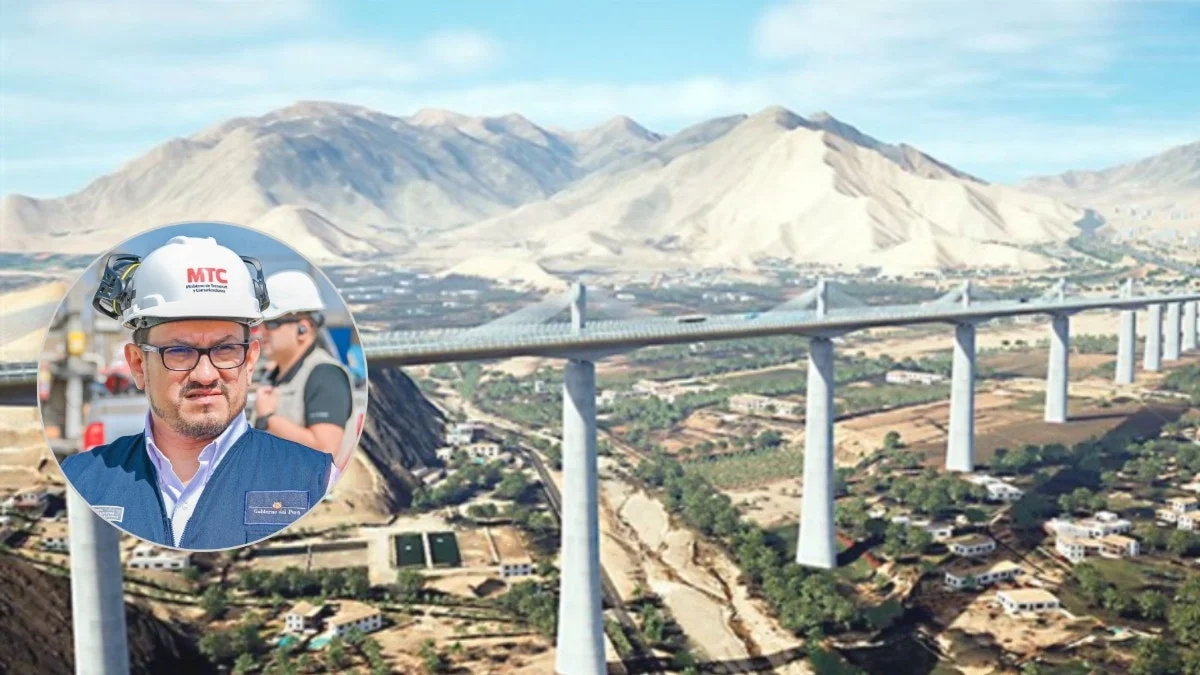
Minister of Transport and Communications, José Tangherlini, recently addressed the media to confirm that his office is in active, albeit delicate, discussions with the MEF to secure the pending budget required to break ground. The objective is to incorporate the necessary capital into the upcoming national budget. However, Tangherlini’s tone was one of guarded optimism rather than absolute certainty.
"We are working with the Ministry of Economy and Finance to secure the necessary budget to initiate this work. The budget law is not yet closed, and we are striving for the best possible solution to turn the New Central Highway into a reality," Tangherlini stated. "We hope to start next year; the goal is to begin in 2027."
The urgency of the situation is amplified by the technical managers of the project, PMO Vías, a French consortium providing technical assistance. They have been increasingly vocal about the need for a definitive "go/no-go" signal from the state. Marc Chassande, the project manager for PMO Vías, underscored that while the technical foundations—including finalized studies, environmental clearances, and legal frameworks—are ready for the first functional unit, the lack of a signed contract remains an insurmountable barrier. "We need the Peruvian State to decide whether it wants to start this work or not," Chassande warned.
A Chronology of Delays and Projections
The trajectory of the New Central Highway has been marked by shifting timelines. Originally conceived to alleviate the crushing congestion and safety hazards of the existing mountain pass, the project has transitioned through multiple administrations, each leaving its own mark on the roadmap.
- The Planning Phase: Years of preliminary studies were conducted to identify a route that would bypass the most treacherous sections of the current highway, which is prone to landslides and heavy truck traffic.
- The 2026 Budget Crisis: Despite promises of funding, S/600 million that were supposedly committed for 2026 were never materialized, nor were they included in the year’s primary supplementary credit. This failure to deliver initial funding has created a deficit of momentum that the MTC is now struggling to correct.
- The Current Gap: For 2027, the government has projected a budget of only S/100 million. However, technical estimates indicate that S/876 million is required to move forward effectively in that calendar year, covering not just construction, but critical land acquisition and the clearing of utility and infrastructure interference.
- The 2038 Horizon: Perhaps the most jarring aspect of the project’s outlook is the disparity in delivery dates. While the political establishment has promised completion within the current government’s mandate (ending in 2031), PMO Vías has presented the Congress with two potential scenarios for the final completion of the network, with the most conservative estimate stretching as far as 2038.
Supporting Data: The Financial Chasm
To understand the scale of the crisis, one must look at the math. The project is not merely a single road; it is a complex, multi-phase infrastructure network. Currently, the state has identified S/172 million in available funds. However, to sign the necessary contracts and begin the initial phases, an additional S/300 million is required immediately to cover startup costs and advance payments.
The breakdown of the S/876 million required for the 2027 kick-off includes:
- Project Management and Engineering: Costs associated with final technical adjustments.
- Land Acquisition: The costly process of clearing rights-of-way in a densely populated and geographically challenging terrain.
- Interference Mitigation: Moving electrical, telecommunications, and hydraulic infrastructure that currently sits on the proposed path.
- Initial Construction: The commencement of the Pariachi bridge and tunnel, which are considered the "first milestones" of the project.
The discrepancy between the available S/172 million and the required capital illustrates a significant "funding chasm" that, if not addressed by the MEF in the upcoming budget cycle, will inevitably push the project into further, multi-year delays.
Official Responses and Political Implications
The political stakes for the Fujimori administration are high. The New Central Highway was a centerpiece of her campaign promises and her July 28th national address. By linking her administration’s legacy to the completion of the project, the government has created a high-pressure environment for the Ministry of Transport.
Minister Tangherlini finds himself in a difficult position: he must maintain public confidence while simultaneously acknowledging that the final decision lies with the Ministry of Economy and Finance. "The New Central Highway is a priority for the government of President Keiko Fujimori," he emphasized, noting that he has held multiple high-level meetings with the technical team from PMO Vías to explore various "paths forward."
However, observers note that these "paths" are increasingly limited by the macro-economic constraints facing Peru. As the government attempts to balance fiscal responsibility with the need for high-impact public works, the highway has become a symbol of the broader struggle to modernize national infrastructure without destabilizing the national budget.
The Broader Implications for Peru
The consequences of a prolonged delay or a cancellation of the project are significant. The current Central Highway is a bottleneck that stifles economic activity, increases the cost of logistics for agricultural products from the interior to the coast, and remains a site of frequent, deadly accidents.
- Economic Impact: The two-and-a-half-hour travel time promise is not just about convenience; it is about efficiency. Reducing the transit time for heavy freight would lower the price of goods in Lima and increase the competitiveness of Junín’s agricultural exports.
- Public Safety: By moving traffic to a modern, engineered route, the state would significantly reduce the number of accidents that plague the current, antiquated road, which is often overwhelmed by the volume of heavy transport.
- Institutional Credibility: Beyond the concrete and steel, the project serves as a test of the state’s capacity to deliver on long-term infrastructure. If the government fails to secure funding for a project it has repeatedly touted as a "priority," it may signal a wider struggle in executing complex public-private partnerships.
Conclusion: A Critical Juncture
As the end of the year approaches, the Ministry of Transport and Communications remains locked in a race against time. The technical expertise provided by PMO Vías has laid the groundwork, but the engine of the project—the funding—remains stalled.
The coming months will be decisive. If the MEF and the MTC cannot bridge the gap between the S/100 million planned for 2027 and the S/876 million actually required, the timeline will inevitably slip further toward the 2038 horizon projected by experts. For the citizens of Lima and Junín, the "New Central Highway" remains a vision of the future, one that currently requires more than just political rhetoric to become a reality on the ground. The state now faces a moment of clarity: it must choose between the long-term economic dividends of a modern highway or the short-term comfort of fiscal austerity, a choice that will define the infrastructure legacy of the current government.