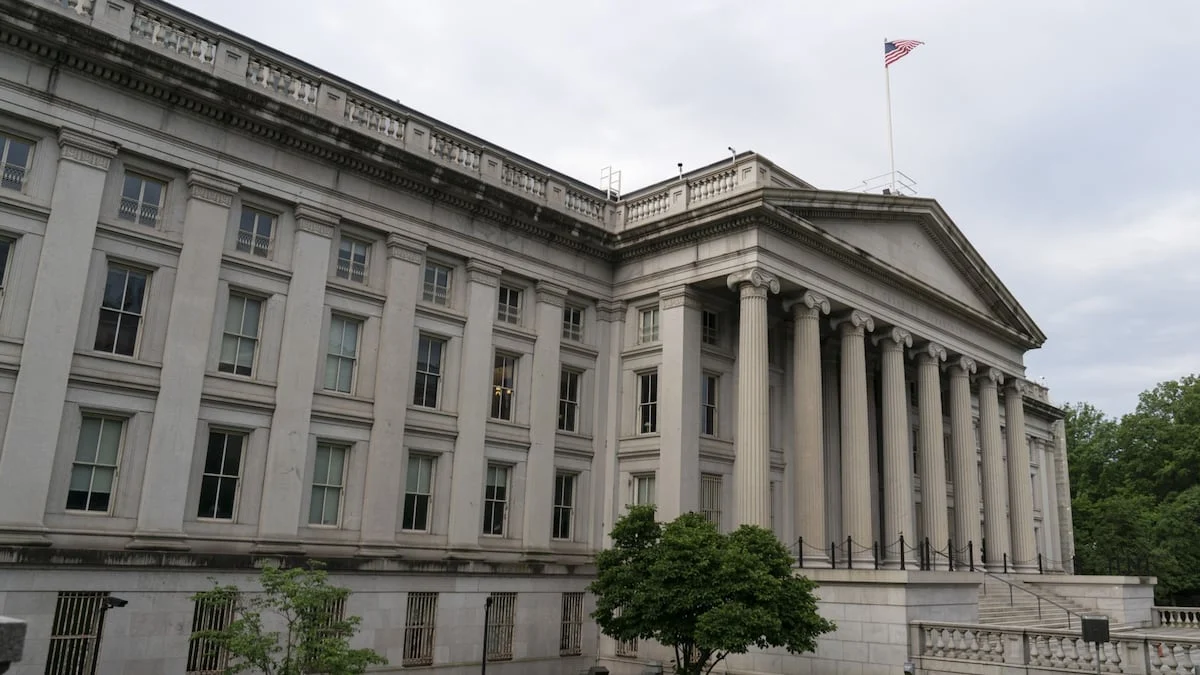
MEXICO CITY — In a landmark move to cripple the operational infrastructure of one of the world’s most dangerous criminal syndicates, the United States government has launched a massive enforcement action against the Cartel Jalisco Nueva Generación (CJNG). On Thursday, the U.S. Treasury Department’s Office of Foreign Assets Control (OFAC) announced sanctions against more than 50 individuals and corporate entities across Mexico, effectively severing their access to the U.S. financial system.
The scope of the operation is unprecedented, targeting a diverse array of sectors ranging from fuel distribution and logistics to high-end tequila production and, incongruously, children’s footwear manufacturing. By systematically dismantling these front companies, Washington aims to erode the CJNG’s capacity to traffic illicit fentanyl—a substance now classified as a weapon of mass destruction by the U.S. administration—and to disrupt the cartel’s grip on regional economies.
The Strategic Objective: Starving the Cartel of Capital
The latest sanctions represent a significant shift in U.S. counter-narcotics strategy. Rather than focusing solely on interdiction and arrests, the U.S. is weaponizing financial intelligence to isolate the CJNG’s leadership.
“The measures announced today strike at the heart of the CJNG’s command structure, its financiers, and its criminal networks,” stated U.S. Treasury Secretary Scott Bessent. “By stripping the organization of the resources it uses to traffic fentanyl, terrorize communities, and threaten American lives, we are directly attacking the cartel’s ability to operate.”
Under the legal framework of Executive Order (E.O.) 14059—which targets the international proliferation of illicit drugs—and E.O. 13224, which focuses on terror organizations and their enablers, the U.S. has effectively frozen all assets and interests of the designated individuals and entities. Any U.S. person or entity found interacting with these companies now faces severe criminal and civil penalties.
Chronology of the Leadership Vacuum
The crackdown follows a period of extreme volatility within the CJNG’s hierarchy. The cartel, once monolithic under the command of Rubén Oseguera Cervantes, alias “El Mencho,” has been in a state of flux since the death of its founder during a high-stakes military operation in February 2026.
With the vacuum created by Oseguera Cervantes’ passing, leadership has fractured. Among those named in Thursday’s sanctions is Juan Carlos “Pelón” González, who has emerged as a primary target of U.S. intelligence as the alleged successor. The Treasury’s move signals that the U.S. is tracking the transition of power closely and is prepared to aggressively dismantle the financial apparatus that supports the new leadership.
Timeline of Key Events:
- December 2025: President Donald Trump formally designates fentanyl and its precursor chemicals as weapons of mass destruction, escalating the urgency of U.S. policy toward Mexican cartels.
- February 2026: Rubén Oseguera Cervantes (“El Mencho”) is killed in a coordinated Mexican military operation.
- February 2026 (Mid-month): Diego Rivera Navarro, the mayor of Tequila, Jalisco, is arrested on extortion charges involving the beverage giant Becle, revealing deep-seated corruption in the tequila industry.
- Thursday (Current): OFAC issues sanctions against 50+ individuals and entities, marking the most significant financial blow to the CJNG since the death of its founder.
A Web of Fronts: From Gasoline to Baby Shoes
The investigation reveals a sophisticated, multi-layered approach to money laundering. The CJNG has moved beyond traditional narcotics trafficking, embedding itself into the legitimate Mexican economy through a labyrinthine network of shell companies.
The “Jardinero” Network
Audias Flores Silva, known as “El Jardinero,” remains a central figure in the Treasury’s crosshairs. His influence is projected through companies like Petrocoda, a gas station chain. The investigation identified that Flores Silva’s cousin, Areli Isis Medina Flores, and his subordinate, Gabriel Serrano Magaña, acted as intermediaries to obscure the ownership structure.
The Diversification of Illicit Income
The cartel’s business model is remarkably diverse:
- Retail and Apparel: The firm Bubux Baby Shoes, registered under the name of suspected senior CJNG member Gerardo Botello Rozalez (“El Cachas”), serves as a prime example of how the cartel integrates into consumer goods.
- Public Safety Complicity: The case of Miguel Ángel Ayala Botello highlights the danger of criminal infiltration into government. While occupying a leadership role at Bubux, he simultaneously served as the director of Public Safety for Tepalcatepec, Michoacán. His links to Green Agropacific and the Alfa y Gama private security firm illustrate how the cartel co-opts law enforcement to protect its illicit assets.
- The Tequila Industry: The sector, a symbol of Mexican pride, has become a frequent target for money laundering and extortion. Beyond the recent scandal involving Mayor Rivera Navarro, entities such as Casa Tequilera El origen del Tequila have been identified as fronts for Roberto Jiménez Arias, demonstrating that even high-value exports are being utilized to sanitize blood money.
Official Responses and Cross-Border Coordination
The operation was not a unilateral U.S. endeavor. It was the result of intense collaboration with the Joint Task Force for National Security—an entity encompassing the FBI, the DEA, and the U.S. Department of Homeland Security’s investigative arm.
Crucially, the operation received support from Mexico’s Financial Intelligence Unit (UIF). This coordination is vital, as it allows for the simultaneous freezing of domestic assets in Mexico that might otherwise be liquidated or moved to jurisdictions outside of U.S. reach.
“The CJNG employs sophisticated methodologies of money laundering and alternative revenue sources, such as fuel theft and timeshare fraud,” the Treasury communiqué noted. By targeting the logistics sector—specifically companies like Transic Logistic and Strong Energy—the U.S. is attempting to cut the supply chain for precursor chemicals used in fentanyl production.
Implications: The High Cost of Cartel Influence
The economic implications for the regions where these companies operated are profound. By sanctioning legitimate-looking businesses, the U.S. is effectively forcing a massive divestment process that will likely disrupt local supply chains.
Furthermore, the involvement of public officials like the former mayor of Tequila highlights a systemic vulnerability. The normalization of extortion—where businesses are coerced into paying “taxes” to the cartel or risk closure—has created a shadow economy that competes with the formal sector.
Economic and Security Impacts
- Market Destabilization: Small and medium-sized enterprises (SMEs) that were unknowingly or forcibly involved with cartel-linked firms now face an existential crisis.
- Deterrence: By publicizing the names of family members and associates—such as the wives of cartel leaders who serve as registered owners of these businesses—the U.S. is increasing the personal and social cost of serving as a “front.”
- Intelligence Gains: The move provides a map of the CJNG’s current financial footprint, which will likely lead to further arrests and the seizure of physical assets in the coming months.
Conclusion
As the U.S. continues to classify the CJNG as a terrorist organization, the distinction between military warfare and economic warfare becomes increasingly blurred. Thursday’s actions represent a decisive, if painful, effort to sanitize the Mexican economy of criminal influence.
Whether these sanctions will force a definitive retreat by the CJNG remains to be seen. However, by targeting everything from the gas in the pumps to the shoes on infants’ feet, the U.S. Treasury has made it clear that no sector is off-limits in the pursuit of dismantling the cartel’s power. The message to the criminal underworld is unambiguous: the financial infrastructure that sustains their terror will be systematically identified, targeted, and destroyed.