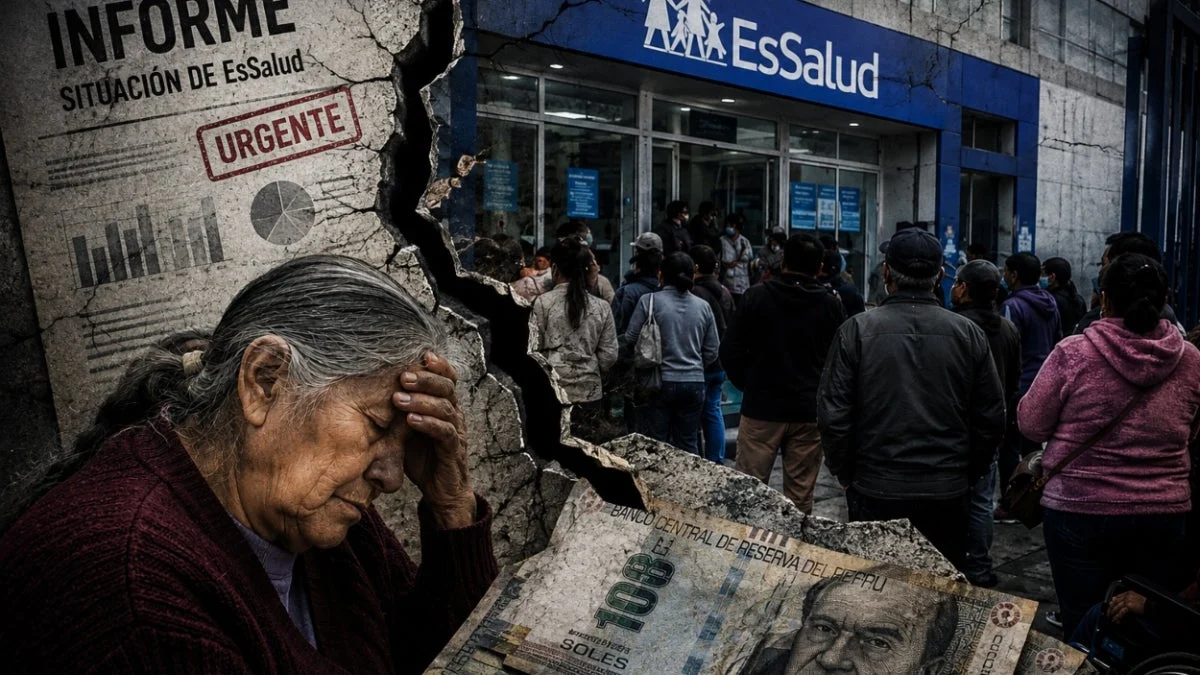
The Peruvian social security system, EsSalud, is currently at a critical juncture. Tasked with managing over S/ 16 billion annually, the institution—once the bedrock of public health for millions of formal workers—is struggling to fulfill its mandate. A recent report by the research organization Horizonte Laboral has exposed deep-seated structural "wounds" that are effectively paralyzing the delivery of healthcare services. As the government, led by Minister of Labor Juan Sheput, contemplates declaring the entity in a state of emergency, the nation is watching closely to see if a "deep audit" can salvage an institution suffering from years of mismanagement, fiscal instability, and political interference.
The Anatomy of the Crisis: Main Facts and Current Challenges
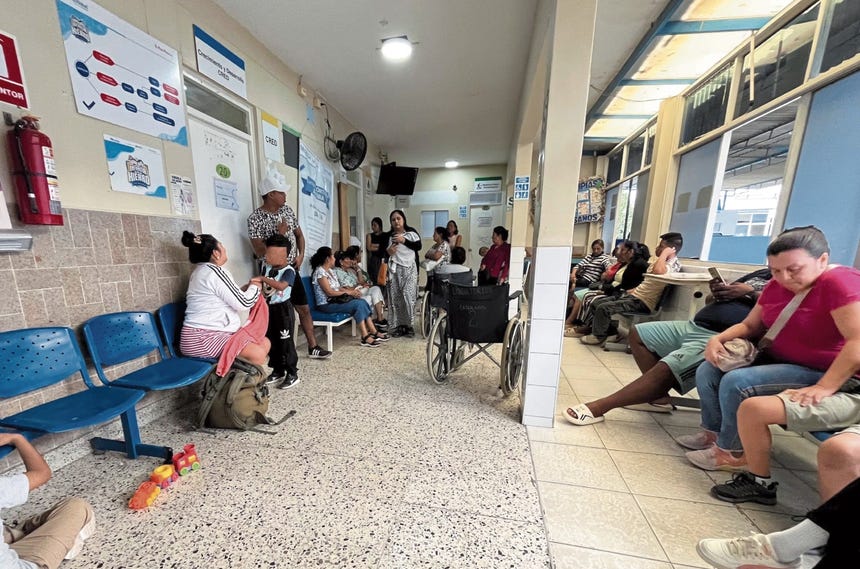
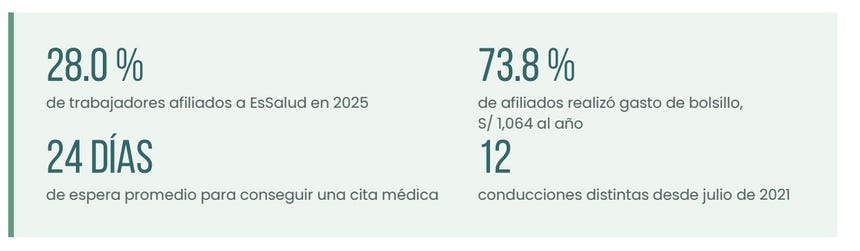
At the core of the crisis lies a paradox: while the budget has remained substantial, the quality of care has plummeted. According to data analyzed by Horizonte Laboral, the time required for a patient to secure a medical appointment has soared to an average of 24 days, more than double the 10-day wait time recorded during the pre-pandemic era.
The decline is systemic. Between 2019 and 2024, the institution saw a staggering reduction of 770,000 external medical consultations. This operational decline is compounded by a massive debt to suppliers—totaling S/ 1.054 billion—which has triggered chronic shortages of essential medicines and the premature interruption of critical treatments. For the 13 million citizens relying on this system, the lack of timely care has forced a shift toward private expenditure, where patients are compelled to pay out-of-pocket for services they have technically already funded through their payroll contributions.
Chronology of a Deteriorating Institution
The decline of EsSalud did not happen overnight; it is the result of years of structural degradation and legislative overreach.
- 2021–2023 (The Legislative Wave): The Peruvian Congress enacted at least 47 laws directly affecting EsSalud. Most of these mandates focused on labor requirements—such as forced transitions to the "728" contract regime and CAS contract modifications—without providing corresponding fiscal sustainability studies.
- 2023 (The Financial Warning): The International Labour Organization (OIT) released a sobering Financial-Actuarial Study, warning that EsSalud would face continuous deficits starting in 2023, with projections showing the depletion of accumulated results by 2024 and the exhaustion of legal reserves by 2026.
- Late 2025 (Regulatory Changes): The 2026 Budget Law introduced a controversial exception for EsSalud, removing the supervisory "filter" of the National Fund for the Financing of State Business Activity (Fonafe). This change granted the institution autonomy to approve its own budget and modifications through its Board of Directors, effectively removing a crucial external layer of technical oversight.
- August 2026 (The Current Collapse): Following the removal of President Jaime Moreno, the government placed Hilda Sandoval Cornejo in an interim role as it prepares for a comprehensive audit. Minister Juan Sheput has publicly labeled the institution’s current state as a "disaster."
Supporting Data: The Burden on the Insured
The Horizonte Laboral report, supported by data from the 2025 National Household Survey (ENAHO), paints a bleak picture of the "social safety net." Only 33% of insured patients who faced health issues in the last year actually managed to receive a medical consultation through the system.
The financial burden on the individual is significant. Approximately 73.8% of affiliates reported making out-of-pocket payments to access health services, averaging S/ 1,064 annually. This figure is even more alarming for the elderly—the demographic most dependent on the system—who pay an average of S/ 1,476 per year to compensate for the deficiencies of their own social security provider.
Furthermore, the system remains trapped in a rigid, outdated model. It is designed for a formal, urban labor market that currently accounts for less than 30% of the Peruvian workforce. With over 70% of the population operating in the informal sector, EsSalud faces a shrinking pool of contributors while its obligations continue to mount. As of the end of last year, only 28% of the working population was affiliated with the system.
The Governance Gap: Official Responses and Policy Proposals
The Ministry of Labor, under Juan Sheput, has initiated a phase of deep institutional scrutiny. The removal of Jaime Moreno marked the start of what the Minister calls a "process of improvement." Sheput has been unequivocal in his critique, questioning the irregular procurement of medicines and the distribution of S/ 380 million in performance bonuses by the previous board—bonuses that, according to critics, were awarded without clear performance metrics.
- The Audit Strategy: The government is pushing for a deep-dive audit to identify the precise points of financial leakage. Regarding the potential declaration of a "State of Emergency," Minister Sheput has clarified that this must be a surgical tool based on data, not a blanket excuse to bypass transparency in procurement.
- Institutional Proposals: Horizonte Laboral suggests that the solution requires a three-pronged approach:
- Governance Reform: Re-establishing technical controls, such as those previously provided by Fonafe, to ensure budget consistency.
- Fiscal Discipline: The OIT recommends equalizing contributions across regimes, restoring contributions on "gratification" bonuses, and establishing a minimum contribution for pensioners.
- Operational Efficiency: Prioritizing the first level of medical care to reduce the burden on high-complexity hospitals and halting the approval of new obligations without a clear, sustainable funding source.
Implications: A System at the Breaking Point
The implications of failing to reform EsSalud are profound. Beyond the immediate health outcomes, the erosion of the social security system threatens the broader social contract in Peru. When citizens continue to pay their social security taxes but find themselves paying again at private pharmacies and clinics, public trust in the state’s capacity to provide basic services evaporates.
The current situation is not merely a matter of budget shortfalls; it is a crisis of governance. As the government searches for a permanent president of EsSalud—someone defined by "decency, capacity, and a proven track record"—the institution faces a race against time. The depletion of legal reserves projected for 2026 leaves little room for error.
The path forward, as argued by experts, requires more than just changing names at the top. It demands a fundamental shift in how the institution is managed. If EsSalud cannot convert its S/ 16 billion budget into effective, timely care for its 13 million members, it risks becoming a hollow shell—an administrative apparatus that consumes resources but fails to fulfill its most basic promise: the right to health.
The coming months will be decisive. Whether the proposed "deep audit" leads to a genuine restructuring or remains a symbolic political gesture will determine the future of healthcare for millions of Peruvians. For now, the "wounds" of EsSalud remain open, and the cost of the status quo continues to be paid, both in public funds and in the personal financial struggles of the most vulnerable citizens.