In the face of an escalating national security crisis that has seen crime rates climb and public safety become a primary concern for citizens and businesses alike, a strategic shift is occurring in how Peru funds its fight against delinquency. The mechanism known as Obras por Impuestos (OxI)—or "Works for Taxes"—has transitioned from a tool for infrastructure construction into a critical pillar for police and public safety funding. With over S/498 million already allocated in 2026, the private sector is becoming an indispensable partner in closing the state’s technological and operational gaps.
The Financial Surge: A New Era for Security Funding
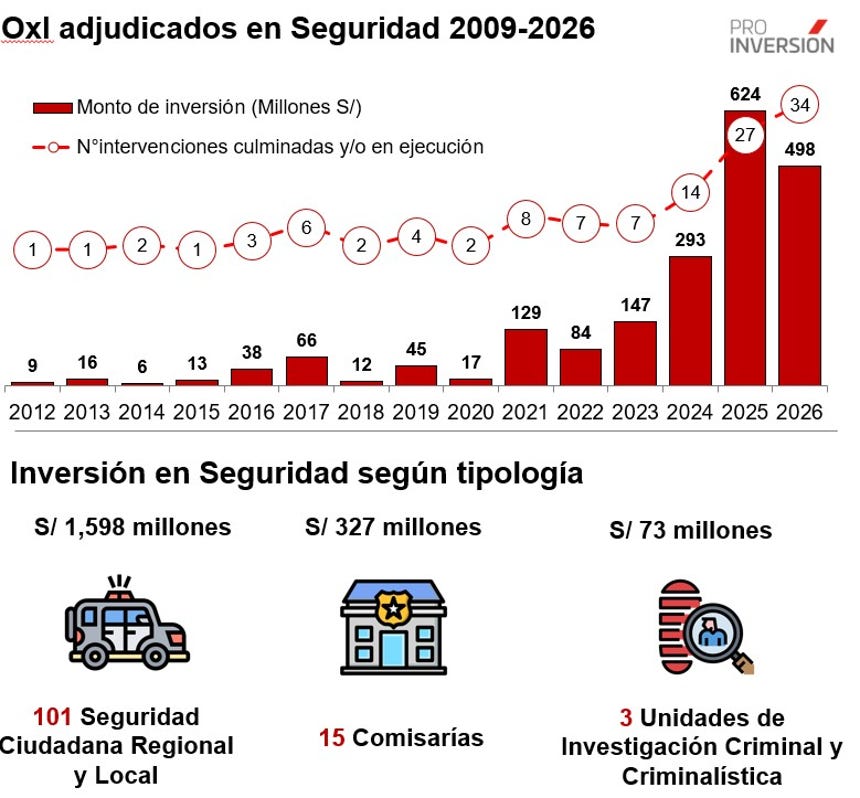
The numbers reveal a staggering shift in policy and private sector engagement. In 2020, investment in security via the OxI mechanism was negligible, failing to even reach S/20 million annually. By 2025, that figure had skyrocketed to over S/624 million. As of September 2026, 34 separate interventions have already reached an investment value of S/498 million, representing nearly 80% of the previous year’s total annual investment in just nine months.
This trajectory reflects a desperate need for resources. Between 2023 and 2025, investment in this sector grew more than fourfold, rising from S/147 million to S/624 million. This surge is not limited to metropolitan Lima; it is a nationwide phenomenon reaching regional and local governments that have long struggled with outdated equipment and inadequate facilities.
Chronology of Evolution: From Roads to Radios
The history of Obras por Impuestos began as a mechanism to facilitate public infrastructure like roads, bridges, and schools. However, as the complexity of urban crime and organized violence evolved, the legal framework was adapted to allow private companies to deduct their tax obligations by financing essential security assets.
- 2020: Minimal participation; security was not a priority area for the OxI model.
- 2023: A turning point where investments reached S/147 million as local governments began to recognize the model’s agility.
- 2025: A record year with S/624 million in investments, signaling a systemic shift in how the state views private-public cooperation.
- 2026: On track to exceed S/600 million, with a broader focus on high-tech equipment and specialized infrastructure rather than just basic civil works.
Analyzing the Investment Portfolio
According to ProInversión, the investments are categorized by the specific nature of the threat or requirement. The largest share of the funding, totaling S/1,598 million across 101 projects, is dedicated to "Regional and Local Citizen Security." These projects are holistic, aiming to provide better logistics for municipal serenazgo (municipal police) and regional coordination centers.
The second tier of investment focuses on the backbone of law enforcement: the police station. With S/327 million invested in 15 major station upgrades, the government is prioritizing the physical environment where officers work. A further S/73 million has been channeled into high-stakes facilities, such as Criminal Investigation Units and Forensic Laboratories, which are essential for processing crime scenes and securing convictions.

Between 2009 and 2026, a total of 119 interventions have been recorded, totaling nearly S/2 billion. Of these, 47 are fully completed and operational, while 72 are currently in the execution phase, representing a massive pipeline of upcoming security improvements.
Official Perspectives: The Role of ProInversión
Dolly Lozano, an advisor to the Directorate of Decentralized Investments at ProInversión, emphasized in an interview that the success of the model lies in its flexibility. "We are seeing that it’s not just about building walls," she noted. "It is about providing the tools that officers need to do their jobs today. We are talking about patrols, motorcycles, advanced technological equipment, and radio systems. We are customizing these investments to the specific geography and reality of each province."

Lozano acknowledges that while the numbers are impressive, the potential is even greater. The main challenge remains the "maturity" of the project profiles. For a company to jump on board, the project must be well-structured, have clear objectives, and be legally sound. "A well-developed project leads to a successful execution," she stated, highlighting the agency’s focus on helping municipalities draft better technical documents to attract private interest.
The Business Perspective: From "Lending Tires" to Strategic Partners
The business community, represented by entities like the Lima Chamber of Commerce (CCL) and the Alliance for Works for Taxes (ALOXI), has been vocal about the necessity of this investment. Raúl Barrios, president of the CCL, provided a sobering look at the reality on the ground during the VII Forum on Citizen Security and Business.

"Businessmen are the most affected by the current crisis," Barrios asserted. "We are being extorted and targeted. The state, as it stands, lacks the basic tools to fight back. Many of us are personally paying for tires for police trucks or covering the electricity bills for local police stations because they don’t have the budget."
Barrios views the expansion of the OxI mechanism as a lifeline. "The regulation has been modified, and today it can be used for anything: drones, advanced computing, specialized weaponry, and intelligence software. We have the technology and the capital; the state has the authority. We must bridge that gap."
The Challenge of "Project Maturity" and Integration
Mariana Caballero, General Manager of ALOXI, adds a layer of caution. While there is a strong appetite from the private sector to participate, the government must move beyond the "quick fix" mentality.
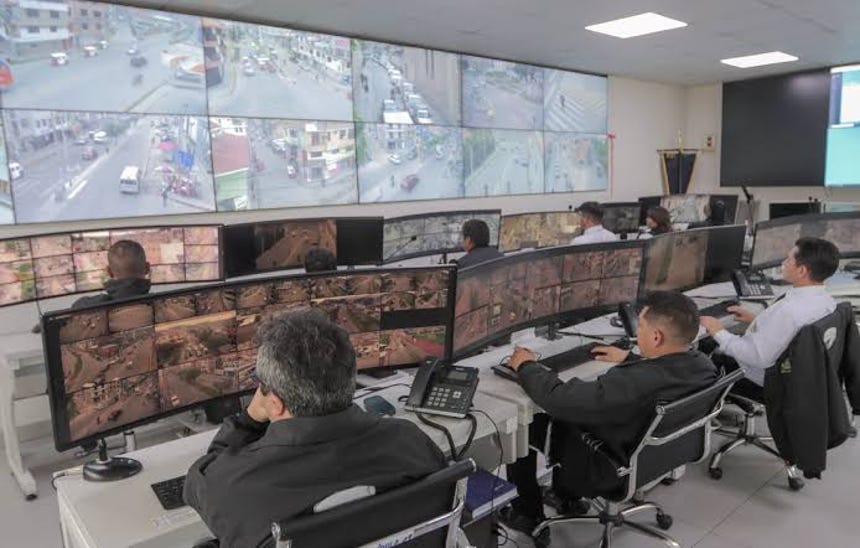
"We need projects that are mature," Caballero explained. "We cannot simply buy a camera and call it security. We need a holistic vision that integrates technology, innovation, and, most importantly, interoperability."

One of the major risks highlighted by ALOXI is the creation of "isolated silos." If every municipality buys a different brand of camera or uses incompatible software, the system will fail to provide a unified response to crime. "If we do not ensure that these systems talk to each other, we are wasting resources," she warned. The goal, according to the business sector, is to use OxI to build a national network of security intelligence that transcends municipal boundaries.
Implications for the Future of Public Safety
The shift toward utilizing Obras por Impuestos for security has profound implications for the future of the Peruvian state:
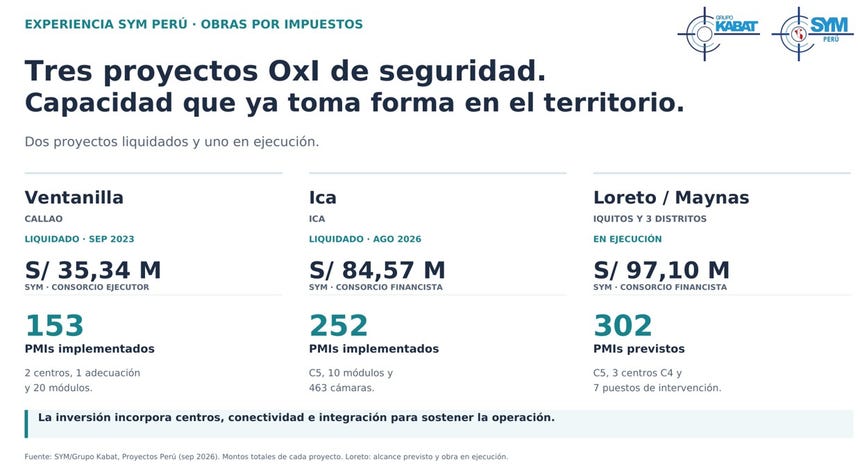
- Efficiency: It bypasses the often-slow and bureaucratic procurement processes of the central government, allowing local authorities to get equipment in months rather than years.
- Sustainability: By involving private companies in the design and maintenance phases, there is a higher probability that the equipment remains functional, as companies often have a vested interest in the long-term success of the security projects in the regions where they operate.
- Resource Reallocation: As the private sector takes over the burden of funding logistical assets (patrols, computers, stations), the state can theoretically redirect its own budget toward intelligence, human resources, and judicial reform.
- Technological Leapfrogging: Through the private sector, police forces in smaller towns are gaining access to AI, advanced surveillance, and digital communication tools that would have otherwise taken decades to reach them through traditional public investment cycles.
Conclusion
The evolution of the Obras por Impuestos mechanism reflects a society in transition. While the surge in funding is a testament to the urgency of the security crisis, it also highlights a maturing partnership between the state and the private sector. The success of the next phase will depend not on the amount of money invested, but on the sophistication and integration of the projects themselves. As Peru continues to battle the rising tide of criminality, the collaborative model of funding promises to be a defining factor in restoring order and safety to its citizens. The challenge ahead is to ensure that these massive investments are not just a collection of hardware, but the foundation of a modern, intelligent, and unified security apparatus.