The recent arrival of the global K-pop sensation BTS in Lima has left an indelible mark not only on the hearts of the "ARMY"—the group’s dedicated fanbase—but also on the Peruvian national economy. Beyond the musical mastery and the spectacular production values showcased at the Estadio San Marcos between October 7 and 10, the concerts served as a massive fiscal engine, generating a record-breaking influx of tax revenue that has caught the attention of financial analysts and government regulators alike.
According to data released by the Superintendencia Nacional de Aduanas y de Administración Tributaria (SUNAT), the events collectively contributed more than S/18 million in tax payments. This figure, bolstered by a surge in commercial activity inside the stadium, sets a new benchmark for mass entertainment events in the country, underscoring the profound economic weight of global music tours in the post-pandemic era.
Main Facts: A Fiscal Landmark in Lima
The financial impact of the BTS concerts can be broken down into two primary categories: direct tax contributions from the promoters and the performers, and the commercial activity generated within the venue.
The total sum of over S/18 million in taxes was settled by the event promoters and the artists before the first curtain rose on October 7. This proactive compliance included:
- S/9.7 million originating from the Impuesto General a las Ventas (IGV) applied to the total value of commercial tickets sold.
- S/8.1 million derived from the Income Tax for Non-Domiciled Entities, representing 15% of the gross earnings generated by the artists themselves.
However, the most startling statistic emerged from the "internal" economy of the Estadio San Marcos. Over the course of the three-day residency, fans spent a staggering S/5.8 million on merchandise, food, and beverages. Of that amount, a record-breaking S/5.6 million was spent exclusively on official clothing and accessories. This figure alone represents more than 50% of the total revenue generated by all other major concerts monitored by the tax authority throughout the entire year, including high-profile acts such as Bad Bunny, Alejandro Sanz, and The Killers.
Chronology: The Three Days That Transformed the Market
The "BTS effect" began long before the band stepped onto the stage, but the intensity of the economic activity reached its crescendo during the concert window.
- Pre-Event Phase: Months of logistical preparation culminated in the early declaration and payment of tax obligations. By securing these payments before the event, the promoters ensured full compliance, allowing the tax authority to focus its monitoring efforts on real-time commercial transactions during the show dates.
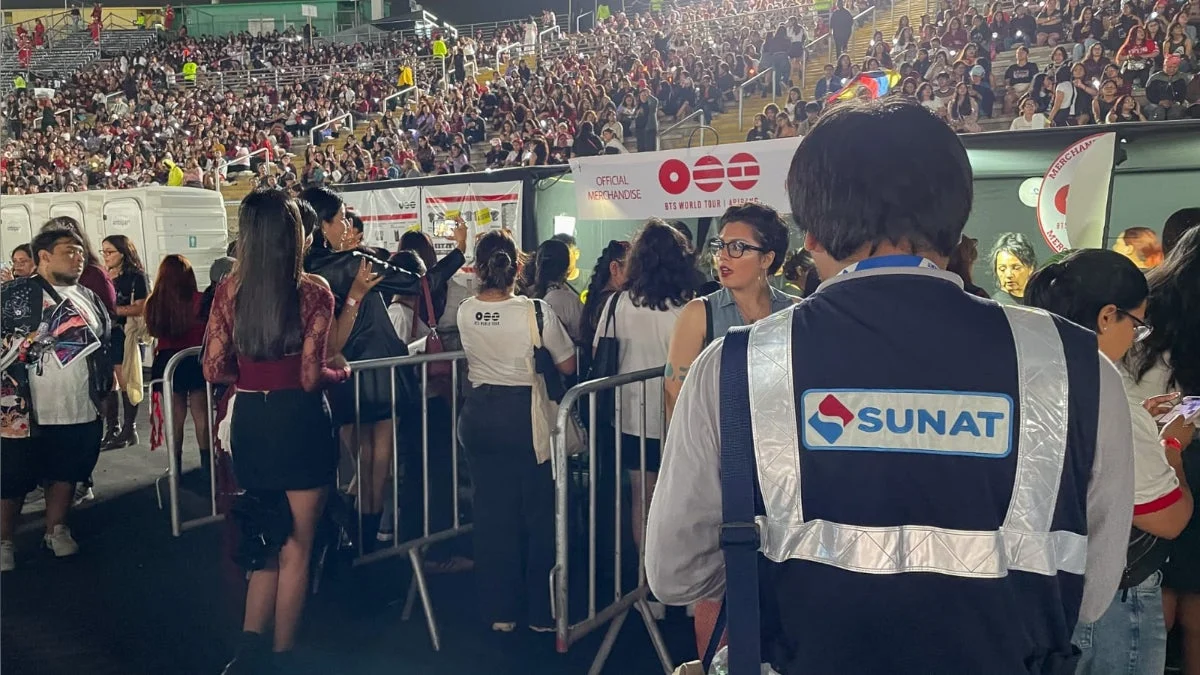
- October 7–10 (The Event Window): As the gates opened, a specialized team of 20 SUNAT inspectors deployed across the Estadio San Marcos. Their mission was to oversee 24 authorized commercial points. Throughout the three days, these inspectors verified the registration of each vendor in the Registro Único de Contribuyentes (RUC) and ensured that every transaction was accompanied by an electronic proof of payment.
- Post-Event Consolidation: Immediately following the conclusion of the final concert on October 10, the tax authority began the process of auditing the collected data. By comparing the projected sales with the actual electronic receipts issued, SUNAT was able to confirm the massive S/5.8 million revenue figure, marking a milestone in fiscal supervision.
Supporting Data: Why BTS Outperformed the Field
The sheer scale of the spending at the BTS concerts is best understood through comparative analysis. While Lima has hosted a variety of international stars this year, the spending patterns observed during the BTS residency were fundamentally different.
The S/5.8 million in total commercial revenue inside the stadium is a testament to the "merchandise-heavy" culture of K-pop fandom. While typical concertgoers might purchase a beverage or a souvenir program, the BTS audience engaged in a comprehensive "consumption experience." With S/5.6 million directed toward apparel and limited-edition items, the data suggests that fans treat concert merchandise as a vital component of the community identity.
By contrast, the sale of food and beverages—including staples like burgers, beer, and soft drinks—accounted for only S/208,624. This highlights that the primary driver of the stadium’s internal economy was not subsistence, but the acquisition of cultural capital in the form of band-related goods. When compared to the total volume of commercial activity in all other major concerts in Lima this year—which totaled approximately S/10 million—the BTS residency effectively captured more than half of the entire annual market for concert-based sales in just three nights.
Official Responses: SUNAT’s Perspective on Compliance
SUNAT has utilized the success of the BTS concerts as a case study in how mass events can contribute to formalizing the economy. In a formal statement, the institution emphasized the transparency of the process:
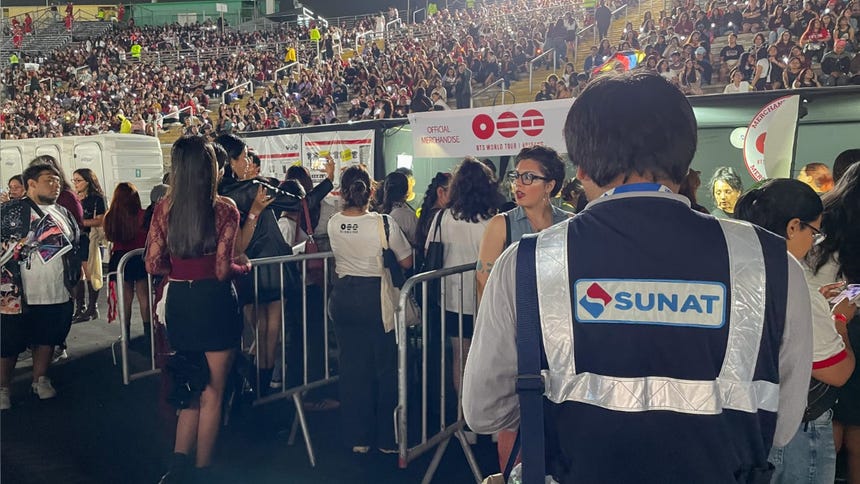
"Complying with the established procedures, the promoters who brought the band and the artists themselves paid over S/18 million in taxes. The declaration and payment were executed prior to the concerts, ensuring a seamless fiscal process," the agency stated.
The deployment of 20 tax inspectors was not merely a punitive measure, but an educational and supervisory one. The agency’s focus was on ensuring that the 24 commercial establishments were not only paying taxes but also participating in the digital transformation of the Peruvian economy. By mandating the use of electronic invoices, the authority aims to reduce the "informal" economy that often plagues large public gatherings.
Furthermore, SUNAT has launched an ongoing campaign to incentivize fans to demand receipts, even at large-scale events. The agency noted that these controls allow the state to contrast the revenue declared by vendors with the actual sales volume observed, ensuring that the tax burden is shared equitably and that the "fever" of K-pop does not translate into tax evasion.
Implications: The Future of Concert Tourism in Peru
The success of the BTS concerts raises significant questions regarding the future of Peru as a destination for global tours. Several key implications have emerged:
1. The Maturity of the Peruvian Fanbase
The data demonstrates that the Peruvian market has reached a level of maturity that global promoters can no longer ignore. The willingness of fans to spend millions on official merchandise suggests a high disposable income and a strong desire to participate in the "global experience" of K-pop, regardless of the price point.
2. The Economic Multiplier Effect
Beyond the S/18 million in taxes, the influx of over 50,000 tourists for the concerts generated ripple effects in the hospitality, transportation, and service sectors. Hotels, restaurants, and local tour operators reported near-capacity levels during the second week of October, suggesting that the "BTS impact" extends far beyond the stadium walls and into the broader GDP of the capital.
3. Strengthening Formalization
The record-breaking compliance witnessed at the Estadio San Marcos serves as a blueprint for future events. By integrating tax oversight into the event planning process, authorities can ensure that the "spectacle economy" contributes directly to public infrastructure and services. The success of this collaboration between promoters and the government creates a stable environment for future international acts to consider Lima as a mandatory stop on their global tours.
4. A New Standard for Fiscal Transparency
For the fans, the message from the tax authority is clear: your participation in the concert experience is also a contribution to the national economy. By insisting on electronic receipts, fans have inadvertently played a role in validating a massive, highly successful commercial operation, setting a standard for transparency that is likely to be applied to all future mass events in the country.
Conclusion
The BTS concerts in Lima were more than a series of performances; they were an economic event of historic proportions. By generating over S/18 million in tax revenue and setting a new record for merchandise sales, the band and their dedicated followers have proven that the culture of fandom is a legitimate and powerful economic force. As Peru continues to position itself as a key hub for international entertainment, the lessons learned from the "BTS experience"—in terms of fiscal compliance, commercial organization, and the power of the consumer—will undoubtedly serve as the foundation for the next generation of mega-events in the region.