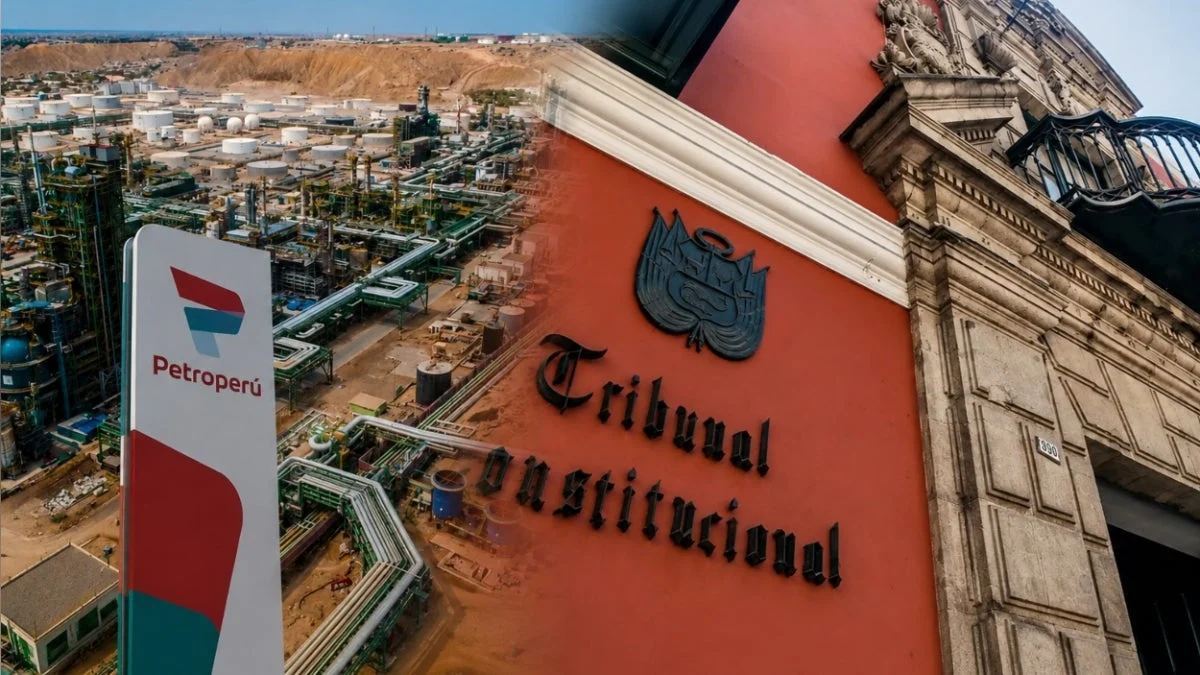
The future of Petroperú, the state-owned oil giant, hangs in the balance as the Peruvian judicial system prepares for a series of landmark rulings that could reshape the nation’s energy landscape. This Tuesday, August 25, the Constitutional Tribunal (TC) is scheduled to deliberate on consolidated challenges to Emergency Decree 010-2025, a controversial measure enacted by the administration of José Jerí that seeks to fundamentally restructure the company’s patrimonial assets.
At the heart of the dispute is the role of the state in the energy sector versus the push for private sector participation. With the company teetering on the edge of a severe liquidity crisis, the government’s attempt to bypass traditional legislative channels to force a reorganization has ignited a firestorm of legal and political opposition.
The Genesis of the Crisis: Decree 010-2025
Enacted on the night of December 31, 2025—a timing that critics suggest was designed to minimize public scrutiny—Emergency Decree 010-2025 was framed by the Jerí administration as a "necessary rescue" for a company crippled by debt and operational inefficiencies.
The decree mandates a radical "patrimonial reorganization" of Petroperú, tasking ProInversión with the management of the company’s assets. The core mechanism involves segregating the firm’s diverse business units into distinct "patrimonial blocks." The intent, according to government officials, is to allow specialized private operators to manage these assets, thereby injecting capital and efficiency into a company that has struggled to even finance the purchase of crude oil.
However, the decree has been met with immediate backlash from the Defensoría del Pueblo (Ombudsman’s Office), the Municipalidad Provincial de Talara, and several professional guilds, including the Colleges of Lawyers and Engineers. The primary accusation is that the executive branch has exceeded its constitutional authority, utilizing an emergency mechanism for a structural change that should have been debated and approved by the Congress of the Republic.
Chronology of the Legal Confrontation
The legal struggle against the decree has unfolded across multiple fronts, reflecting the deep polarization surrounding the state’s role in the energy sector:
- December 31, 2025: The government publishes Emergency Decree 010-2025, initiating the reorganization plan.
- Early 2026: Initial public outcry begins as unions and professional associations warn of a "disguised privatization" of strategic state assets.
- Mid-2026: The Defensoría del Pueblo and the Municipalidad Provincial de Talara formally file constitutional challenges with the Tribunal Constitucional, arguing that the decree violates the separation of powers and lacks the urgency required for such a sweeping executive measure.
- August 2026: The Federation of Petroleum, Energy, and Allied Workers (FENPETROL) files a separate amparo (constitutional protection) lawsuit in the judicial branch.
- August 25, 2026: The Tribunal Constitucional convenes to hear the consolidated cases against the decree.
- October 5, 2026: Scheduled "Single Hearing" for the FENPETROL amparo lawsuit before the Fifth Constitutional Court of the Superior Court of Justice of Lima.
Institutional Arguments: A Clash of Perspectives
The Defensoría del Pueblo’s Stance
The Defensoría del Pueblo has been a vocal critic of the executive’s methodology. Their argument is twofold: procedural and ideological. Procedurally, they contend that the executive branch has "evaded parliamentary debate" by labeling a long-term structural reorganization as an "emergency." They argue that the decree fails the "urgency and unpredictability" test required by the Peruvian Constitution for such measures.
Ideologically, the Ombudsman’s Office warns that Petroperú serves a vital strategic role in the country’s energy security. By facilitating the entry of private operators into core business units, the Defensoría suggests that the state is effectively dismantling the company’s ability to act as a guarantor of energy supply, potentially leading to increased costs for the Peruvian consumer and a loss of national sovereignty over critical infrastructure.
The Government’s Rationale
The Jerí administration maintains that the company’s financial state is so dire that it constitutes a national emergency. Petroperú currently faces a liquidity crunch so severe that it has lost the ability to procure basic crude oil for its refineries. Government representatives argue that without the involvement of ProInversión and the private sector, the company faces imminent collapse, which would trigger a massive fiscal shock and potentially lead to a shortage of fuel across the country.
The Judicial Front: The FENPETROL Lawsuit
Beyond the Constitutional Tribunal, the dispute has reached the civil courts. FENPETROL’s lawsuit, admitted by the Fifth Constitutional Court, targets the highest levels of government, including the Presidency of the Council of Ministers (PCM), the Ministry of Economy and Finance (MEF), and the Ministry of Energy and Mines.
The workers’ union presents a unique set of concerns: labor stability. They argue that the segmentation of assets into "patrimonial blocks" is a precursor to mass layoffs and the degradation of collective bargaining agreements. Furthermore, they contend that the restructuring is being conducted without a transparent, long-term national energy strategy, suggesting instead that it is a fire sale of assets meant to appease international creditors rather than solve the company’s underlying operational deficiencies.
Supporting Data: The Liquidity Trap
The scale of the challenge is reflected in the numbers. Petroperú is currently awaiting a high-stakes infusion of private financing totaling US$2 billion. This package is structured in stages, with an initial "bridge loan" of US$500 million considered essential to keep operations afloat in the short term.
Financial analysts note that the legal uncertainty created by the challenges at the Constitutional Tribunal and the courts is chilling investor sentiment. Lenders are wary of providing capital to a company whose legal structure and management model are currently being litigated. The lack of liquidity has already manifested in supply chain disruptions, forcing the company to rely on increasingly expensive spot-market purchases, further eroding its margins.
Implications for Peru’s Energy Future
The outcome of these legal battles will set a significant precedent for how Peru manages its state-owned enterprises.
1. Constitutional Precedent
If the Tribunal Constitucional rules against the government, it will reaffirm the limits of executive power, signaling that "emergency" decrees cannot be used as a shortcut for major economic reform. This would force the executive to return to the halls of Congress to build consensus for the future of Petroperú, a process that is likely to be lengthy and fraught with political horse-trading.
2. Energy Security
The ultimate concern for the average citizen is the stability of fuel prices and availability. Should the courts order a suspension of the decree, the government will face the immediate, existential question of how to fund the company without the reorganization plan. Failure to secure the necessary US$2 billion in financing could lead to a systemic failure in fuel distribution, with catastrophic consequences for the transport and industrial sectors.
3. The Privatization Debate
The term "privatization" has become a toxic label in Peruvian politics. However, the current crisis forces a reality check: can the state effectively manage a massive, debt-ridden energy firm without private partnership? The rulings will effectively determine whether Petroperú remains a 100% state-owned enterprise with a monolithic structure, or if it will be forced to transition into a "mixed" model where state ownership exists alongside private operational management.
Conclusion: The Path Ahead
As the judges prepare their arguments for the upcoming sessions, the atmosphere remains tense. The intersection of constitutional law, labor rights, and macroeconomic necessity has placed the Peruvian judiciary in an unenviable position.
Whether the Tribunal chooses to prioritize the formalist interpretation of the Constitution—insisting on legislative oversight—or allows the pragmatic, albeit aggressive, restructuring proposed by the government to proceed, one thing remains clear: the status quo is unsustainable. Petroperú, as it stands today, is caught in a feedback loop of debt and political paralysis. The decisions handed down in the coming weeks will not only determine the survival of the company but will also define the ideological direction of Peru’s energy policy for a generation.