By Editorial Staff | September 2026
In a proactive effort to fortify the capital’s critical water infrastructure, the Ministry of Housing, Construction, and Sanitation, led by Minister Mauricio Arnillas, has launched an aggressive series of preventative actions. As the nation braces for the potential impacts of the 2026-2027 El Niño phenomenon, authorities are prioritizing the stability of the La Atarjea complex and the Rímac River basin, which serve as the primary lifelines for millions of residents in Lima and Callao.
The Core of the Strategy: Securing La Atarjea
The recent site inspection, led by Minister Arnillas and the newly appointed Chairman of the Board of Sedapal, Fernando Laca, focused on the operational readiness of the La Atarjea Potable Water Treatment Plant (PTAP). This facility is the heart of Lima’s water supply, and its protection is paramount to avoiding widespread service disruptions.
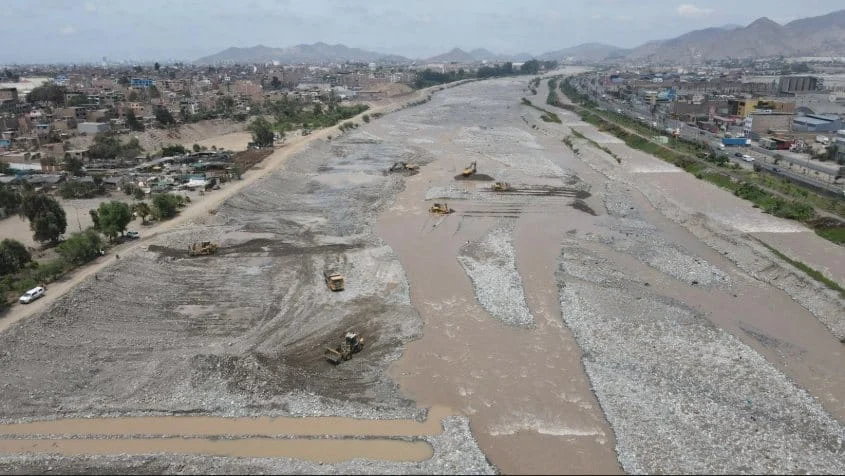
During the visit, officials examined six kilometers of intensive riverbed cleaning and desilting works along the Rímac River. By removing accumulated sediments and debris, Sedapal aims to maintain the river’s hydraulic capacity. This is a critical preemptive measure; during previous weather events, heavy rainfall and associated mudslides (huaicos) have caused significant blockages, putting the city’s water capture systems at risk of clogging or physical damage.

Official Stance: Reforming, Not Privatizing
Minister Arnillas utilized the inspection to address ongoing speculation regarding the future of Sedapal. With the appointment of a new leadership team, the Minister emphasized that the current strategy is centered on internal strengthening and operational efficiency.
"We are here with the new board of directors to initiate a process of reinforcement. The goal is for Sedapal to function better and serve the public more effectively," Minister Arnillas stated. "I want to be clear: this is not a privatization process, under any circumstances. We are working to ensure that the company is robust enough to provide house-to-house water connections to the three million citizens in Lima who currently lack access to this vital service."
Chronology of Preventive Efforts (2026)
The current infrastructure protection plan is part of a broader, year-long initiative that began in early 2026. The timeline of intervention reflects the government’s commitment to preempting disaster rather than reacting to it:
- January – March 2026: Initial identification of high-risk zones in the Rímac basin. The government begins small-scale clearing operations as part of the annual rainy season contingency plan.
- April – June 2026: Assessment of national infrastructure. Sedapal identifies the need for a comprehensive investment plan to address both the excess of water (El Niño) and the deficit (drought conditions in the high Andes).
- July – August 2026: Approval and rollout of the S/358 million Emergency Plan. Procurement of 48 new pumping units and the identification of 70 sites for replacement wells to secure groundwater sources.
- September 2026: High-level inspection of the La Atarjea facility and the Center for Data, Telecommunications, and Automation (CDTA). Launch of the countdown for the October city-wide simulation.
- October 2026 (Forthcoming): A mandatory large-scale simulation exercise to test the efficacy of all work completed to date, serving as a stress test for the city’s water resilience.
Technical Infrastructure: Data and Automation
A significant component of the modernization effort involves the Center for Data, Telecommunications, and Automation (CDTA). During their visit, the authorities observed the real-time monitoring capabilities of the SCADA (Supervisory Control and Data Acquisition) Metropolitan System.

This digital backbone allows engineers to monitor the flow, pressure, and quality of water across the city’s primary network in real-time. By utilizing these tools, Sedapal can detect anomalies or potential pipeline ruptures immediately, allowing for rapid response teams to be dispatched before a localized issue escalates into a city-wide water crisis. This reliance on data-driven management marks a shift in how Sedapal handles both routine maintenance and crisis intervention.
Supporting Data: National Scope
The effort in Lima is just one part of a nationwide strategy to safeguard water resources. The statistics released by the Ministry underscore the scale of these operations:
- Lima Region: 68 targeted interventions for prevention and emergency response have been completed across more than 33 kilometers of critical river and canal infrastructure.
- National Level: A total of 428 distinct cleaning and desilting operations have been conducted, covering over 333 kilometers of waterways.
- Beneficiaries: These preventive works are designed to directly protect approximately 3.6 million citizens across the country, mitigating the risks of supply chain interruptions, pollution of water sources, and infrastructure failure.
Financial Commitment: The S/358 Million Emergency Plan
The S/358 million budget allocation is segmented into several priority areas designed to create a "fail-safe" environment for water distribution:
- Hydraulic Defense: Protecting the physical facilities at La Atarjea and Huachipa through reinforcing river embankments and strengthening intake structures.
- River Basin Management: Continuous desilting of the Rímac River to prevent sediment buildup, which is the primary cause of intake failure during heavy rainfall.
- Groundwater Security: Recognizing that surface water sources may become unusable during extreme weather events, the project includes the integration of 70 replacement wells and the deployment of 48 high-capacity pumping stations to ensure that groundwater can bridge the supply gap.
- Technological Upgrades: Investing in telecommunications and remote monitoring to ensure that the water grid remains responsive even if physical access to certain zones is restricted by weather.
Implications for the Future
The implications of these actions go beyond mere disaster preparedness. By securing the water supply against the volatility of the El Niño phenomenon, the government is effectively protecting the economic and social stability of the capital.

The upcoming simulation in October will be the definitive test of this strategy. It will demonstrate whether the synchronization between the new board, the Ministry’s policy, and the technical execution on the ground is sufficient to handle the climatic pressures expected in the coming months.
Furthermore, the government’s insistence on "strengthening" rather than "privatizing" indicates a political sensitivity to the public’s perception of utility management. By linking these massive investments to the goal of providing water to the 3 million citizens still living without direct connections, the administration is attempting to turn a defensive emergency plan into a progressive social policy.
As the 2026-2027 season approaches, all eyes will be on the Rímac River and the management of the La Atarjea plant. For the millions of people in Lima and Callao, the success of these S/358 million in interventions is not just a technical requirement—it is a fundamental necessity for daily life.