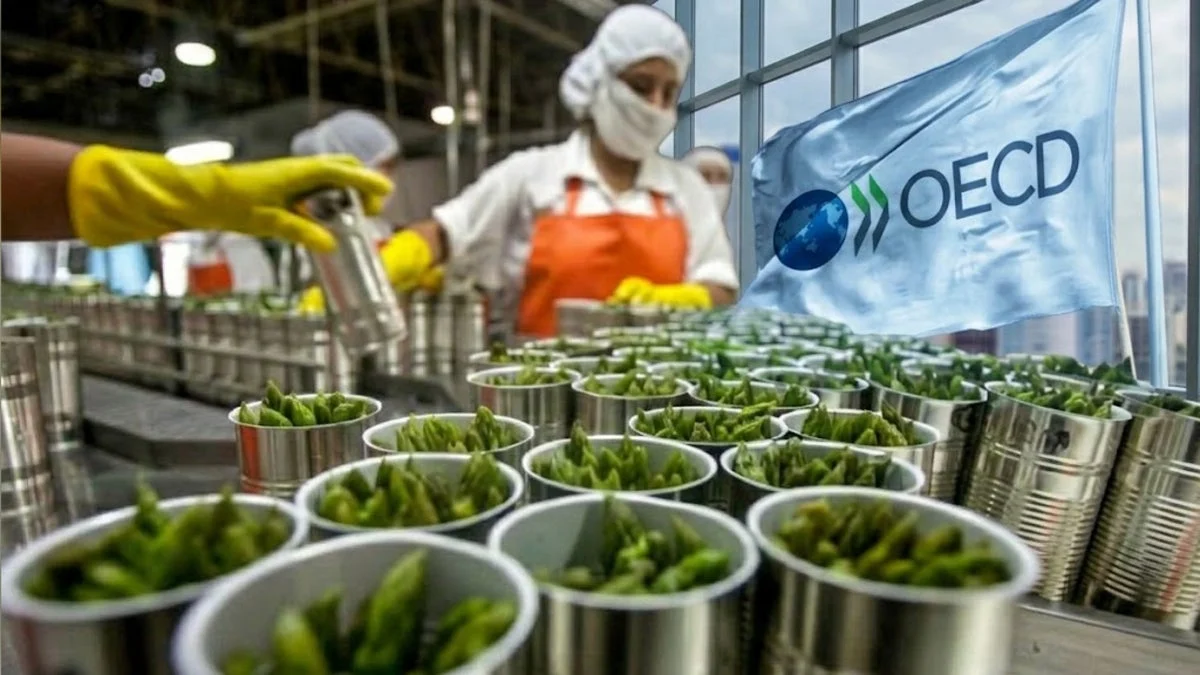
In a significant report that could reshape Peru’s economic landscape, the Organisation for Economic Co-operation and Development (OECD) has issued a stern recommendation to the Peruvian government: eliminate the preferential tax treatment currently enjoyed by the country’s massive agro-export sector. As Peru continues its rigorous multi-year journey toward OECD accession, this critique serves as a pivotal test of the nation’s willingness to align its domestic policies with global standards of fiscal equity and transparency.
The report, which focuses on tax expenditures, argues that the preferential 15% income tax rate for agricultural companies—far below the general corporate rate of 29.5%—is no longer justifiable given the industry’s robust growth over the past decade.
Main Facts: The Core of the Contention
The OECD’s analysis highlights a structural paradox in the Peruvian economy. While the agro-export sector has flourished, becoming a cornerstone of national GDP and a global competitor in produce, its contribution to the state’s tax coffers has remained disproportionately low.
The primary target of the OECD’s concern is the long-term extension of the reduced income tax rate, a measure frequently dubbed by critics as "Ley Chlimper 2.0," which keeps the tax benefit in place until 2035. According to the OECD, maintaining this regime not only erodes the government’s revenue-generating capacity but also creates an uneven playing field. By sheltering one sector from the standard tax burden, the government inadvertently shifts the fiscal weight onto other industries, distorting market competition.
The report explicitly states: "Eliminating this reduced rate would contribute to mobilizing much-needed additional revenue and promoting more equitable conditions across sectors."
A Chronology of the Agro-Export Tax Regime
To understand the current tension, one must look back at the historical evolution of Peru’s agricultural incentives:
- The Early 2000s: Following the initial success of the Promotion of the Agricultural Sector Law, the government implemented tax benefits to jump-start an industry that was then in its infancy, aiming to stimulate investment in arid regions and create formal employment.
- The Decadal Expansion: Throughout the 2010s, the sector saw unprecedented growth, with Peruvian blueberries, avocados, and asparagus dominating international markets. The tax incentives were widely credited with this success, but critics began to argue that the benefits were no longer necessary for mature, high-profit corporations.
- 2020-2021 Reform Debates: Following social unrest and intense labor disputes in the Ica and La Libertad regions, the government was forced to revisit the legal framework. Despite the push for total reform, the legislative consensus resulted in an extension of the tax benefits, pushing the expiration date to 2035.
- 2022 to Present: Peru formally initiated its accession process to the OECD. Since then, the organization has begun conducting technical reviews of Peruvian policy, culminating in the current push for structural tax reform.
Supporting Data: The Fiscal Cost of Preferential Treatment
The economic implications of these tax breaks are staggering. According to internal projections from the Peruvian Ministry of Economy and Finance (MEF), these tax expenditures represent a loss of approximately S/ 1,888 million annually in potential tax revenue.
Projecting this over the next decade, the cumulative impact could reach a staggering S/ 20,000 million by 2035. This is a critical figure for a nation that, according to the OECD, is increasingly reliant on volatile commodity prices—specifically mining—to fund its public budget.
The OECD report emphasizes that a more robust tax contribution from the agro-export sector would serve as a crucial fiscal buffer. "The sector has registered rapid growth in value-added and exports… but has contributed relatively little to tax revenues," the report notes. By integrating these firms into the general tax regime, the state could stabilize its revenue streams, becoming less vulnerable to the cyclical fluctuations of copper and gold prices that currently dominate the national economy.
The "Drawback" Controversy: A System Out of Balance
Beyond income tax, the OECD has launched a stinging critique of Peru’s "drawback" system—a mechanism intended to reimburse exporters for the tariffs paid on imported raw materials.
The OECD argues that the current design is fundamentally flawed. Rather than basing reimbursements on the actual tariffs paid, Peru utilizes a fixed rate based on the total value of exports. The OECD’s data reveals a concerning disparity:
- In 2013, the average beneficiary received reimbursements equivalent to more than three times the tariffs actually paid.
- The top 25% of beneficiaries received more than 13 times the tariffs paid.
- The most extreme 10% of cases saw reimbursements exceeding 61 times the actual duties paid.
The organization concludes that the system has morphed from a tool for competitiveness into a de facto subsidy that far exceeds its original intent. The recommendation is clear: the government should immediately reduce the reimbursement rate via executive decree and eventually move toward a system that strictly limits refunds to the actual costs incurred.
Implications for Peru’s OECD Accession
The path to OECD membership is not merely about economic status; it requires a deep, institutional commitment to "best practices." The accession process involves a rigorous review by various technical committees that evaluate whether a candidate country’s laws and practices align with the OECD’s standards for fairness and efficiency.
The current recommendations on tax reform are not optional in the long term if Peru is to secure its seat at the table of the world’s most developed economies. If the Peruvian government chooses to ignore these warnings—specifically regarding the extension of tax benefits to agricultural-linked manufacturing—it risks signaling that it is not yet ready to commit to the institutional transparency required for membership.
Furthermore, the OECD has explicitly warned against "tax creep," where benefits meant for primary agriculture are slowly expanded to include industrial processing activities. Such expansion, the report warns, "weakens both the equity and the revenue-raising capacity of the tax system and can divert support from taxpayers and sectors with greater demonstrated need."
Conclusion: The Crossroads of Reform
As the Peruvian government deliberates on its next steps, it faces a classic political dilemma: the need to maintain a thriving, competitive export sector versus the urgent requirement for a more equitable, efficient, and robust tax system.
The OECD’s report provides a roadmap for the latter. By calling for the end of artificial tax barriers and the modernization of subsidy systems like the drawback, the organization is challenging Peru to transition from a model based on incentives to one based on structural efficiency. Whether the government has the political capital to implement these changes—and whether the private sector is willing to accept a higher tax burden in exchange for the long-term stability and prestige of OECD membership—remains the defining question of Peru’s economic trajectory for the coming years.