Executive Summary: A Path Toward Stability
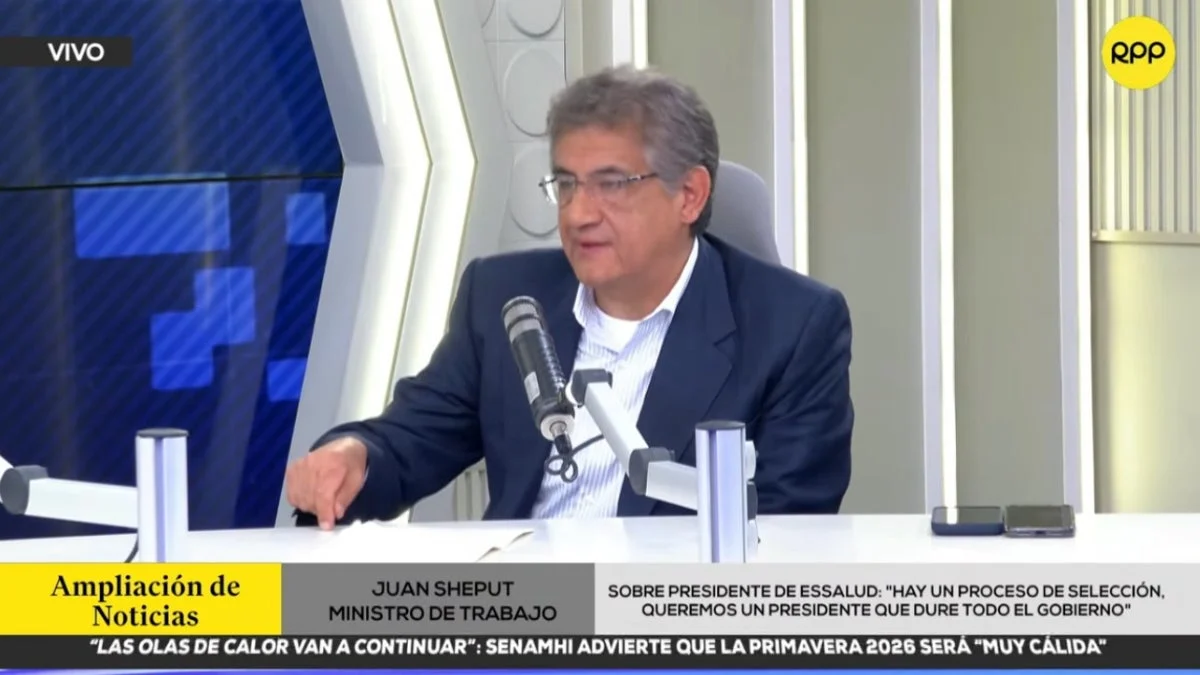
The Peruvian government, through the Ministry of Labor and Employment Promotion, has signaled a strategic pivot in its approach to the Seguro Social de Salud (EsSalud). Minister Juan Sheput has publicly clarified that the administration currently sees no immediate necessity to declare the entity in a state of emergency. Instead, the government is focusing on a comprehensive audit and a series of managerial improvements under the interim leadership of Hilda Sandoval. This decision marks a significant development in the ongoing efforts to address systemic inefficiencies that have long plagued the nation’s primary social health insurance provider.
The government’s primary objective, according to Sheput, is to transition away from reactive, crisis-driven management toward a sustainable model of institutional efficiency. This shift comes at a critical time when public confidence in EsSalud’s ability to provide timely care and adequate medical supplies has reached a historical low.
The Current State of Affairs: Identifying Critical Failures
The decision to pursue a "deep audit" rather than a formal declaration of emergency is rooted in a detailed assessment conducted by the Ministry of Labor. Upon reviewing the status of the institution after the removal of the previous administration, Minister Sheput identified four core pillars where urgent intervention is required:
- Patient Care and Access: The bottleneck in appointment scheduling and the overall patient experience remain the most visible points of friction.
- Supplier Obligations: Managing the financial relationship with pharmaceutical and medical equipment providers has been historically erratic, leading to service disruptions.
- Medicinal Procurement: The planning and acquisition cycles have often failed to align with patient demand, causing unnecessary shortages.
- Logistical Infrastructure: Storage and supply chain management for pharmaceuticals have been identified as weak links, necessitating an overhaul of how the institution handles its inventory.
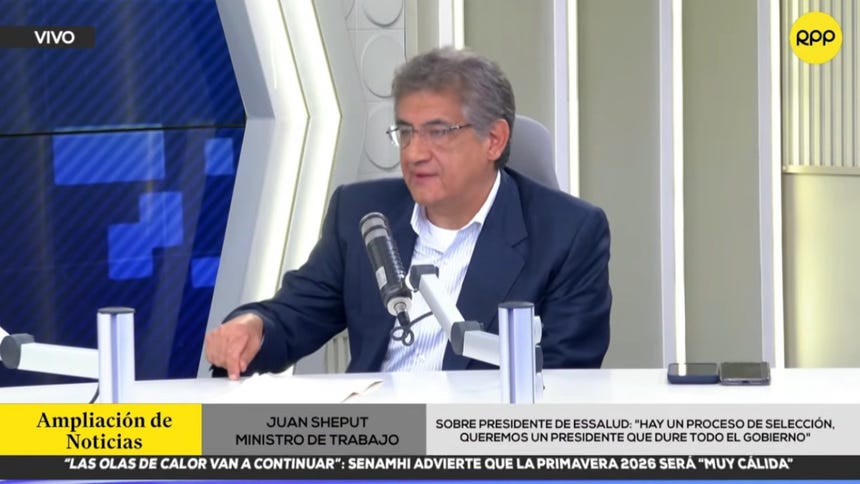
By addressing these four sectors directly, the administration believes it can restore the institution’s functional integrity. "It is possible to improve EsSalud with a good management approach," Sheput stated during a recent media appearance, emphasizing that internal reorganization is more effective than the administrative paralysis that can sometimes accompany a declaration of emergency.
Chronology: A History of Instability
To understand the gravity of the current situation, one must look at the historical context of EsSalud’s leadership. The institution has been plagued by a revolving door of executives, with twelve different presidents serving in the span of just five years. This lack of continuity has made long-term strategic planning nearly impossible.
- The Pre-Crisis Era: Years of inconsistent leadership led to a degradation of services, with patients reporting wait times exceeding one month for basic consultations.
- The "UCI" (Intensive Care) Diagnosis: Recent analyses revealed that nearly 74% of patients are forced to pay for their own medical care out-of-pocket because they cannot access timely services through EsSalud, effectively rendering the insurance system ineffective for a large portion of the population.
- Recent Transitions: The removal of Jaime Moreno as president marked the start of the current, more rigorous phase of oversight.
- The Interim Period: Hilda Sandoval’s appointment one week ago has served as a bridge. Her mandate is to stabilize the institution while the government searches for a permanent successor capable of serving a five-year term.
Official Perspectives and Government Strategy
Minister Juan Sheput’s strategy relies heavily on inter-institutional coordination. He noted that EsSalud is currently working in tandem with the Ministry of Health (Minsa) to ensure that the patient experience is seamless, regardless of which public entity provides the service.
The Search for Permanent Leadership
The responsibility of selecting the next permanent head of EsSalud now rests with the Council of Ministers, led by Luis Galarreta. The government is not looking for a temporary fix; it is looking for a leader with the vision to guide the institution for the next half-decade.
When asked if the current interim president, Hilda Sandoval, might be considered for the permanent role, Sheput remained diplomatic. He indicated that her suitability depends on her performance during this transition period. "As a public official, if the President [Keiko Fujimori] sees that the management is efficient, they will consult with the Premier and myself, but it is too early to anticipate that," he remarked. The vetting process is currently underway, and the administration is looking for candidates who possess both the technical expertise to manage a massive healthcare infrastructure and the political resilience to handle the complexities of the Peruvian public sector.
The Inmunoglobulina Crisis: A Case Study in Resolution
One of the most pressing issues that threatened to push the government toward declaring a state of emergency was the critical shortage of immunoglobulin. This medication is essential for patients suffering from various autoimmune and neurological conditions.
Minister Sheput provided a detailed account of how this crisis was managed:
- The Root Cause: The shortage originated from a defective batch procured in a previous purchasing cycle, which forced the institution to discard existing stock.
- The Remediation: The government negotiated new supply lines to bypass the damaged inventory.
- Current Status: "The problem of the immunoglobulin has been solved," the Minister asserted. He confirmed that multiple lots have been scheduled for delivery—one in the coming three months and another by the end of the year.
By stabilizing this specific supply chain, the government has been able to reassure the public that no patients are currently in danger due to a lack of this specific life-saving medication. This serves as a primary example of the "efficient management" the Minister argues is the alternative to a formal state of emergency.
Implications for the Future of Healthcare
The government’s refusal to declare a state of emergency is a calculated risk. While a declaration of emergency would allow for faster, more flexible spending and procurement, it also suggests an admission of total systemic failure. By choosing the path of an "in-depth audit" and managerial reform, the administration is attempting to prove that the public health system can be saved through better governance rather than radical, top-down intervention.

The Challenges Ahead
Despite the optimism expressed by the Ministry, the challenges are significant:
- Trust Deficit: After years of instability, the Peruvian public is skeptical of promises of "improved management." The administration will need to produce tangible results, such as reduced wait times and consistent availability of essential drugs, to regain public confidence.
- Budgetary Constraints: Even with perfect management, EsSalud faces the inherent challenge of an aging population and rising costs of medical technology.
- Political Pressure: With high-level involvement from the office of President Keiko Fujimori and the Premier, the success or failure of this reform will be viewed as a benchmark for the administration’s overall competency.
The Road to Sustainability
The next few months will be decisive. If the audit reveals deep-seated corruption or if the supply chain improvements fail to reach the hospitals, the pressure to declare an emergency will return with greater intensity. Conversely, if the current management team can successfully streamline the procurement of medicines and stabilize the relationship with medical providers, it could provide a blueprint for reforming other, similarly troubled public institutions.
The government’s message is clear: EsSalud is not in a state of terminal decline, but it is in urgent need of professionalization. By focusing on the fundamentals—logistics, procurement, and leadership stability—the Ministry of Labor is attempting to move the entity out of the "intensive care unit" and back into a functional, reliable status for the millions of citizens who depend on it.
Conclusion
The path ahead for EsSalud remains complex. The government has opted for a surgical approach—auditing and reform—rather than the blunt instrument of a state of emergency. As the Council of Ministers continues to evaluate long-term leadership candidates, the focus remains on ensuring that the internal mechanisms of the insurance provider are restored to full health. For the millions of Peruvians who rely on the institution, the promise of a consistent supply of medication and improved care delivery is the only metric that truly matters. The coming months will determine if this administration can deliver on that promise or if further, more drastic action will eventually be required.