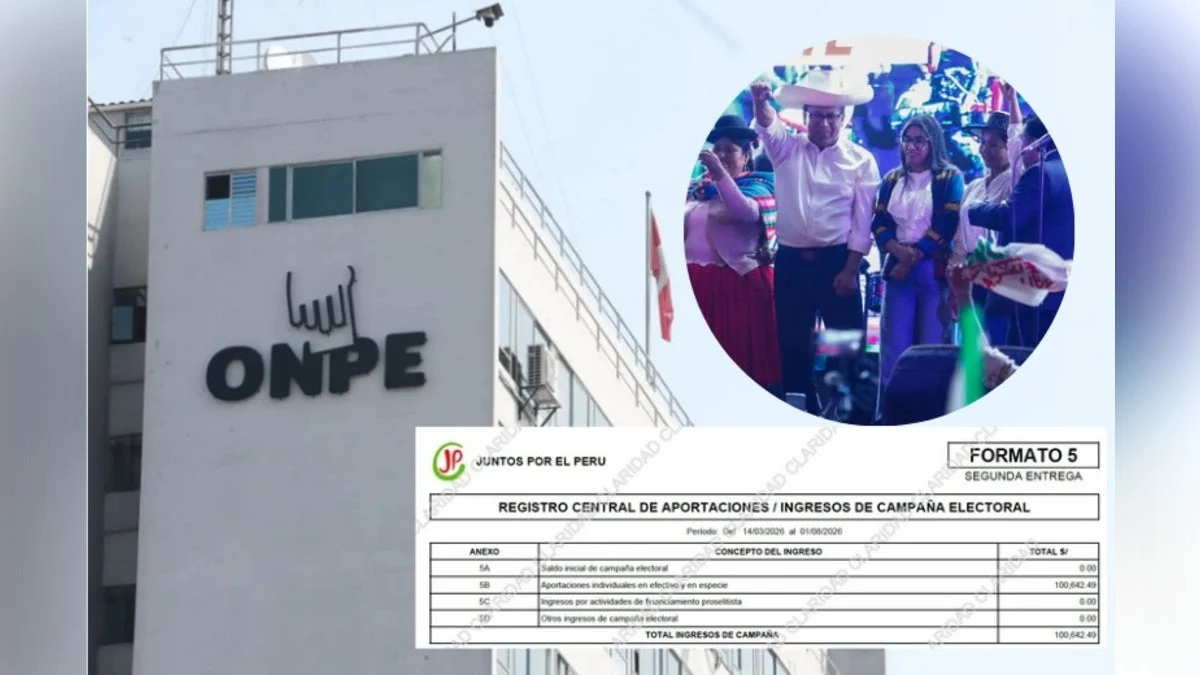
In the high-stakes environment of Peruvian electoral politics, the line between "ordinary party income" and "campaign-related expenditure" has become the center of a significant regulatory dispute. The political party Juntos por el Perú (JPP) is currently facing intense scrutiny from the National Office of Electoral Processes (ONPE) after failing to include in its second financial campaign report the funds collected via the digital wallet ‘Yape’ during the post-second-round period.
The controversy revolves around the collection of funds initiated by the party between June 12 and June 18, 2026—a timeframe immediately following the second round of the General Elections. During these days, the party launched an urgent appeal to its militants and supporters, requesting economic contributions through the mobile payment platform ‘Yape’ and traditional bank accounts. The declared purpose of this mobilization was to finance the legal fees required for submitting petitions to nullify electoral records.
The Core of the Dispute: Campaign vs. Ordinary Funds
The crux of the tension lies in the classification of these funds. Luzmila Ayay, treasurer of Juntos por el Perú, has maintained a firm stance that these contributions do not constitute "campaign" income. According to Ayay, these resources qualify as "ordinary party contributions," which, under her interpretation, are exempt from the specific reporting requirements governing electoral campaign finances.
"The Yape funds cannot be included there because Yape represents an ordinary contribution to the party; it goes directly to the party’s operational accounts," Ayay stated in a previous interview. She further argued that the timing—post-election—and the nature of the expense (legal fees for ballot challenges) do not fall under the umbrella of proselitist activities. "The Yape campaign began on June 12, and the second round concluded on June 7. There is no way it is a campaign expense," she insisted.
However, the regulatory body, the ONPE, holds a markedly different perspective. Luis Camino, a senior official at the ONPE’s Management of Supervision of Party Funds, emphasized that the legislation is designed to capture the true nature of financial flows during the electoral cycle, regardless of whether a specific activity is labeled "proselitist" or "administrative."
Chronology of the Financial Reporting Obligations
To understand the gravity of the situation, one must look at the legal framework governing political finances in Peru. The Law of Political Organizations mandates that parties must present transparent financial information during specific windows of the electoral process.
- First Reporting Window: The initial reporting cycle covered the period from March 26, 2025, to March 13, 2026. This period focused on the preliminary phases of candidate preparation and organizational structure.
- Second Reporting Window: This cycle covered the period from March 14, 2026, to August 1, 2026, with a submission deadline of August 24, 2026.
The funds collected by Juntos por el Perú via ‘Yape’ occurred in mid-June 2026, placing them squarely within the second reporting window. While the treasurer argues that the nature of the expense—legal nullity petitions—is outside the scope of a standard campaign, the ONPE maintains that any expense directly linked to the electoral process must be accounted for.
ONPE’s Stance: The "Nature of the Expenditure" Criterion
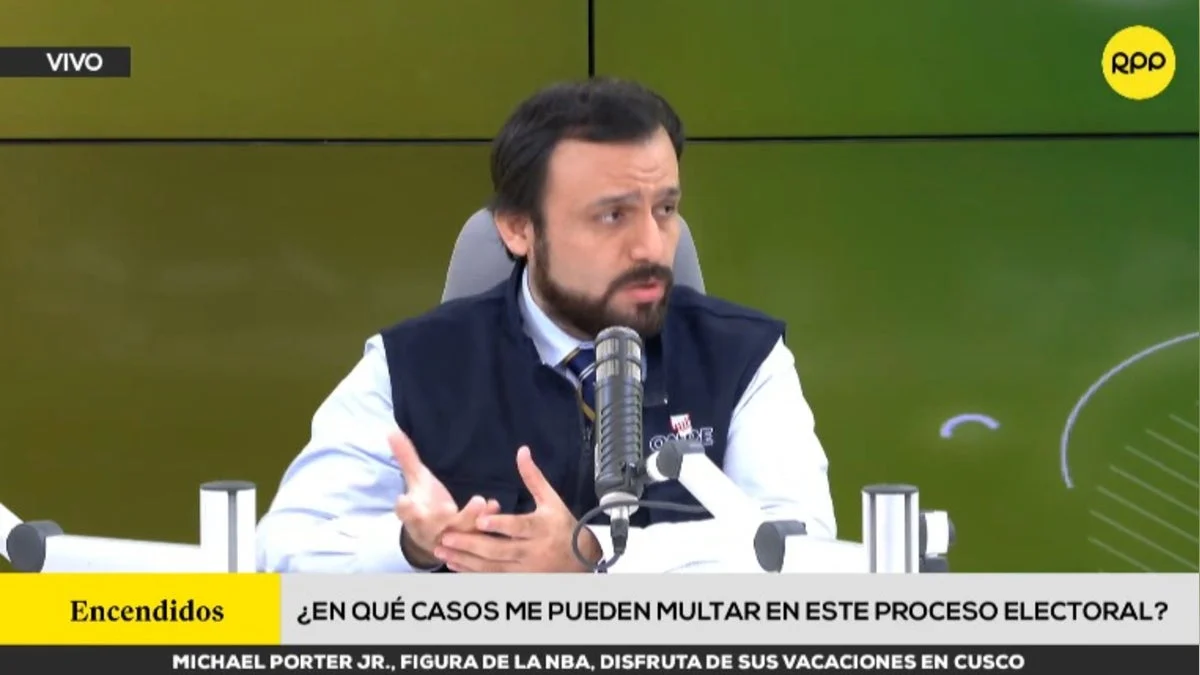
In an exclusive interview with El Poder en tus manos, the RPP electoral coverage segment, Luis Camino provided a technical clarification that challenges the party’s defense. He explained that the classification of an expense is not determined by the party’s intent, but by its objective link to the electoral process.
"All organizations, during these periods, must report all contributions, income, and campaign expenses," Camino asserted. When asked specifically if paying for legal challenges to electoral results constitutes a campaign expense, he was unequivocal: "All expenses related to payments linked to an electoral process must be declared as part of the financial information presentation."
The ONPE acknowledges that parties have legitimate "ordinary expenses"—such as utility bills for a local office, staff salaries, or basic administrative costs—that are unrelated to a campaign. However, the onus of proof lies with the political organization. If a party claims that funds were used for "ordinary" purposes, they must be prepared to provide documentation proving that those funds were not utilized for electoral strategies, advertising, or in this specific case, the legal processing of election results.

The Audit Process: Verification and Control
Currently, the data submitted by Juntos por el Perú—and indeed all other participating political organizations—is under a rigorous verification and control process. The ONPE’s auditing teams are conducting a deep dive into the reports, checking for:
- Identity of Contributors: Ensuring that all donors are identifiable and do not exceed the legal limits for individual contributions.
- Source Verification: Confirming that no funds originated from prohibited sources, such as foreign governments, criminal organizations, or state-funded entities.
- Consistency: Cross-referencing declared income with the actual expenditures reported.
This phase is not merely administrative; it is a critical safeguard for the integrity of the democratic process. During this stage, parties have the right to submit additional information, clarify discrepancies, and offer their "descargos" (formal defenses).
"We are currently evaluating all information presented by all political organizations," Camino noted. "At the end of this process, the ONPE will issue a technical report for each organization. It is only upon the conclusion of this technical assessment that we can determine if there have been infractions that merit the initiation of an administrative sanctioning procedure."
Legal Implications and Potential Sanctions
The legal framework for political parties in Peru, specifically Article 36 of the Law of Political Organizations, establishes a tiered system of infractions:
- Minor Infractions: Typically involve clerical errors or minor delays in reporting.
- Grave and Very Grave Infractions: Include the failure to disclose income, the use of prohibited funding sources, or the concealment of campaign-related expenditures.
Penalties for these violations are significant, ranging from five to fifteen Tax Units (UIT). While the ONPE has not yet formally accused Juntos por el Perú of an infraction, the outcome of the ongoing audit will be decisive. If the auditors conclude that the ‘Yape’ funds were, in fact, used to facilitate a core electoral activity (the legal challenge of votes) and were intentionally omitted from the campaign report, the party could face both financial penalties and potential reputational damage.

The Broader Context: Why Transparency Matters
This incident highlights a growing concern among regulators regarding the "informalization" of political financing through digital tools like ‘Yape’. While these platforms allow for rapid, decentralized fundraising, they also create "blind spots" in traditional accounting if not properly integrated into the party’s official financial ledgers.
For the Peruvian electorate, the transparency of campaign financing is not merely a technicality; it is a fundamental pillar of trust. When a party requests money from its supporters to "defend the vote," the public has a right to know how much was raised, who contributed, and exactly how that money was deployed.
The case of Juntos por el Perú serves as a litmus test for the ONPE’s ability to enforce digital-age financial regulations. As the institution moves toward finalizing its technical report, the political class and the public remain attentive. Whether the party’s defense—that these were "ordinary contributions"—holds up under the scrutiny of the ONPE’s auditors will set a precedent for how political organizations handle similar digital fundraising efforts in future electoral cycles.
Conclusion
The tension between Juntos por el Perú and the ONPE underscores the evolving nature of political accountability in the digital era. While the party maintains its innocence, citing a distinction between administrative and proselitist activities, the electoral authority’s focus on the "nature of the expenditure" provides a clear mandate for transparency.
As the audit continues, the focus remains on whether the party can provide the necessary documentation to distinguish these funds from their electoral activity. Failure to do so could result in significant legal and financial repercussions, reinforcing the necessity for political parties to adopt more rigorous and comprehensive accounting practices. Ultimately, the resolution of this case will reaffirm whether the rules governing electoral transparency are sufficient to cover the modern, digital methods of political fundraising that now define the Peruvian political landscape.