Executive Summary: A Unified Front Against Climate Volatility
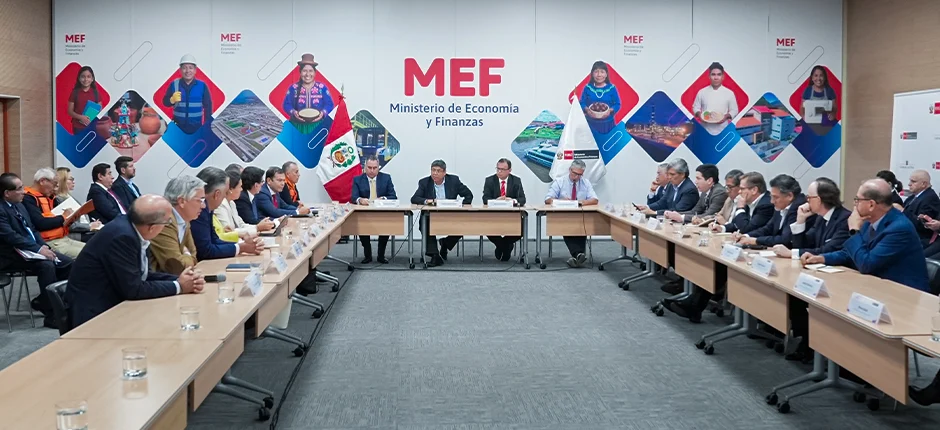
In a decisive move to mitigate the potentially catastrophic effects of the El Niño phenomenon, the Peruvian Ministry of Economy and Finance (MEF) has entered into a high-level strategic partnership with the nation’s leading business associations. The alliance, finalized during a session of the National Commission for the Management of FEN (El Niño Phenomenon) Risk, represents a departure from traditional bureaucratic responses, aiming instead for a synchronized, agile, and resource-heavy approach to disaster prevention and emergency management.
Led by the Confederation of Private Business Institutions (CONFIEP), the private sector has formally committed its logistical infrastructure—ranging from heavy machinery and industrial motobombs to private storage facilities and technical engineering teams—to the state’s disposal. This collaboration seeks to bridge the gap between government planning and private sector execution, ensuring that critical infrastructure, agriculture, and urban centers are shielded from the predicted climatic disruptions.
Chronology of the Strategic Coordination
The road to this partnership was paved by increasing meteorological warnings from regional and global institutions regarding the intensifying temperature anomalies in the Pacific Ocean.
- Early Q3 2023: Initial warning signals from the National Committee for the Study of the El Niño Phenomenon (ENFEN) prompted the Ministry of Economy and Finance to initiate a series of consultative sessions with key economic actors.
- The Planning Phase: Throughout the following weeks, the government identified that while the state possessed the fiscal authority, the private sector held the immediate physical assets required for rapid disaster response.
- The High-Level Summit: The recent meeting of the National Commission for the Management of FEN Risk served as the turning point. During this gathering, the President of CONFIEP, Jorge Zapata Ríos, articulated the sector’s readiness to mobilize assets.
- Establishment of the Task Force: Following the summit, a dedicated coordination framework was established under the leadership of Carlos Neuhaus, President of the Association of Malls and Entertainment Centers of Peru (ACCEP), tasked with streamlining the flow of resources between the private sector and the executive branch.
Supporting Data: The Magnitude of Private Sector Readiness
The commitment made by the private sector is not merely symbolic; it involves a tangible catalog of resources designed to combat flooding, landslides, and infrastructure collapse.
Logistical Assets and Operational Capacity
The inventory made available to the government includes:
- Heavy Earth-moving Machinery: Critical for clearing mudslides and reopening transport routes that link agricultural hubs to urban markets.
- Advanced Hydraulic Infrastructure: High-capacity motobombs and drainage systems aimed at preventing urban flooding in low-lying residential and commercial zones.
- Supply Chain Resilience: Access to private warehouses and cold storage units, which are vital for the distribution of humanitarian aid and the preservation of food supplies during supply chain disruptions.
- Technical Expertise: A pool of engineers and safety technicians from firms associated with the Peruvian Chamber of Construction (CAPECO) and the Association for the Promotion of National Infrastructure (AFIN).
Stakeholder Composition
The scope of this initiative is broad, involving the most influential economic pillars of Peru:
- Agricultural and Food Security: Represented by the Association of Agrarian Producer Guilds of Peru (AGAP).
- Financial Stability: Supported by the Association of Banks of Peru (ASBANC).
- Industrial and Extractive Sectors: Led by the National Society of Mining, Petroleum, and Energy (SNMPE) and the National Society of Fisheries (SNP).
- Infrastructure and Urban Development: Supported by CAPECO, AFIN, and the Confederation of Real Estate Developers of Peru (CODIP).
- Trade and International Relations: Coordinated by the Executive Director of ComexPerú.
Official Responses and Bureaucratic Reform
A central pillar of the discussion was the request by the private sector to remove the "red tape" that historically hampers emergency intervention.
The Proposal for Administrative Simplification
Business leaders highlighted that during emergencies, traditional permitting processes—often requiring weeks of approval—are untenable. They proposed a "Fast-Track Protocol" for authorizations in critical zones. This protocol would allow for the immediate repair of bridges, drainage canals, and road segments without the delays of standard public procurement cycles.
The Ministry of Economy and Finance’s Position
The MEF, while receptive to the proposal, maintained a stance of fiscal and legal responsibility. The ministry requested that all proposed simplifications be accompanied by detailed documentation, including:
- Operational Timelines: Clear milestones for when and how interventions will be executed.
- Resource Allocation: A breakdown of where the financial burden lies and the cost-benefit analysis of specific repairs.
- Accountability Frameworks: Mechanisms to ensure that the fast-tracked interventions comply with safety standards and environmental regulations, despite the accelerated schedule.
Implications: The Long-Term Impact on Risk Management
The coordination between the MEF and the business sector carries profound implications for the future of disaster risk management in Peru.
Paradigm Shift in Public-Private Collaboration
This agreement marks a shift toward "Shared Responsibility." By integrating private logistical capacity into the public risk-management plan, the government is essentially treating the private sector as a strategic partner in civil defense rather than just a taxpayer. This is a critical evolution for a country frequently subjected to seismic and meteorological risks.
Economic Stabilization
The involvement of entities like ASBANC and the SNMPE ensures that the economic impact of El Niño is monitored across the financial and export sectors. By maintaining the flow of goods and preventing the destruction of key infrastructure, the alliance aims to minimize the inflationary pressures that usually follow natural disasters, thereby safeguarding the national GDP.
The Role of ‘Hombro a Hombro’
A vital component of this strategy is the inclusion of Hombro a Hombro (Shoulder to Shoulder). As an organization specifically designed to bridge the gap between private philanthropy, business resources, and government needs, their role will be to serve as the "connective tissue" of the operation. Their experience in previous emergencies ensures that the resources pledged are not just available, but are deployed with the necessary speed and efficiency.
Challenges and Future Outlook
Despite the optimism surrounding this alliance, the path forward is not without challenges. The primary obstacle remains the coordination of heterogeneous private assets under a single unified command structure.
Overcoming Operational Hurdles
The effectiveness of the plan will be tested the moment the first heavy rains occur. The success of the "Fast-Track Protocol" will depend on the willingness of local governments to respect the national-level agreements and not impose local-level obstacles that could derail the central government’s strategy.
Sustainability of the Partnership
The government must ensure that this high level of cooperation is sustained beyond the immediate threat of El Niño. Institutionalizing this collaboration into a permanent emergency response framework would be a legacy-defining achievement for the current administration.
Conclusion
The alignment between the Peruvian Ministry of Economy and Finance and the country’s private sector represents a sophisticated approach to the existential threat of climate change. By prioritizing the synchronization of assets, the simplification of administrative barriers, and the leveraging of specialized expertise, the alliance provides a blueprint for how nations can defend their economic and social fabric against the unpredictability of the El Niño phenomenon. As the nation prepares for the coming months, the success of this partnership will be measured not by the resources gathered, but by the resilience of the communities protected by these proactive, unified actions.