Executive Summary: A Call for Legal Accountability
In a dramatic escalation of political tensions, Roberto Sánchez, the presidential candidate for the Juntos por el Perú (JP) party, has formally announced his intention to file a criminal complaint against those he alleges were involved in a coordinated conspiracy to destabilize and eventually remove former President Pedro Castillo from office.
This legal offensive is a direct response to explosive recent comments made by Miguel Torres Morales, a high-ranking member of the Fuerza Popular party and a vice-presidential candidate. The accusations have reignited a fierce national debate regarding the legitimacy of the political processes that led to Castillo’s departure and the role of various state institutions in shaping the Peruvian political landscape.
Chronology of the Controversy
The current political climate in Peru remains deeply polarized, characterized by a series of events that have challenged the stability of democratic institutions. To understand the gravity of Sánchez’s announcement, one must trace the timeline of these escalating tensions:
1. The Context of Instability (2021–2022)
Following the 2021 presidential election, the administration of Pedro Castillo faced unrelenting opposition. From the outset, accusations of electoral fraud—largely unsubstantiated but widely propagated—set the tone for a contentious term marked by frequent cabinet changes and persistent threats of impeachment.
2. The "Willax TV" Revelation
The catalyst for the current legal challenge was an interview conducted on Willax TV involving Miguel Torres. During this broadcast, Torres detailed the strategies employed by various sectors to counteract the Castillo administration. His comments were interpreted by political rivals not as a standard account of parliamentary opposition, but as an admission of a multi-institutional effort to force the president’s exit.
3. The San Juan de Lurigancho Declaration
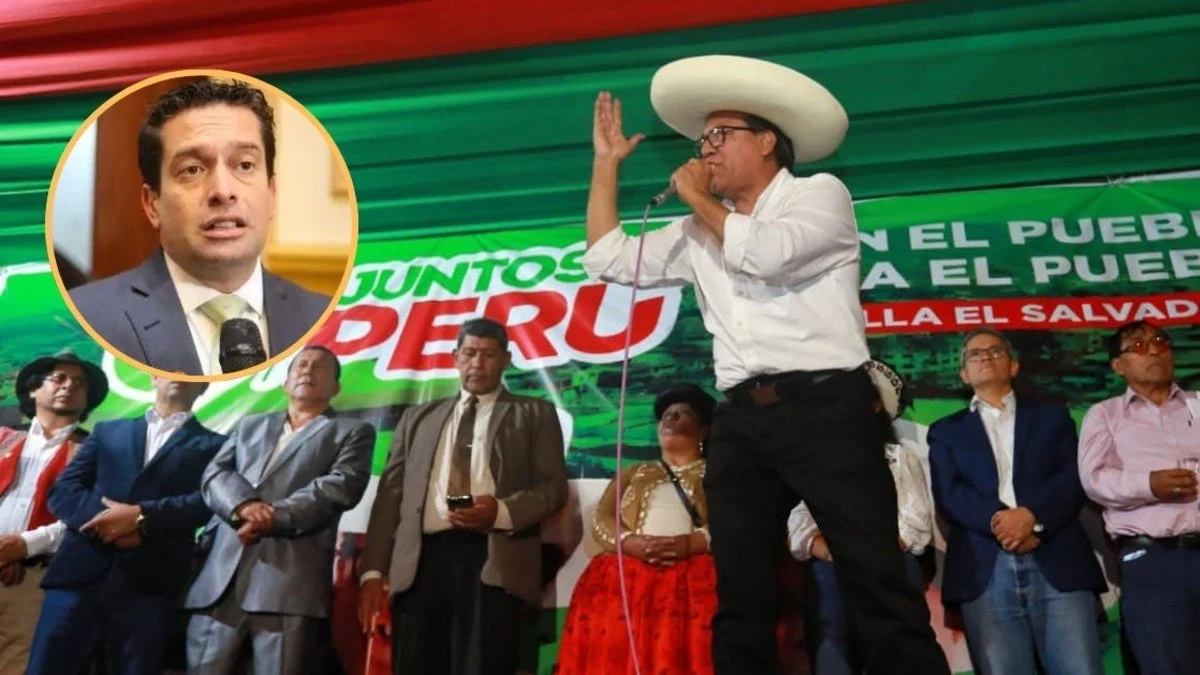
During a campaign rally in the José Carlos Mariátegui sector of San Juan de Lurigancho, Roberto Sánchez responded to the discourse. Invoking the legal principle of “A confesión de parte, relevo de pruebas” (a confession from a party relieves the need for proof), Sánchez declared that the opposition had effectively confessed to orchestrating a systematic campaign to undermine the democratic order.
Supporting Data and Evidence: The Torres Statements
The crux of the legal argument rests on the specific phrasing used by Miguel Torres. In his interview, Torres described the removal of Castillo as a "gesta de contención" (an act of containment) and explicitly acknowledged the role of different branches of government.
The Breakdown of the Allegation
Torres stated:
"What we have had in the last five years has been terrible. And it has been terrible because a whole effort of containment had to be carried out. Removing Mr. Castillo was not simple. Of course, they will say: ‘No, he left on his own.’ It was not like that. Journalists did it, Congress did it, the Public Ministry also did it. It was truly a sum of efforts so that this gentleman would leave."
For Sánchez and his legal team, this statement serves as the cornerstone of their complaint. They argue that this implies an unconstitutional coordination between the legislative branch, the judicial/prosecutorial apparatus, and private media entities, which, if proven, would constitute a grave violation of the separation of powers and the constitutional order.
Official Responses and Political Repercussions
Juntos por el Perú’s Position
Roberto Sánchez has positioned himself as a defender of democratic integrity. By formalizing the complaint, he seeks to force a judicial inquiry into whether the "sum of efforts" mentioned by Torres bypassed legal channels.
Furthermore, Sánchez has sought to insulate his party from accusations of radicalism. Addressing concerns about his economic platform, he explicitly stated: "We are not talking about expropriation or nationalization." This attempt to moderate his image comes as he balances the need to hold opponents accountable with the need to attract centrist voters.
The Economic Dimension: The Velarde Factor
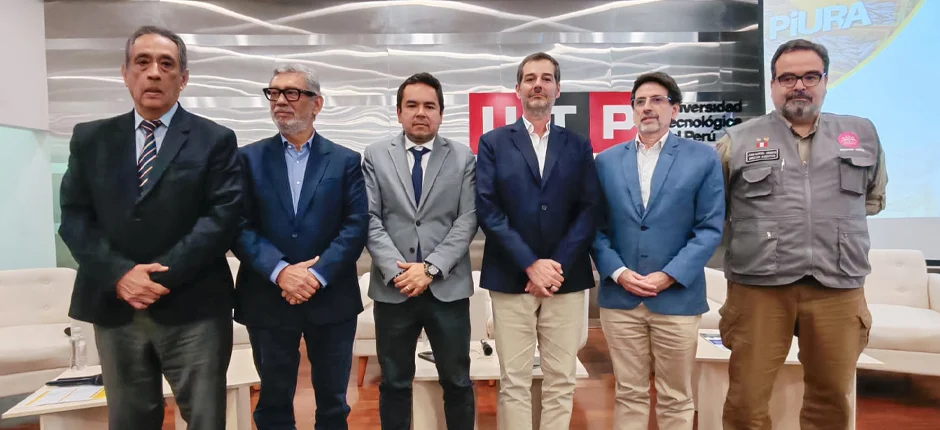
A significant portion of the political discourse has focused on the management of the Peruvian economy. During a technical debate organized by the National Jury of Elections (JNE), Pedro Francke, a key economic advisor to the coalition, proposed the retention of Julio Velarde as the president of the Central Reserve Bank (BCR).
Sánchez reaffirmed this commitment, stating, "The economic team has sustained this position. I respect it, we agree. We have discussed it with our political commission, and that is how we will do it." By backing Velarde—a figure widely respected by international markets—Sánchez is attempting to reassure investors that his push for legal accountability does not signal a radical departure from established macroeconomic orthodoxy.
Implications for the Peruvian Democratic Order
The Threat to Institutional Trust
The fallout from these statements poses a serious risk to the credibility of Peruvian institutions. If the Public Ministry (the Prosecutor’s Office) and the Congress are perceived as having acted in concert to achieve a specific political outcome through extra-constitutional means, the legitimacy of the current governing structures may be further eroded.
Legal Challenges and Precedents
The filing of a criminal complaint of this nature is unprecedented in its scope. The legal burden on Sánchez’s team will be significant: they must demonstrate that the "efforts" described by Torres were not merely the standard exercise of political opposition or legislative oversight, but a conspiracy aimed at subverting the democratic process.
Polarization and the Electorate
The timing of this conflict is critical. As the nation prepares for electoral cycles, the electorate remains deeply divided. The discourse from Fuerza Popular and Juntos por el Perú represents two fundamentally different interpretations of the last five years of Peruvian history. One side views the period as a heroic struggle to save the country from "totalitarianism," while the other views it as a period of institutional sabotage and the erosion of the popular mandate.
Concluding Analysis
As the legal proceedings commence, the Peruvian political scene faces a period of heightened instability. The decision by Roberto Sánchez to pursue a criminal investigation against his political rivals is a high-stakes gamble. It forces the judiciary to rule on the nature of political collaboration, an area that is often murky and difficult to regulate under criminal law.
Whether this move will lead to a deeper understanding of the events surrounding the exit of Pedro Castillo or simply fuel further division remains to be seen. What is clear, however, is that the rhetoric of "conspiracy" versus "containment" has become the defining theme of this electoral period, leaving the Peruvian public to navigate a political environment where the very definition of democracy is at the center of the conflict.
As the legal timeline progresses, all eyes will be on the Public Ministry to see how they handle a case that touches the heart of the country’s recent history. The political future of key figures in both Fuerza Popular and Juntos por el Perú hangs in the balance, as does the public’s confidence in the impartiality of the state institutions tasked with overseeing the nation’s democratic processes.