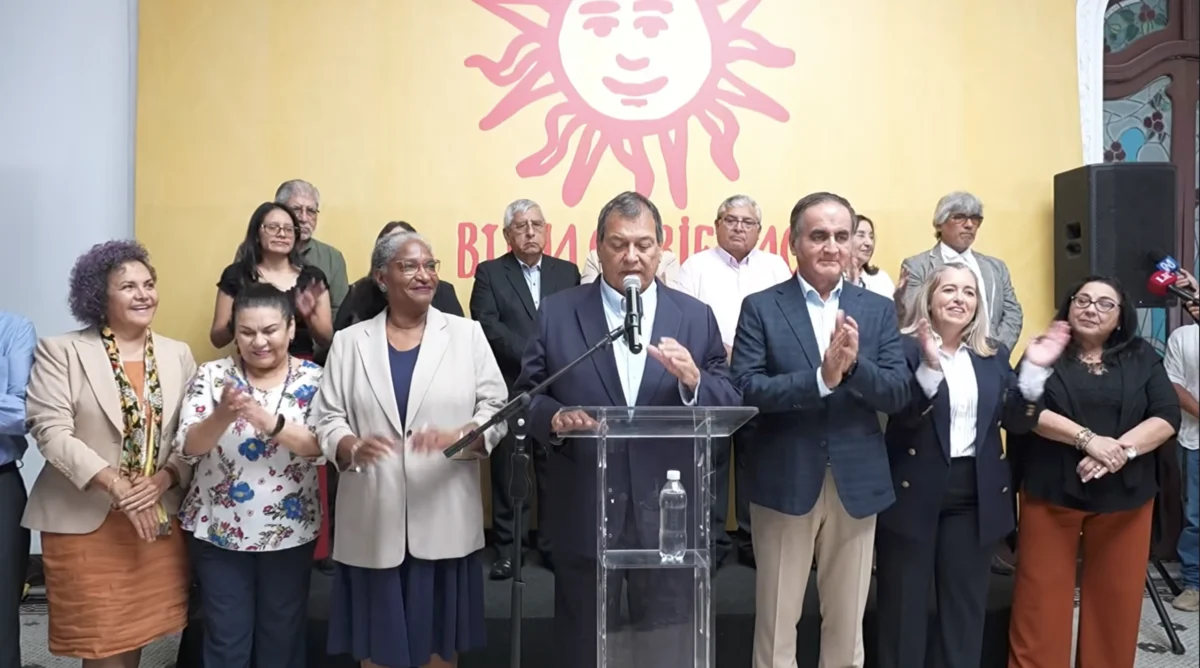
In a decisive moment for Peru’s democratic trajectory, Jorge Zapata Ríos, president of the National Confederation of Private Business Institutions (CONFIEP), has issued a robust appeal to the nation’s electoral authorities. As the country navigates the complexities of a high-stakes second-round electoral process, the business sector’s leadership has emphasized that the twin pillars of transparency and institutional stability are the only safeguards against the recurring cycles of political volatility that have hampered the nation’s progress in recent years.
The Call for Electoral Integrity
The core of Zapata Ríos’s message is an urgent plea for institutional reliability. Addressing the public and the relevant governing bodies, the CONFIEP president stressed that the National Jury of Elections (JNE) and the Office of National Electoral Processes (ONPE) bear the heavy burden of ensuring that the electoral outcome is beyond reproach.
"We must ensure that electoral bodies exert their maximum effort to instill confidence, but this responsibility does not rest solely with them," Zapata Ríos stated. "All institutions in the country, including civil society, must rise to the occasion. The climate of the election must be one of absolute clarity to ensure that the transition of power on July 28 is viewed as legitimate by the entire population."
Zapata Ríos highlighted that any lingering "mantles of doubt" regarding the electoral process serve as a catalyst for instability. By demanding transparency, the business community is not merely asserting a preference for a particular outcome, but is advocating for the preservation of the democratic system itself. Without a clear and undisputed winner, the country risks sliding into a period of stagnation that could derail economic recovery efforts.
Chronology of Institutional Strain
To understand the weight of Zapata Ríos’s remarks, one must look at the recent historical context of Peruvian politics. For the past several years, Peru has grappled with a chronic state of political instability, characterized by the rapid succession of presidents, executive-legislative deadlocks, and an erosion of public trust in democratic mechanisms.
- 2018–2020: The resignation of Pedro Pablo Kuczynski and the subsequent administration of Martín Vizcarra set a precedent for legislative-executive friction, leading to the dissolution of Congress.
- Late 2020: The "November Crisis" saw three different presidents in the span of a single week, sparking mass protests and highlighting the fragility of the political system.
- 2021–2023: The election of Pedro Castillo and his subsequent impeachment, followed by the ascension of Dina Boluarte, further polarized the nation and created significant friction between the state and the private sector.
- The Current Cycle: As the nation prepares for the next transition, the memory of these crises looms large. The business sector, represented by CONFIEP, is proactively signaling that the country cannot afford a repeat of the contested results or the protracted uncertainty that defined the 2021 election.
The current demand for transparency is a direct response to these years of volatility. By calling for a "legitimately elected presidency" by July 28, CONFIEP is signaling that the private sector’s cooperation—and indeed, the market’s willingness to invest—is contingent upon the stability of the incoming administration.
The Economic Imperative: Investment as a Poverty Alleviation Tool
While the political focus remains on the electoral process, Zapata Ríos was equally adamant about the underlying economic reality. For the CONFIEP president, there is a symbiotic relationship between political stability, private investment, and the reduction of poverty.
The Myth of Growth Without Investment
Zapata Ríos dismantled the notion that economic development can occur in a vacuum. "Investment is the foundation of development, and development is the foundation of poverty reduction," he asserted. His argument is rooted in the practical realities of the Peruvian economy: to create jobs, generate tax revenue, and build infrastructure, the state must attract capital. However, capital is inherently risk-averse; it flees from environments characterized by legal uncertainty and political hostility.
The Efficiency Crisis
A significant portion of the CONFIEP leader’s address focused on the "efficiency gap" within the Peruvian state. While acknowledging that tax revenues have increased substantially over the last decade—thanks to the hard work of businesses and the labor force—Zapata Ríos lamented that these funds have not translated into tangible improvements for the citizenry.
"The state has failed to manage these resources well to address the urgent needs of the population, such as water, education, and health," he noted. This critique hits on a sensitive nerve in Peruvian public discourse. The disconnect between macroeconomic performance and the delivery of basic public services is a primary driver of social unrest.
Supporting Data and Sectoral Implications
The economic arguments presented by CONFIEP are supported by long-term trends in the Peruvian economy. Over the last two decades, private investment in mining, agriculture, and energy has been the primary engine of GDP growth. However, when political instability rises, the "wait-and-see" approach adopted by investors results in stalled projects and a slowdown in job creation.
- Poverty Reduction Trends: During the commodities boom (2004–2014), Peru experienced one of the most significant poverty reduction rates in Latin America. This was largely driven by a massive influx of private investment.
- The Cost of Inaction: Recent reports from the Central Reserve Bank of Peru (BCRP) have frequently cited "low business confidence" as a primary drag on private investment. The lack of clear, long-term rules of the game prevents firms from committing to multi-year projects.
- State Execution: Data from the Ministry of Economy and Finance (MEF) consistently shows that regional and municipal governments often struggle to execute their annual budgets, leaving billions of soles in unspent funds that were intended for schools, clinics, and irrigation projects.
Official Responses and Political Implications
The stance taken by CONFIEP has triggered a mix of reactions across the political spectrum. Pro-market factions have echoed the call, framing it as a necessary defense of the rule of law. Conversely, populist and radical movements often view such statements as an attempt by the "elite" to influence democratic processes.
The challenge for the electoral authorities is to navigate these conflicting expectations while maintaining the impartiality required by law. The JNE and ONPE have consistently emphasized that their processes are subject to rigorous observation by international bodies, such as the Organization of American States (OAS). However, the intensity of the current political atmosphere suggests that legal compliance alone may not be enough to satisfy the public’s demand for perceived legitimacy.
Conclusion: A Nation at a Crossroads
The message from Jorge Zapata Ríos and CONFIEP is clear: Peru is at a critical juncture where the political and economic spheres are inextricably linked. The demand for electoral transparency is not a political maneuver; it is a prerequisite for the economic stability needed to lift millions out of poverty.
As the country moves toward the transition on July 28, the responsibility falls not only on the candidates and the electoral institutions but on the entirety of the Peruvian state to prove its efficacy. If the state continues to fail in its management of resources, no amount of economic growth will be sufficient to quell the social dissatisfaction that fuels instability.
Ultimately, the path forward requires a new "social pact"—one where the private sector provides the engine for growth, the state provides the efficiency for social delivery, and the electoral process provides the legitimacy that prevents the cycles of the past from repeating. Whether the nation can achieve this remains the most significant challenge of the current decade. The coming months will be a testament to the resilience of Peru’s democratic institutions and the maturity of its political class.