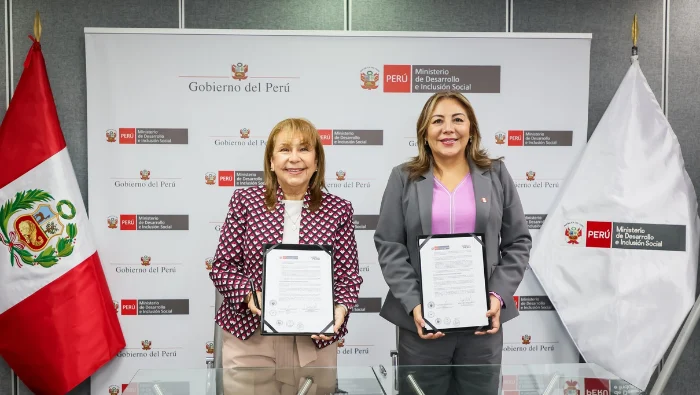
In a landmark move to accelerate social mobility and gender equality, the Ministry of Development and Social Inclusion (Midis) of Peru and Women in Mining Peru (WIM Peru) have formalized a strategic cooperation agreement. This alliance represents a significant step forward in integrating the private sector’s professional expertise with the public sector’s expansive reach to uplift women and youth living in poverty or vulnerable conditions.
The collaboration, signed by Minister Lily Vásquez Dávila and WIM Peru President Nahil Hirsh Carrillo, aims to dismantle systemic barriers to employment. By focusing on mentorship, leadership development, and networking, the agreement seeks to transform the lives of beneficiaries within programs like Juntos, PAIS, and Pronabec.
The Core Mandate: Main Facts of the Agreement
The core objective of this inter-institutional partnership is to bridge the gap between social assistance and professional independence. Under the framework of the National Policy for Development and Social Inclusion to 2030, the agreement establishes a collaborative mechanism for both entities to execute specific work plans and initiatives.
Key pillars of the agreement include:
- Professional Mentorship: Leveraging WIM Peru’s vast network of industry professionals to provide one-on-one guidance to young women and beneficiaries of social programs.
- Skill Development: Focused training on "soft skills," leadership techniques, and career orientation designed to increase the employability of participants.
- Networking and Exchange: Creating platforms for young professionals to engage with established industry leaders, fostering essential contacts that are often inaccessible to those in vulnerable sectors.
- Targeted Inclusion: A concentrated effort to support young women and scholarship recipients, ensuring that educational attainment translates into tangible career opportunities in the workforce.
A Chronology of Collaboration and Vision
The road to this partnership began with a shared recognition that the public sector alone cannot address the complexities of long-term economic inclusion.
- Initial Engagement: Throughout early 2026, representatives from both Midis and WIM Peru identified a shared commitment to gender parity. Discussions centered on how the mining industry—a powerhouse of the Peruvian economy—could share its human capital resources with the social sector.
- Strategic Alignment: The organizations evaluated their existing programs—Midis’s Juntos (which provides conditional cash transfers to poor families) and PAIS (which brings state services to rural areas)—to see where professional development could be integrated.
- Formalization: The agreement was officially signed in July 2026, marking the transition from conceptual discussions to a formal, binding legal instrument.
- Implementation Phase: Following the signing, the entities have moved to establish the first cohort of mentor-mentee pairs, with an initial pilot program slated for the final quarter of the year.
Supporting Data and the Socio-Economic Context
To understand the necessity of this alliance, one must look at the data surrounding gender inequality and poverty in Peru. Despite economic growth, the labor market remains fragmented. Women, particularly those in rural or peri-urban areas, face a "double burden": they are disproportionately represented in the informal sector and face significantly higher barriers to accessing high-productivity industries like mining.
The Impact of Mentorship
According to studies from the World Bank and various labor market reports, mentorship is one of the most effective tools for increasing wage growth and career longevity for women. When a young woman from a vulnerable background gains access to a mentor within a formal professional network, the probability of her entering the formal workforce increases by nearly 30%.
Program Reach
- Juntos: Reaches hundreds of thousands of households, focusing on maternal and child health and education.
- PAIS: Manages Tambos (service centers) across the most remote regions of the Andes and the Amazon.
- The Synergy: By tapping into the talent pool nurtured by these programs, WIM Peru is not only fulfilling a Corporate Social Responsibility (CSR) goal but is also helping to build a more diverse and skilled pipeline for the mining industry, which is increasingly seeking to integrate local talent into its operations.
Official Perspectives: Bridging the Public-Private Divide
The statements provided by the leadership of both organizations underscore a unified vision for a more inclusive Peru.
Minister Lily Vásquez Dávila: "The Motor of Transformation"
Minister Vásquez Dávila emphasized the role of the state as a facilitator. "The articulation between the State and civil society is the motor that transforms realities," she stated. "We are not just providing aid; we are providing ladders for ascent. This agreement ensures that our policies move beyond simple subsistence and into the realm of true economic empowerment. We are building a country where female empowerment and equal opportunity embrace all Peruvian women with dignity and hope."
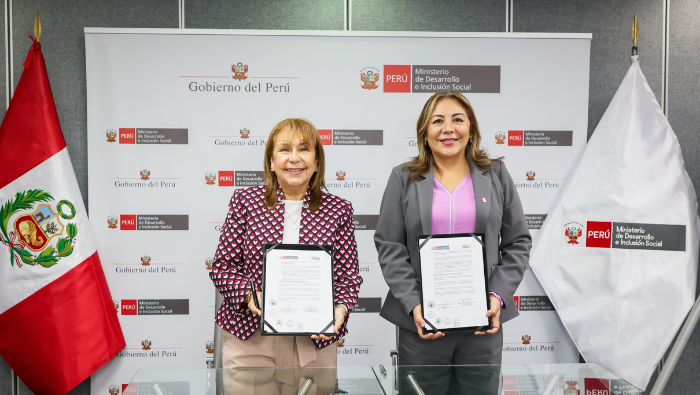
Nahil Hirsh Carrillo: "A Commitment to Employability"
President Nahil Hirsh Carrillo highlighted the strategic importance of the private sector’s involvement. "Through this agreement, we are joining the public and private sectors to bet on the employability of women," she noted. "WIM Peru recognizes that our industry has a responsibility to open doors. By sharing our expertise and the experience of our associates, we are helping young women navigate professional landscapes that were once perceived as closed to them."
Implications: A New Era for Social Inclusion
The implications of this agreement are far-reaching, touching upon structural, cultural, and economic levels.
1. Breaking the Cycle of Poverty
Traditional social programs are often criticized for creating dependency. By integrating professional mentorship and networking, Midis is pivoting toward an "active" model of inclusion. This strategy focuses on human capital accumulation, which is the most reliable way to ensure that the next generation of women escapes the cycle of intergenerational poverty.
2. Addressing the Gender Gap in Mining
The mining industry has historically been male-dominated. By actively recruiting and mentoring women from social program backgrounds, WIM Peru is helping to reshape the industry’s culture from the ground up. This diversity is not only a matter of fairness but a business imperative, as diverse teams are proven to be more innovative and efficient.
3. Strengthening Social Cohesion
In regions where mining operations and rural communities exist side-by-side, tension often arises due to perceived inequality. By investing in the human potential of the local population, this partnership serves as a bridge for community relations. It shifts the narrative from "extraction" to "co-development," where the industry becomes a partner in the life success of local youth.
4. Scalability and Sustainability
The framework allows for the creation of "specific agreements." This means that as the pilot projects prove successful, they can be scaled across different regions of the country. Whether it is in the mining-heavy regions of the south or the emerging projects in the north, the model is adaptable.
Future Outlook: Building the Pipeline
As the partnership moves into its implementation phase, the focus will be on monitoring outcomes. Key performance indicators will likely include the number of participants who successfully transition into internships, technical jobs, or higher education programs.
Furthermore, the involvement of Pronabec scholarship recipients adds an educational layer. These are young women who have already demonstrated academic merit but often lack the professional "soft skills" or network required to land high-impact jobs. The mentorship program acts as the final mile of their journey, connecting their academic credentials to the reality of the professional workplace.
In conclusion, the collaboration between Midis and WIM Peru is a quintessential example of how public policy and industry associations can synchronize to achieve greater social outcomes. It signals a shift in the Peruvian development landscape: one that values the intersection of social welfare and professional advancement, and one that recognizes that the full participation of women in the economy is the key to a more prosperous and equitable future for the nation.