Executive Summary: A Nation on Edge
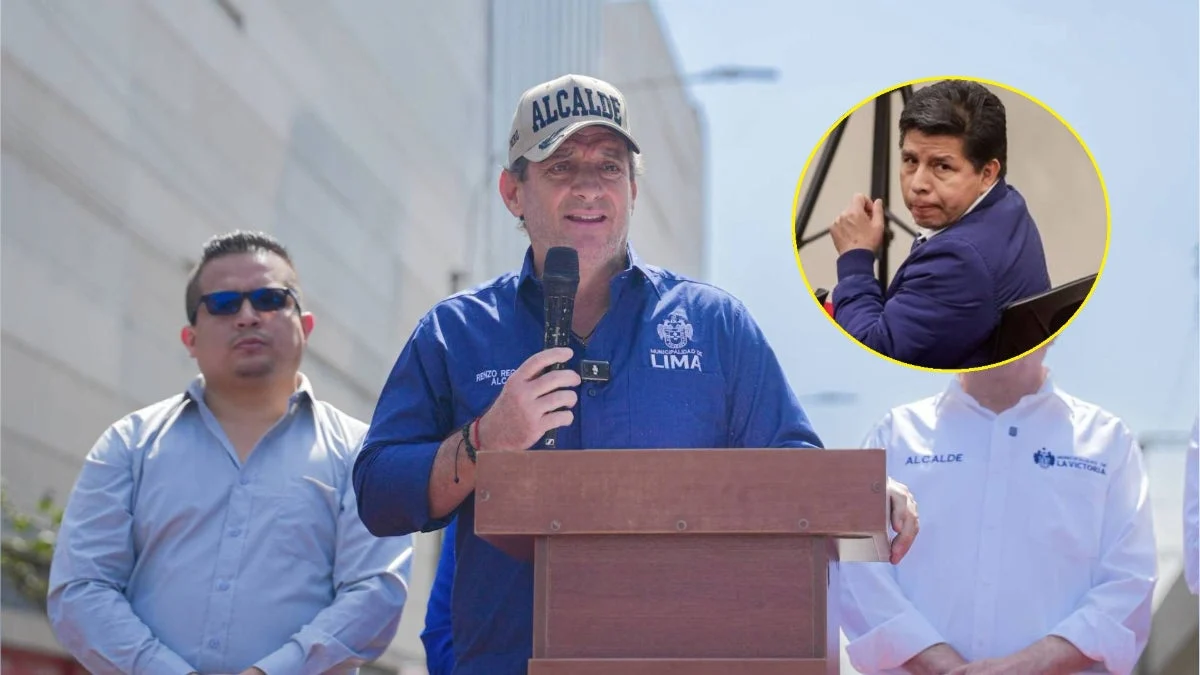
As Peru approaches a pivotal transition of power, a simmering political controversy has erupted regarding the potential issuance of a presidential pardon for former President Pedro Castillo. The debate reached a boiling point this week when the Mayor of Lima, Renzo Reggiardo, publicly condemned the mere suggestion of such a measure, labeling it an "insolence" and a "shame" for the nation.
The controversy unfolds against a backdrop of severe social instability, characterized by a worsening security crisis and the tragic aftermath of a fire in the Cercado de Lima that claimed the lives of ten individuals, including five children. While speculation swirls in political corridors, the administration has officially distanced itself from the rumors, insisting that such a move is not under consideration.
Chronology of the Controversy
The current political friction is rooted in the complex legal status of former President Pedro Castillo, who has been incarcerated at the Barbadillo prison facility since his failed attempt to dissolve Congress and reorganize the judicial system in December 2022.
- December 7, 2022: Pedro Castillo is removed from office following an attempted self-coup. He is subsequently detained and faces multiple criminal charges, including rebellion and conspiracy.
- Early July 2026: As the current administration nears the end of its term, rumors begin to circulate in political and journalistic circles regarding the potential for a "farewell" pardon or presidential grace for the former head of state.
- July 22, 2026: A catastrophic fire occurs in the Cercado de Lima, resulting in a tragic loss of life.
- July 23, 2026: Mayor Renzo Reggiardo, while attending to the victims of the fire, addresses the press. His comments focus not only on the local tragedy but also on the political rumors, condemning the potential pardon of Castillo as an affront to the public.
- July 24, 2026: Minister of Labor Flavio Cruz holds a press conference to clarify the government’s position, asserting that no such item has ever appeared on the agenda of the Council of Ministers.
The Mayor’s Stance: A Call for Prioritization
Speaking from the site of the tragic fire on Jirón Pisagua, Mayor Renzo Reggiardo did not mince words. He emphasized that the focus of the executive branch should remain squarely on the safety and welfare of the citizenry rather than the legal fate of political figures.
"It seems to me a true insolence to even suggest a pardon during these final days of a government’s mandate," Reggiardo stated. "We are in a period of democratic transition. To focus on such a divisive issue while the country is grappling with a severe security crisis is, frankly, grave."
The Mayor’s critique is symptomatic of a broader sentiment in Lima, where local authorities are struggling to manage crime rates that have spiked in recent months. For Reggiardo, the optics of a pardon—even if purely hypothetical—would constitute a betrayal of the public trust during a period of national mourning and instability.
Official Responses: Denying the Rumors
In an attempt to quell public anxiety and political speculation, the executive branch has moved to distance itself from the discourse. Minister of Labor Flavio Cruz addressed the media on Thursday, providing a firm rebuttal to the claims.
"Yesterday, we held a Council of Ministers session, and in no instance was this subject brought up," Cruz declared. "It is not on the agenda, nor is it a topic of discussion even among informal circles. It often feels as though certain topics are manufactured and placed into the public agenda by external actors, but within the formal framework of the Council, it simply does not exist."
Despite these assurances, the political climate remains volatile. Analysts suggest that the persistence of these rumors is indicative of a lack of trust between the public and the political establishment, where every action of the outgoing government is scrutinized for potential "last-minute" political maneuvering.
The Broader Context: A Country Under Pressure
The debate over the potential pardon of Pedro Castillo cannot be viewed in isolation. It is inextricably linked to the multifaceted crises currently challenging the Peruvian state.
1. The Security Crisis
The primary concern for citizens in Lima and beyond is the surge in violent crime. Public perception of safety has plummeted, and the municipal government, led by figures like Reggiardo, has been under immense pressure to deliver results. The potential diversion of executive attention toward the legal status of an incarcerated former president is viewed by many as a dereliction of duty.
2. The Tragedy in Cercado de Lima
The fire that occurred on July 22 serves as a grim reminder of the urban challenges facing the capital. The death of ten individuals, including five minors from the same family, has galvanized public sentiment. The political discourse regarding the pardon is viewed by some as an inappropriate distraction from the humanitarian response required by such a tragedy.
3. Institutional Instability
The frequent turnover of governments and the ongoing legal battles involving high-ranking officials have created a sense of "permanent crisis" in Peruvian politics. The concept of a "presidential grace" or "indulto" has historically been a flashpoint for social unrest, as seen in previous administrations. Any move to pardon a leader accused of attempting to dismantle the democratic order is bound to be met with intense scrutiny and potential public demonstrations.
Implications for the Transition of Power
As the current administration prepares to hand over the reins of power, the atmosphere is defined by a lack of political consensus. The following implications are critical to monitor in the coming days:
- Public Distrust: The fact that a rumor can gain enough traction to force a cabinet minister to issue a formal denial highlights the fragility of the current political environment.
- Political Polarization: The harsh rhetoric from the Mayor of Lima suggests that the incoming administration will face significant challenges in reconciling with regional and local authorities who are increasingly vocal about their opposition to the current status quo.
- Legal Precedents: The case of Pedro Castillo remains a cornerstone of the nation’s legal stability. Any perceived interference by the executive branch into judicial matters threatens to undermine the separation of powers—a fundamental pillar of the democracy that the current administration claims to be protecting.
Analysis: The Politics of Speculation
Why do these rumors persist? In the vacuum of a quiet transition, political actors and the media often engage in "what-if" scenarios. However, the intensity of Mayor Reggiardo’s reaction suggests that he perceives a real risk. By framing the potential pardon as a "shame" and an "insolence," he is effectively setting a boundary. He is signaling to the executive branch that any such move would not go unchallenged by the municipal government and the citizens of Lima.
Furthermore, the Minister of Labor’s denial is a classic example of "damage control." By explicitly stating that the topic is not on the agenda, the government aims to prevent a full-blown political scandal during its final week. However, in the current climate, such denials are rarely sufficient to silence critics.
Conclusion: A Nation Searching for Stability
The debate over a potential presidential pardon for Pedro Castillo is more than a legal or political squabble; it is a reflection of the profound desire for stability in Peru. While the government maintains that the issue is non-existent, the public outcry led by voices such as Mayor Reggiardo highlights a deep-seated fear that the nation’s democratic institutions remain vulnerable to partisan interests.
As the country moves toward its next chapter, the focus must shift from the grievances of the past to the urgent needs of the present—specifically the security of its streets and the safety of its most vulnerable citizens. Whether the administration can navigate this final hurdle without further erosion of public trust remains to be seen. For now, the message from Lima is clear: the people are watching, and they are demanding accountability over political concessions.