By Editorial Staff
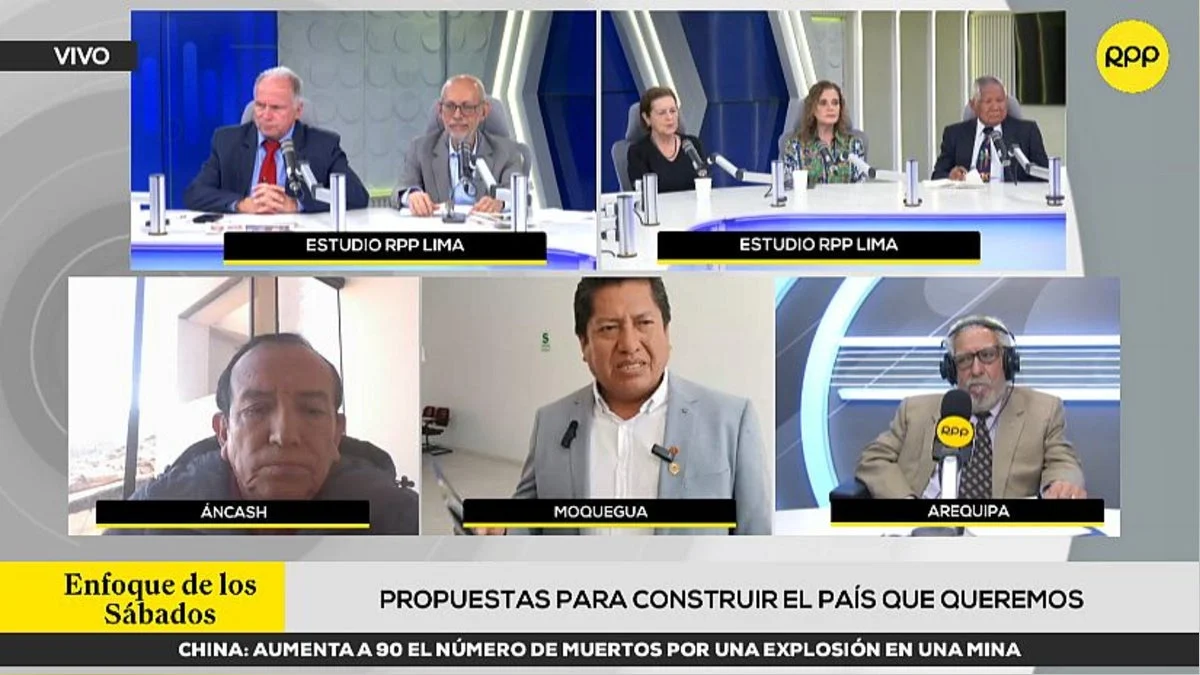
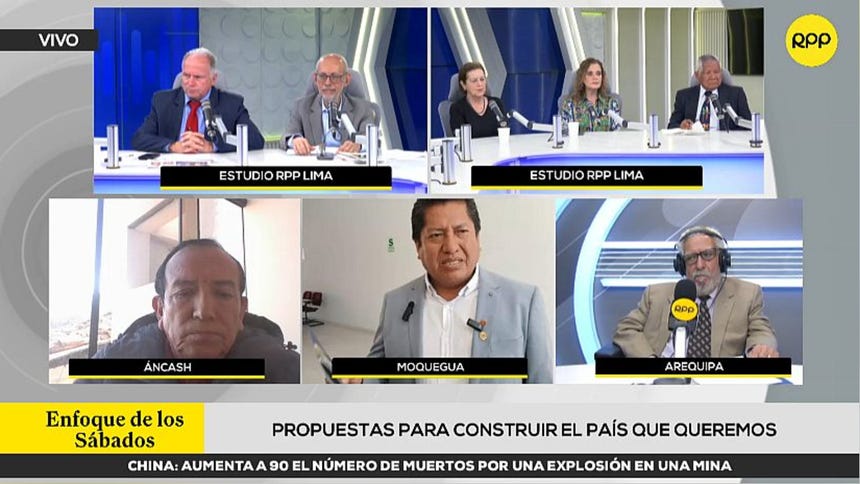
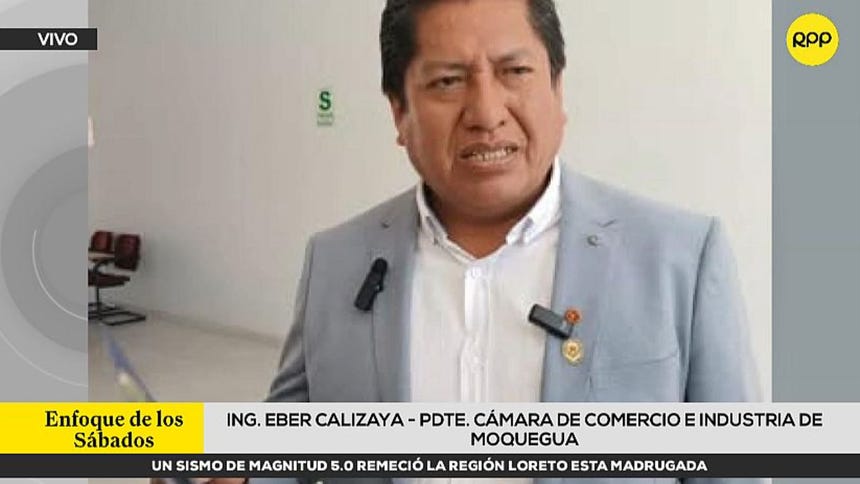
Moquegua, a region long defined by its rugged landscapes and rich mineral deposits, currently stands at a critical socioeconomic crossroads. While it continues to wear the crown of Peru’s most competitive region—a title it has held for three consecutive years according to the INCORE index—the underlying structure of its prosperity is under intense scrutiny. During a recent appearance on the program Enfoque de los Sábados, Eber Calizaya, President of the Moquegua Chamber of Commerce and Industry, provided a candid assessment of the region’s economic reality, emphasizing that while mining remains the engine of development, the lack of agricultural diversification poses a significant risk to long-term sustainability.
The Mining Engine: A Pillar of Regional Competitiveness
The cornerstone of Moquegua’s economic dominance is, undeniably, the mining sector. With the global demand for copper reaching unprecedented heights, Moquegua has solidified its position as a primary contributor to the national economy. As Calizaya noted, copper is not merely a commodity in the region; it is an "irreplaceable" asset that drives global markets and secures Moquegua’s fiscal health.
The financial data supports this sentiment. In 2025 alone, the region received a staggering 1.29 billion soles (PEN) through the canon (mining tax redistribution), sobrecanon, and royalty payments. This influx of capital has transformed the region’s infrastructure capacity and provided the fiscal space necessary for public investment projects that have propelled it to the top of national competitiveness rankings.
However, relying heavily on a single industry is a strategy fraught with vulnerability. The "Dutch Disease"—where an abundance of natural resources leads to the neglect of other sectors—is a specter that haunts regional planning. Calizaya’s message was clear: while mining provides the capital, it must act as a catalyst for a broader economic ecosystem.
The Agro-Export Crisis: A Sector Left Behind
Despite the impressive figures flowing into the regional treasury, there is a palpable sense of stagnation in other critical sectors. Calizaya did not mince words when addressing the state of local agriculture: "The agro-export sector has been left behind and postponed."
For decades, the arid lands of Moquegua have demonstrated potential for high-value agricultural production. Yet, compared to the rapid expansion of mining, the development of an agro-industrial base has been sluggish. The imbalance is not merely a matter of revenue but of social stability. Calizaya argues that a robust agro-export industry is essential to "balance the social responsibility of mining."
The vision presented is one of economic equilibrium. If mining generates the bulk of the region’s wealth, that wealth must be strategically channeled into water infrastructure, irrigation technology, and logistics—the very tools required for agro-industrial success. Without this, the region risks a widening gap between the high-tech, capital-intensive mining sector and the struggling, labor-intensive agricultural sector.
Chronology of Institutional Challenges
The path toward a diversified economy has been obstructed by persistent institutional volatility. The relationship between the regional government and the central government in Lima has been characterized by a cycle of broken promises.
- The Early 2020s: Moquegua secures its position as the top region in the INCORE index, buoyed by major mining investments.
- 2024: Heightened concerns regarding water security emerge as agricultural stakeholders demand better irrigation infrastructure to combat climate-induced scarcity.
- 2025: Fiscal data confirms the 1.29 billion soles in mining revenue, yet local chambers of commerce report a lack of tangible progress in agricultural investment.
- Present Day: Constant ministerial turnover in the central government leads to a repetitive cycle of visits to the region, pledges of support for water quality and availability, and a subsequent failure to implement long-term solutions.
This "revolving door" of cabinet ministers has effectively paralyzed long-term planning. Each new administration arrives in Moquegua with promises to address the water crisis, only to be replaced before the feasibility studies or infrastructure projects can move beyond the proposal stage.
Supporting Data and Economic Indicators
The INCORE (Indice de Competitividad Regional) ranking serves as a double-edged sword for Moquegua. While it signals success, it also highlights the fragility of that success.
- Mining Dependency: Over 70% of the regional GDP is directly or indirectly tied to mining activity.
- Fiscal Windfall: The 1.29 billion soles received in 2025 represents a significant portion of the total regional budget, yet the execution rate of these funds remains a point of contention among local leaders who point to inefficient public spending.
- Labor Imbalance: The mining sector, while highly profitable, employs a smaller, specialized segment of the population compared to the potentially massive employment capacity of an industrialized agro-sector.
The data suggests that while Moquegua is "rich" in fiscal terms, it is "poor" in terms of economic resilience. The transition from a resource-dependent economy to a diversified one requires more than just capital; it requires administrative continuity and technical expertise—both of which have been hampered by political instability.
Official Responses and Political Implications
The central government’s inability to maintain a stable cabinet has become the primary grievance of regional leaders like Calizaya. The critique is not just about the lack of funds, but about the "inconsistency of commitment." When ministers change frequently, the institutional memory of the state disappears. Commitments made in one quarter are often ignored or re-evaluated in the next, leading to a state of perpetual "start-stop" development.
In his analysis, Calizaya emphasized that if the government truly wants to see a "country that we want," it must move beyond rhetorical promises. The demand for water infrastructure—specifically the modernization of irrigation systems—is the single most important factor for the future of Moquegua’s agro-export potential. Water is the currency of the future in this region, and currently, it is being managed through short-term fixes rather than structural investment.
Future Outlook: The Path to Equilibrium
To achieve a sustainable future, Moquegua must leverage its current mining wealth to build the foundation for a post-mining economy. This implies several critical steps:

- Investment in Water Security: Transforming the region’s irrigation systems to ensure that agriculture can survive and thrive despite the environmental challenges posed by the arid geography.
- Institutional Stability: The central government must prioritize the continuity of regional projects, insulating them from the volatile nature of cabinet changes.
- Human Capital Development: Shifting the educational focus toward technical skills relevant to both modern mining and precision agriculture.
- Public-Private Collaboration: As Calizaya suggests, mining companies and the state must work in tandem with the agro-industrial sector to create a "social license" that is based on tangible, long-term economic development rather than just short-term corporate social responsibility programs.
Conclusion
The situation in Moquegua is a microcosm of the broader challenges facing Peru. The country possesses immense natural wealth, but the translation of that wealth into broad-based, diversified, and sustainable development remains elusive. Eber Calizaya’s assessment serves as both a warning and a roadmap.
Moquegua cannot afford to be a one-trick pony. The mining sector will continue to provide the capital, but it is the agricultural sector that will provide the long-term stability and social cohesion necessary for the region to thrive in the coming decades. As the region navigates this period of high revenues and high political turnover, the call for "balance" is more than a policy recommendation—it is an existential imperative for the future of Moquegua.
If the government can break the cycle of ministerial instability and focus on the technical requirements of sustainable growth, Moquegua has the potential to become a model for the rest of the nation. If not, it risks remaining a wealthy region with a fragile future, forever waiting for the next political cycle to fulfill the promises of the past.