Cencosud, the multinational retail giant, has officially entered a critical phase of its 2026 expansion strategy. With a robust capital allocation of US$600 million, the conglomerate is aggressively scaling its footprint across Latin America, specifically targeting growth in Chile, Peru, Argentina, Brazil, and Colombia. This multi-country offensive is designed not only to bolster the group’s market share but to fundamentally reshape the retail landscape in the region through modernized infrastructure, high-traffic commercial complexes, and the expansion of its core supermarket formats.
The Strategic Vision: A $600 Million Commitment
The cornerstone of Cencosud’s 2026 ambition is a deliberate investment of US$600 million. This capital is being funneled into a diverse portfolio of projects, ranging from the construction of new shopping centers to the tactical renovation of existing assets. By prioritizing the enhancement of its physical footprint, Cencosud aims to capture the evolving demands of a modern, post-pandemic consumer base that increasingly values proximity, efficiency, and a diversified service offering.
The group’s roadmap for the current year is particularly ambitious, with plans to inaugurate 20 new establishments across its operational map. This development will add approximately 42,000 square meters of high-quality retail surface area. Of these new locations, 17 are dedicated specifically to the supermarket segment, underscoring the company’s belief that grocery retail remains the most resilient and reliable driver of long-term revenue growth.
The Rengo Milestone: A New Frontier for Santa Isabel
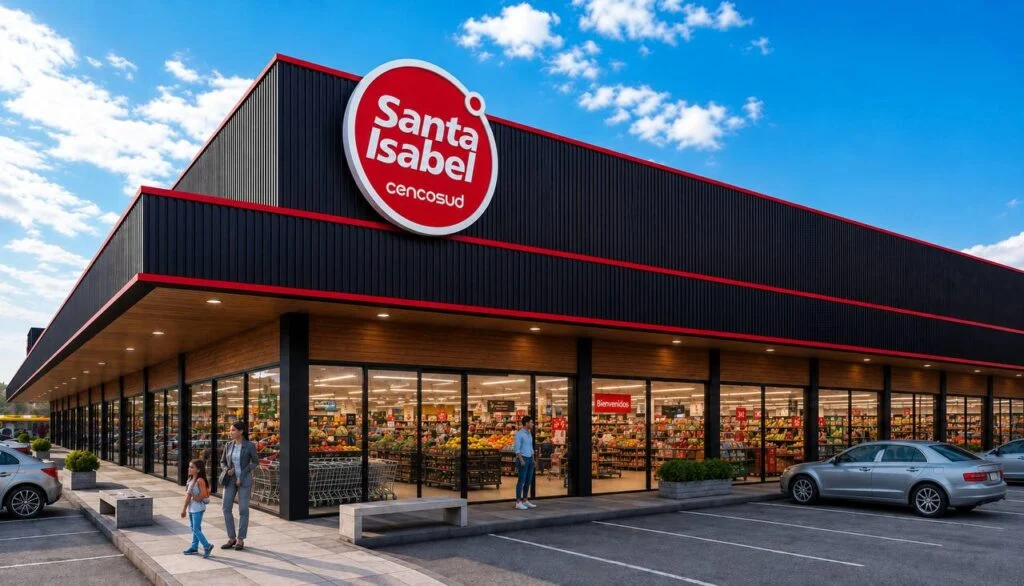
As part of this regional expansion, Cencosud’s subsidiary, Santa Isabel, is set to make a historic entry into the commune of Rengo, located in the O’Higgins Region, approximately 115 kilometers south of Santiago. The brand will anchor the upcoming "Strip Center Puerto Rengo," a commercial hub currently under development on Avenida Balmaceda.
This move is significant for two primary reasons. First, it marks the debut of the Santa Isabel banner in Rengo, a market previously dominated by competitors such as Unimarc and Tottus. By entering this untapped territory, Cencosud is signaling its intent to capture regional demand in high-growth communes that have historically been underserved by major retail players. The project is expected to be fully operational before the end of the year, providing a much-needed boost to the local retail ecosystem.
Chronology of Expansion: From Osorno to Chiloé
The Rengo project is just one piece of a much larger, fast-paced puzzle. Since the beginning of 2026, Cencosud has been executing a series of high-impact openings that demonstrate the company’s operational velocity:
- January 27, 2026: Cencosud inaugurated a flagship, concept-renovated Santa Isabel supermarket at La Misión No. 2775 in Osorno. This facility serves as the third branch in that city, reflecting the company’s "deepening" strategy—increasing density in regions where the brand is already well-known.
- Early Q1 2026: Following the Osorno opening, the group expanded its urban presence in the capital with a new store at Portugal 279, Santiago, catering to high-density residential corridors.
- Mid-2026 and Beyond: Cencosud is in the process of a major rebranding and operational shift. The legacy "Supermercados O’Higgins" locations in Ancud, Castro, and Calbuco are transitioning to the Santa Isabel banner. This consolidation effort is pivotal for strengthening the brand’s presence in the Chiloé province, effectively streamlining operations and leveraging the economies of scale associated with the Santa Isabel brand.
Supporting Data: The Strip Center Model
The Strip Center Puerto Rengo, developed by Incosa, represents the modern "lifestyle center" model that Cencosud is increasingly favoring. Rather than isolated stores, the company is prioritizing developments that offer a "one-stop-shop" experience.
The Puerto Rengo complex is designed to house 24 distinct commercial units. Confirmed tenants include:
- Santa Isabel: As the primary supermarket anchor.
- Farmacia Salcobrand: Providing essential health and wellness services.
- ABC: A major retail chain focusing on consumer electronics and home goods.
This mix of tenants is not accidental. By combining groceries, healthcare, and general merchandise in a single, high-traffic location, the developers aim to create a self-sustaining commercial ecosystem. The inclusion of space for smaller local entrepreneurs and boutique services further enhances the appeal of the center, ensuring that it functions as a community hub rather than just a retail destination.
Official Perspectives: Why Rengo?
The choice of Rengo as a development site is backed by detailed demographic and economic analysis. Cristián Aedo, Subgerente Comercial at Incosa, highlights that the project is a direct response to the "economic maturation" of the commune.
"The decision to develop on Avenida Balmaceda was driven by the demographic surge and the increasing purchasing power we have observed in Rengo over the last few years," Aedo noted. "The connectivity of the area and the consistent foot traffic make it the ideal location for a modern retail cluster. Our objective is to mirror the growth of the local population by providing a superior range of goods and services."
Aedo also emphasized the ripple effect of such developments. Beyond providing a shopping destination, the construction phase and the subsequent operational stage of the strip center are significant job creators. The project is designed to be a catalyst for further investment, encouraging other regional and national brands to consider Rengo as a viable location for future expansion.
Economic Implications and Future Outlook
The implications of Cencosud’s strategy are twofold. On a micro-level, the arrival of brands like Santa Isabel in municipalities like Rengo often leads to price competition and a wider assortment of goods for consumers, ultimately driving up the standard of living. On a macro-level, the US$600 million investment confirms that Cencosud is positioning itself as a dominant regional player, capable of pivoting quickly to capture emerging market opportunities.
Looking ahead, Cencosud’s reliance on the supermarket format as its primary engine of growth suggests a defensive yet aggressive strategy. Supermarkets are historically less susceptible to the volatility of the fashion or home-decor retail sectors, making them a "safe harbor" for capital during periods of economic uncertainty.
As the group continues to integrate its newly acquired or rebranded stores and pushes forward with its 2026 agenda, the retail sector will be watching closely. The success of the Puerto Rengo development will likely serve as a blueprint for future projects in secondary cities across Chile and the broader South American market.
Conclusion: A New Era of Retail
Cencosud’s strategy for 2026 is a masterclass in calculated growth. By balancing massive capital expenditures with granular, localized expansion efforts, the company is ensuring it remains relevant in both major metropolitan centers and growing provincial towns.
With 20 new openings planned and a clear focus on diversifying its retail ecosystems, Cencosud is not merely adding stores; it is building a modernized, efficient, and highly integrated retail network. As the company moves toward the second half of its 2026 roadmap, the combination of strong brand identity, strategic location selection, and a commitment to consumer convenience positions Cencosud as a formidable force in the competitive Latin American retail landscape. Whether in the bustling streets of Santiago or the growing commercial zones of Rengo, Cencosud is clearly committed to being the retailer of choice for a new generation of shoppers.