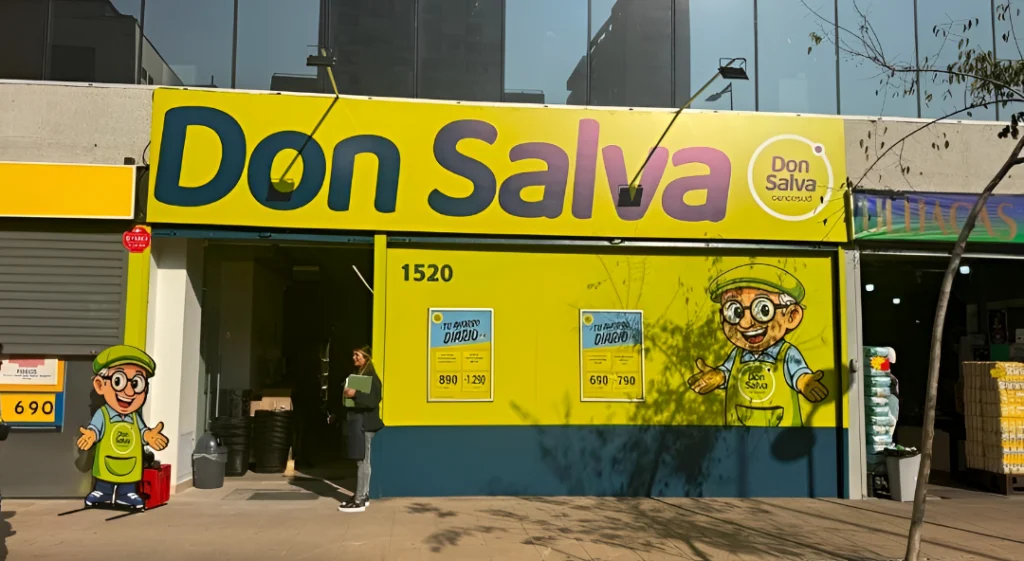
In a significant shift within the Latin American retail landscape, the Chilean multinational giant Cencosud has officially entered the hard-discount supermarket segment. With the introduction of its new brand, Don Salva, the company is aggressively pivoting to meet the demands of a changing economic climate. By prioritizing permanent savings, operational efficiency, and a lean, neighborhood-centric model, Cencosud aims to solidify its market position against the rising tide of inflation and shifting consumer habits that favor value-driven shopping experiences.
This strategic move marks a major diversification of the group’s portfolio, which currently encompasses powerhouse brands such as Jumbo, Santa Isabel, and the convenience-focused SPID in Chile, alongside Wong, Metro, and SPID in Peru. Don Salva represents more than just a new store opening; it is a tactical response to the "cautious consumer," a demographic that has become increasingly common in the wake of global economic volatility.
The Genesis of Don Salva: Strategy and Context
For years, Cencosud has built its reputation on a multiformat strategy that caters to varying socioeconomic segments. However, the rise of discount retail—a format that has historically disrupted markets across Europe and Latin America—necessitated a direct competitive response. The launch of Don Salva is designed to capture the segment of the market that prioritizes low prices and shopping efficiency above all else.
Adapting to the "Cautious Consumer"
The contemporary Chilean consumer is navigating a complex environment characterized by constrained budgets and a focus on essential goods. Don Salva’s value proposition is centered on the promise: “Acá sí alcanza” (Here, it truly reaches/is affordable). This slogan underscores the brand’s commitment to becoming an indispensable ally for household budgets.
By stripping away the overhead associated with large-format hypermarkets, Cencosud has created a lean operation that allows for competitive pricing on everyday essentials without compromising the reliability for which the parent company is known.
Chronology of the Launch
The road to the inauguration of Don Salva was marked by rigorous logistical planning and market analysis.
- Initial Development Phase: Cencosud identified a gap in its portfolio for a high-efficiency, small-footprint store model that could penetrate dense urban areas where traditional large supermarkets are physically impossible to build.
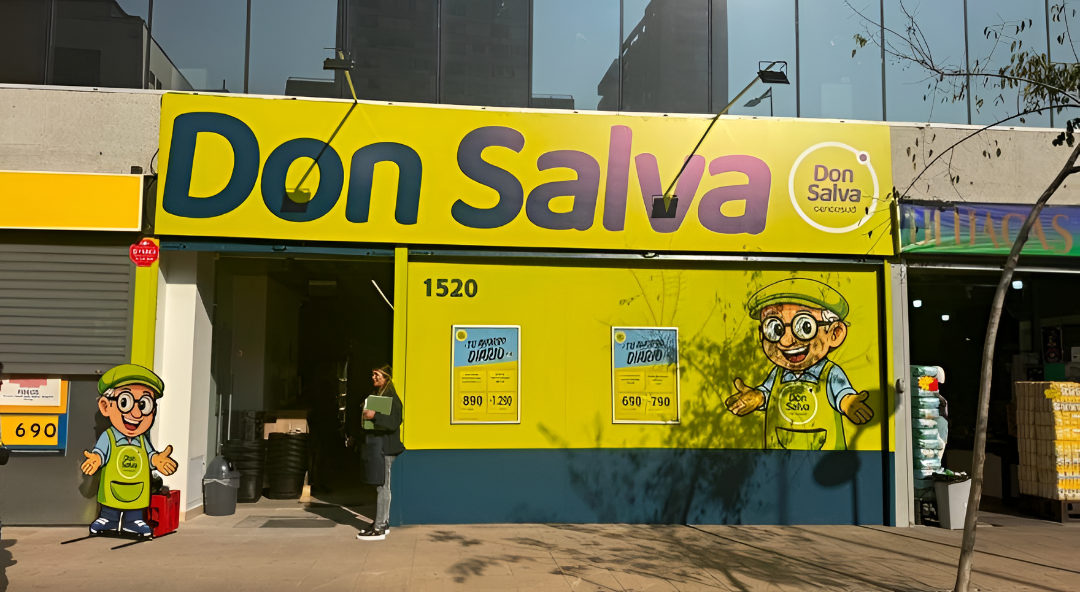
- May 22, 2024: The inaugural Don Salva store officially opened its doors in the heart of Santiago, located on Calle Santo Domingo. This location was chosen for its high foot traffic and density, serving as the "proof of concept" for the entire project.
- Operational Validation: Following the successful launch, the company began evaluating performance metrics, including space optimization and inventory turnover rates, to finalize the blueprint for future locations.
- Expansion Roadmap: With the initial site proving successful, Cencosud has already announced plans for further expansion throughout the Metropolitan Region and other key urban centers in Chile, signaling a sustained commitment to the format.
Anatomy of a Discount Store: Operational Excellence
The Don Salva model is defined by its extreme focus on efficiency. The inaugural location, spanning approximately 180 square meters, serves as the standard template for the brand’s future footprint.
Maximizing Space and Logistics
In retail, "space is money." By keeping the footprint compact, Don Salva achieves high revenue density per square meter. The interior layout is deliberately simple, avoiding the sensory overload of hypermarkets to focus on rapid navigation and purchase. The store relies on a high-velocity turnover model, where shelf space is reserved exclusively for high-demand, essential products.
The Product Mix
The assortment is curated to cover the "core basket" of a household. Key categories include:
- Abarrotes (Dry Goods): Staples like rice, pasta, and oils.
- Bakery and Perishables: Fresh goods that drive daily foot traffic.
- Perfumería and Household Items: Essential cleaning and personal care products.
- Botillería (Liquor/Beverage): A standard feature in Chilean retail that drives consistent margin.
Crucially, the store integrates Cencosud’s robust line of Private Label (Own Brand) products. This integration is a cornerstone of the company’s strategy, as it allows them to control the entire supply chain, offering lower prices to the consumer while maintaining healthy profit margins.
Official Perspectives: The Leadership Vision
The launch of Don Salva is a top-down initiative, backed by the highest levels of Cencosud’s management. Cristián Siegmund, General Manager of the Supermarkets Division at Cencosud Chile, has been the public face of this transition.
In an official statement following the launch, Siegmund emphasized the necessity of agility in the current market:
"Consumption dynamics are evolving rapidly, and at Cencosud, we seek to stay attentive to the new needs of our customers. In that line, today we welcome a new supermarket format, Don Salva, a proposal that combines convenient prices every day."
Siegmund further clarified that this is not a departure from the company’s core values, but rather an evolution of them. By maintaining the "standard of quality and service" associated with the Cencosud name, the company aims to differentiate Don Salva from "no-frills" competitors that often suffer from a poor reputation regarding product quality or store environment.
Market Implications and Competitive Landscape
The entry of a titan like Cencosud into the discount segment sends a clear signal to the rest of the industry. The "hard discount" format is no longer a niche, but a mainstream battleground.
Impact on Neighborhood Commerce
Don Salva is positioned as a "neighborhood" store, bringing the benefits of large-scale logistics to the local level. By placing these stores within walking distance of residential areas, Cencosud is effectively competing with both traditional "mom-and-pop" stores (almacenes de barrio) and smaller existing supermarket chains.
Economic Efficiency
The primary implication for the industry is the heightened pressure on margins. As Don Salva gains traction, competitors will be forced to re-examine their own operational efficiencies. If Cencosud can prove that its logistics-heavy approach can sustain profitability, we can expect a rapid proliferation of similar formats across the Andean region, particularly in Peru and Colombia, where the company has a strong foothold.
Future Growth and Scalability
The "roadmap" provided by Cencosud for the coming months is aggressive. By targeting Santiago Centro and other high-density communes, the company is betting on the sustainability of the discount model. The goal is clear: to secure a dominant market share before competitors can effectively pivot their own strategies.
The Road Ahead
As the retail sector continues to navigate the complexities of the 21st-century economy, the success of Don Salva will be a litmus test for Cencosud’s ability to remain relevant. The shift from a premium-heavy focus to a balanced portfolio—ranging from the high-end experience of Jumbo to the tactical efficiency of Don Salva—demonstrates a sophisticated understanding of market segmentation.
For the consumer, the arrival of Don Salva is a welcome development in an era of rising costs. For the retail industry, it is a reminder that the giants are often the most capable of adapting, provided they are willing to reinvent their operational DNA.
With the first few months of operations already showing promise, and a robust pipeline of new openings planned, Cencosud’s latest venture is poised to redefine the neighborhood shopping experience in Chile. The "Acá sí alcanza" promise is more than a slogan; it is the cornerstone of a new era for one of Latin America’s most influential retail groups.
As we look toward the second half of the year and into 2025, all eyes will be on the performance of these new units. If the current trajectory holds, Don Salva will likely become a permanent fixture in the urban landscape, proving that in the world of retail, the ability to pivot is just as important as the ability to lead.